

Summary
22 items · 30–60 minutes to audit and stock
Why a Home Remedy Cabinet Makes Sense
Minor ailments — a scratchy throat, an upset stomach, a small skin irritation — are an unavoidable part of daily life. Having a curated set of reliable, evidence-informed staples within arm's reach means you can respond thoughtfully rather than reactively. This checklist is designed to help you audit what you already own, identify what's missing, and organize your supplies so they're genuinely useful when you need them.
Before stocking your cabinet, it's worth grounding your expectations. If you're new to this approach, our beginner's guide to home remedy practice covers the fundamentals of how these remedies work and what realistic outcomes look like. For a broader cultural perspective on household healing traditions, see Home Remedies Across Cultures.
This article is for general informational purposes only and is not medical advice. Always consult a qualified healthcare professional for personal health concerns, persistent symptoms, or before making changes to any treatment.
Pantry-Based Remedies
Topical Staples
Supportive Tools and Basics
Cabinet Organization and Safety
What to Stock, Store, and Know
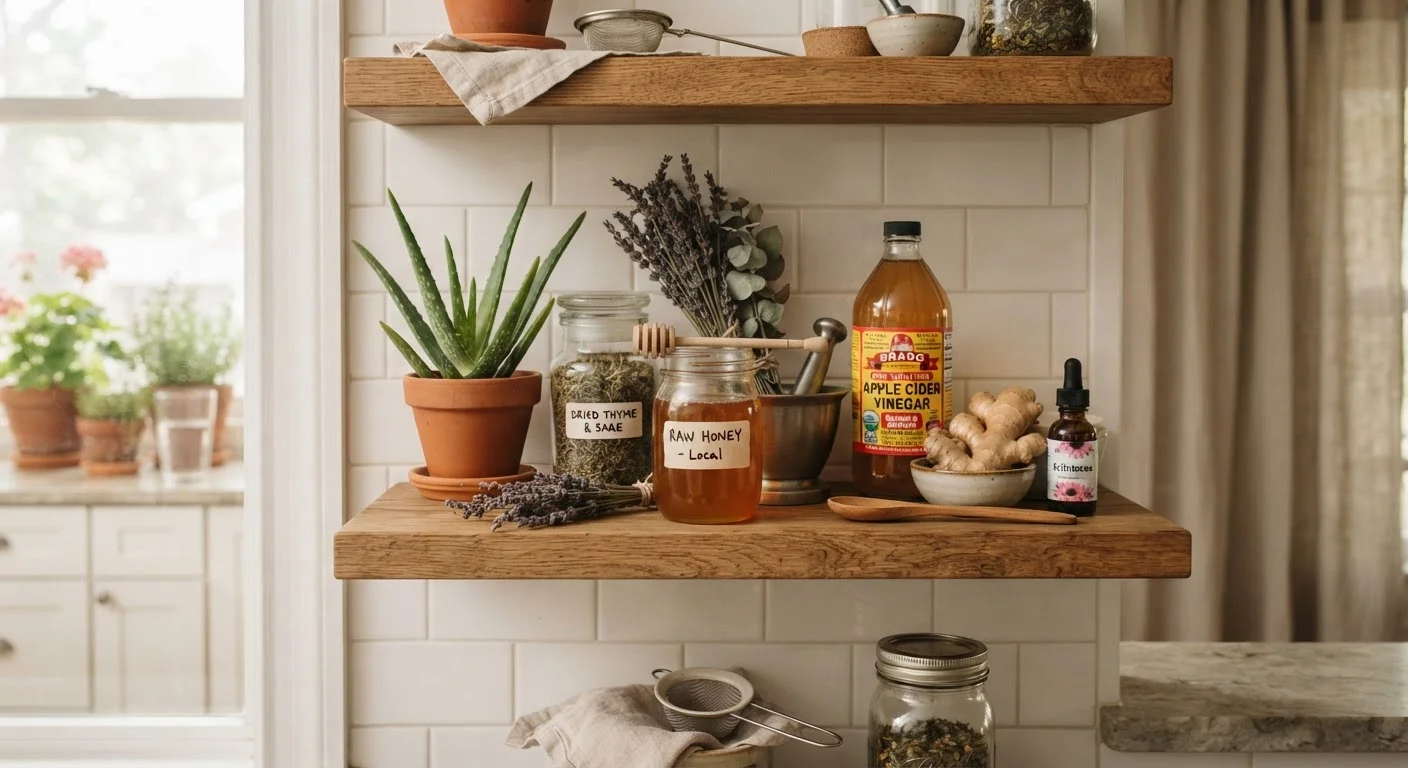
The items in this checklist span three categories: pantry-based remedies, topical staples, and supportive tools. Many overlap with ordinary kitchen and bathroom supplies, which keeps the approach practical and affordable.
For a deeper look at the science behind three of the most versatile pantry items, see Ginger, Turmeric, and Honey: How Three Pantry Staples Work in the Body. If you're managing minor skin issues, home remedies for minor skin irritations provides targeted guidance.
Digital Thermometer
Provides accurate temperature readings to help distinguish minor discomfort from symptoms requiring medical attention.
Glass Storage Jars (assorted sizes)
Airtight glass containers preserve the potency and integrity of dried herbs, honeys, and homemade preparations.
Kitchen Scale
Enables accurate measurement of dried herbs and other ingredients when preparing small-batch teas or topical blends.
Fine Mesh Strainer or Cheesecloth
Used for straining loose-leaf teas, herbal infusions, or homemade preparations cleanly.
Glass Dropper Bottles
Safe for storing diluted essential oil blends and other small-volume liquid preparations.
Hot Water Bottle or Heat Pack
Delivers localized warmth for minor muscle tension, cramps, or general comfort during illness.
Once your cabinet is stocked, the next priority is learning to use these items safely. Our companion guide on preparation, storage, and dosing principles walks through contamination prevention, shelf life, and responsible use. And when you're uncertain whether a home remedy is appropriate, When a Home Remedy Is Enough — and When It Isn't provides clear guidance on recognizing symptoms that need professional evaluation.
Essential Oils Require Careful Dilution
Essential oils such as tea tree, peppermint, and eucalyptus are highly concentrated and should never be applied undiluted to skin. Always dilute in a suitable carrier oil (such as coconut or jojoba) at a ratio recommended for the intended use. Keep essential oils away from children and consult a professional before use during pregnancy.
Honey Is Not Safe for Infants Under 12 Months
Raw and commercial honey both carry a risk of Clostridium botulinum spores, which can cause serious illness in infants. Never give honey in any form to a child under 12 months of age. This restriction applies regardless of the form honey takes in a remedy.
This article is for informational purposes only and does not constitute medical advice. Consult a qualified healthcare professional before using any remedy, especially if you are pregnant, nursing, elderly, caring for a child, or managing a chronic health condition.
The content on this site is for informational purposes only and is not a substitute for professional advice. Always consult a qualified professional for guidance specific to your situation.