

Our Verdict
Home remedies for minor skin irritations occupy a genuinely useful middle ground between doing nothing and seeking clinical care. Ingredients like colloidal oatmeal, aloe vera, and cool compresses are backed by a credible combination of traditional use and scientific study, making them reasonable first steps for mild itching, redness, or contact-related rashes. However, several popular folk treatments carry real risks of irritation or allergic reaction, and the line between a minor complaint and a symptom requiring professional attention is not always obvious.
Best suited for adults with mild, clearly identified skin irritations — such as insect bites, minor contact dermatitis, or dry-skin itch — who have no known allergies to the chosen remedy and whose symptoms are not worsening.
Understanding Minor Skin Irritations
Minor skin irritations include a wide range of common complaints: insect bites, contact dermatitis from plants or household products, dry-skin itch, mild sunburn, and small heat rashes. While these conditions are generally self-limiting, they can be uncomfortable enough to prompt a search for quick, accessible relief.
Before reaching for any remedy, it helps to identify the likely cause. A clearly localized itch after gardening differs from a spreading red rash with swelling — the latter warrants professional evaluation rather than home care. For general guidance on recognizing when home treatment is appropriate, see when a home remedy is enough.
The skin is an active barrier organ, and what you apply to it matters. Both helpful and harmful effects of topical agents are real, which makes evidence — even traditional evidence — worth considering carefully.
Remedies With Reasonable Evidence Behind Them
Several home-based treatments stand out for combining a long history of use with meaningful scientific support:
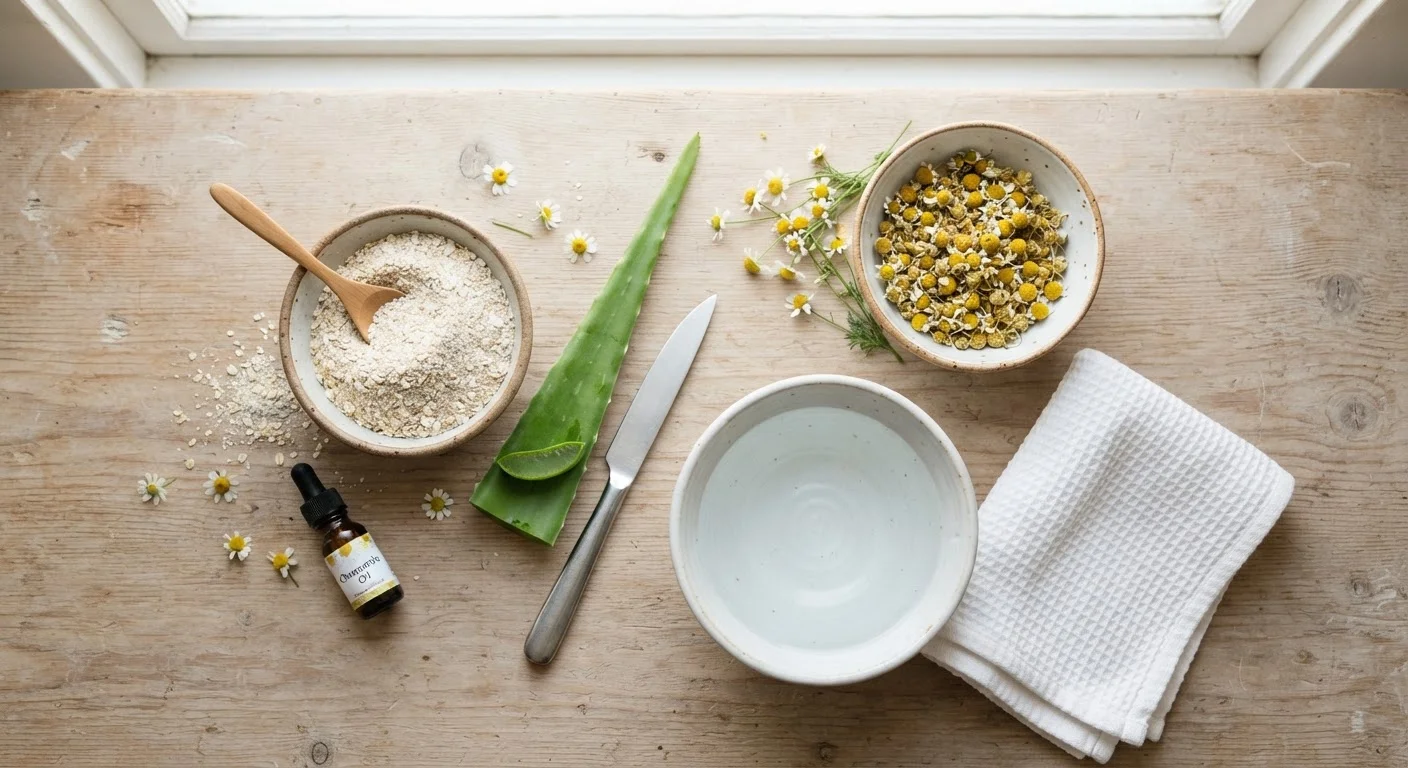
- Colloidal oatmeal: Finely milled oatmeal suspended in water has anti-inflammatory and skin-barrier-supporting properties. Research has identified avenanthramides — compounds in oats — as contributors to its itch-relieving and redness-reducing effects. An oatmeal bath or paste is one of the more evidence-supported choices available at home.
- Aloe vera gel: The clear gel from Aloe barbadensis leaves contains compounds with demonstrated anti-inflammatory and wound-soothing activity. It is widely used for minor burns and sunburn, with a reasonable evidence base supporting its calming effect on superficial skin irritation.
- Cool compresses: A clean cloth soaked in cool (not ice-cold) water reduces localized inflammation and provides direct itch relief. This carries essentially no risk and can be used alongside other approaches.
- Witch hazel: An astringent derived from Hamamelis virginiana, witch hazel has traditionally been used to reduce swelling and soothe bug bites. Alcohol-free preparations are gentler on sensitive skin.
Accessible and low-cost ingredients
Most effective home remedies — oatmeal, aloe vera gel, cool compresses — are inexpensive and widely available without a prescription or specialist visit.
Colloidal oatmeal has genuine scientific backing
Clinical studies have identified anti-inflammatory compounds in oats that demonstrably reduce itch intensity and skin redness in mild irritation and eczema-adjacent conditions.
Low risk when evidence-based options are chosen
Remedies like cool water compresses and fragrance-free moisturizers carry minimal adverse-effect potential and are appropriate even for sensitive skin types.
Can provide meaningful symptom relief quickly
For minor contact rashes or insect bites, an oatmeal paste or aloe application can reduce discomfort within minutes, supporting comfort while the skin heals naturally.
Supports skin barrier function
Ingredients such as aloe vera and plain humectant moisturizers can reinforce the skin's protective barrier, potentially shortening the irritation cycle.
These options are generally low-risk when used as directed, but individual responses vary. Always patch-test a small area of skin before wider application.
Popular Remedies That Can Backfire
Not every folk treatment that circulates online holds up under scrutiny. Some carry real potential for harm:
Undiluted vinegar can cause chemical burns
Apple cider vinegar is frequently promoted for skin complaints, but applying it undiluted — especially to already-irritated skin — can cause acid burns and worsen inflammation significantly.
Toothpaste irritates rather than soothes
A common remedy for bug bites, toothpaste contains menthol, fluoride, and detergents that are not formulated for skin and frequently cause additional contact dermatitis.
Essential oils risk allergic contact dermatitis
Even 'natural' oils like tea tree or lavender are among the more common causes of allergic contact dermatitis when applied without adequate dilution or on sensitized skin.
Delayed medical care can allow conditions to worsen
Treating a rash at home that actually requires antifungal, antibiotic, or prescription anti-inflammatory treatment can allow the underlying condition to progress and become harder to treat.
Natural ingredients can still trigger allergies
Aloe vera, chamomile, and oats are all known allergens for a subset of individuals — those with grass pollen sensitivities, for example, may react to oat-based preparations.
The appeal of remedies like toothpaste or neat lemon juice is understandable — they are convenient and widely shared. But their pH or concentration can disrupt the skin's acid mantle (the slightly acidic surface layer that protects against pathogens and moisture loss), making irritation worse rather than better.
For broader context on evaluating household ingredient claims, the science behind kitchen pharmacy remedies is a useful reference.
Practical Tips for Safe Home Treatment
When to Stop Home Treatment and Seek Care
Home remedies are appropriate for mild, clearly minor irritations with a known cause. If a rash spreads, develops blisters, becomes painful rather than just itchy, shows signs of infection (warmth, pus, fever), or does not begin to improve within 48–72 hours, stop home treatment and consult a healthcare provider. Individuals with known skin conditions such as eczema or psoriasis should also seek professional guidance before applying new topical agents.
A few habits make home skin care both safer and more effective:
- Patch test first: Apply any new remedy to a small, inconspicuous area and wait 24 hours before using it more broadly.
- Dilute essential oils: Oils like tea tree or lavender are sometimes suggested for skin irritations, but they must be diluted in a carrier oil (such as coconut or jojoba oil) before skin contact. Undiluted essential oils frequently cause contact dermatitis.
- Keep the area clean and moisturized: Plain, fragrance-free moisturizers support the skin barrier while it heals — often as effectively as more elaborate preparations.
- Avoid scratching: Breaking the skin increases infection risk and prolongs healing.
If you are building a general home remedy toolkit, stocking a home remedy cabinet covers practical essentials worth keeping on hand.
~20%
Adults affected by contact dermatitis at some point
Contact dermatitis is among the most common skin complaints seen in primary care, affecting roughly one in five adults over a lifetime, according to dermatology epidemiology estimates.
Top 5
Tea tree oil ranks among common contact allergens
Patch test studies across several countries consistently place tea tree oil in the top tier of contact allergens identified in dermatology clinics, underscoring the importance of dilution.
This article is for general informational purposes only and does not constitute medical advice. Always consult a qualified healthcare professional before starting any treatment, particularly if you have a skin condition, known allergies, or symptoms that are worsening or not improving within a few days.
The content on this site is for informational purposes only and is not a substitute for professional advice. Always consult a qualified professional for guidance specific to your situation.