

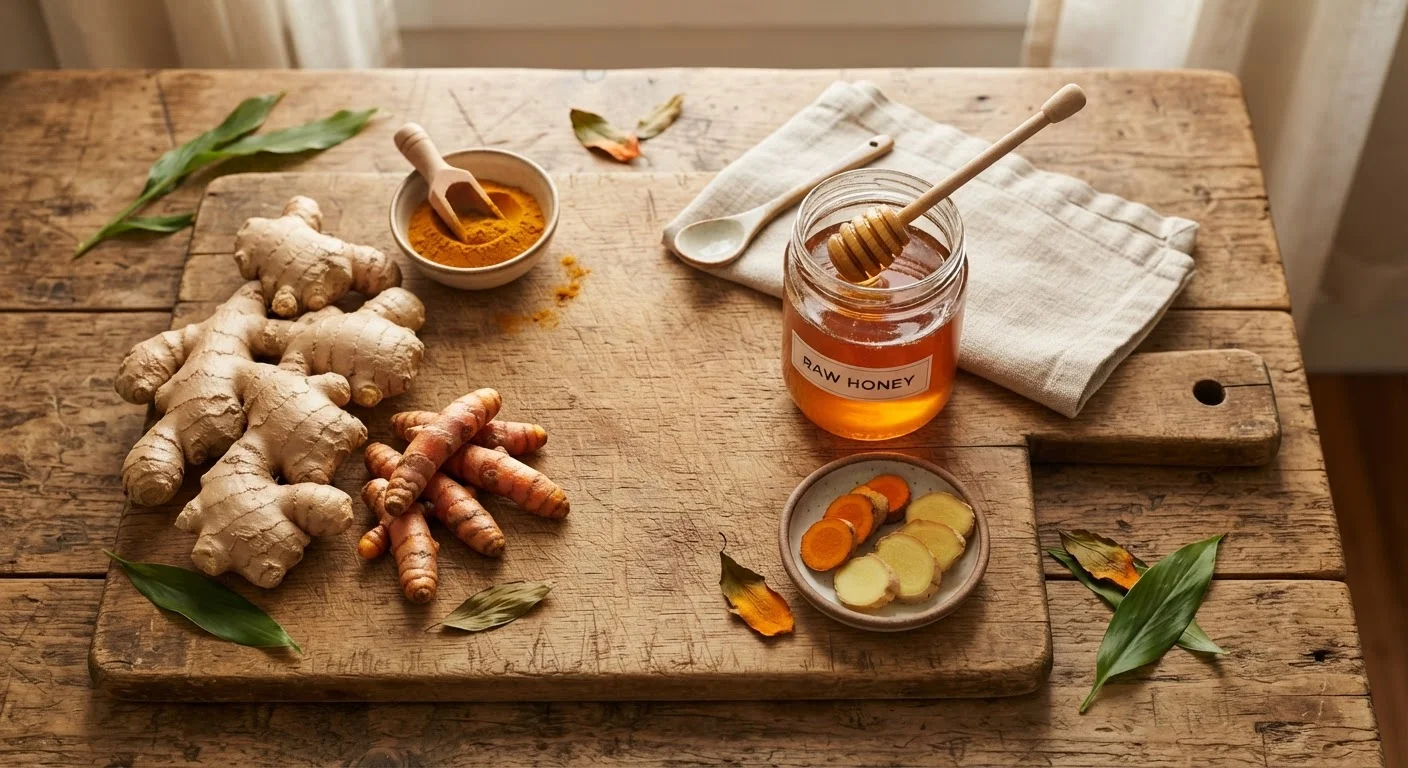
Active Compounds: What Makes Each Ingredient Work
These three pantry staples share something important: each contains specific bioactive compounds that researchers have studied for their effects on human physiology. Understanding what these compounds are — and how well the evidence supports their use — helps set realistic expectations.
| Ginger's key compound | Gingerols (fresh) / Shogaols (dried or heated) |
| Turmeric's key compound | Curcumin (a polyphenol) |
| Honey's antimicrobial agents | Hydrogen peroxide, methylglyoxal, flavonoids |
| Best-supported use (ginger) | Nausea relief, particularly motion sickness and pregnancy-related nausea (Multiple controlled clinical trials) |
| Curcumin absorption challenge | Low bioavailability when consumed alone; piperine (black pepper) may improve uptake |
| Honey safety note | Never give to infants under 12 months — risk of infant botulism (CDC and pediatric guidelines) |
Ginger: Gingerols and Shogaols
Fresh ginger's primary active constituents are gingerols, which convert to shogaols when the root is dried or heated. Both groups interact with receptors involved in nausea signaling and inflammation pathways. Multiple controlled trials support ginger's use for pregnancy-related nausea and motion sickness, making it one of the more research-backed of the three for a specific application. Its anti-inflammatory properties are plausible based on laboratory findings, though clinical evidence in humans remains more limited. See our kitchen pharmacy guide for broader context on how ginger fits among everyday food-based remedies.
Turmeric: Curcumin
Curcumin is turmeric's most studied polyphenol, responsible for its deep golden color. It has demonstrated anti-inflammatory and antioxidant activity in laboratory and animal models, and some human trials show modest effects on inflammatory markers. A well-documented challenge is curcumin's low bioavailability — the body absorbs it poorly on its own. Combining turmeric with black pepper (which contains piperine) is commonly cited as a strategy to improve absorption, though the practical magnitude of this effect in everyday cooking varies. For a deeper look at the research, see what the science actually says about curcumin.
Honey: Hydrogen Peroxide, Methylglyoxal, and Flavonoids
Raw honey's antimicrobial properties stem from several mechanisms: enzymatic production of hydrogen peroxide, the compound methylglyoxal (concentrated in Manuka honey), and a range of flavonoids and phenolic acids with antioxidant activity. Honey's use for soothing sore throats and minor wound care has traditional roots across many cultures — explored in home remedies across cultures — and some clinical evidence supports its role in cough relief, particularly in children aged one and older.
Everyday Uses, Evidence Levels, and Safety Considerations
Knowing how each ingredient is traditionally used, and how much scientific support exists, helps distinguish well-supported applications from those that are still speculative.
Gingerols
The primary bioactive compounds found in fresh ginger root, belonging to a class of phenolic chemicals. They are responsible for ginger's pungent flavor and are studied for anti-nausea and anti-inflammatory properties.
Curcumin
A polyphenolic compound that gives turmeric its yellow color and is its most extensively researched constituent. It has demonstrated antioxidant and anti-inflammatory activity in laboratory settings, though human evidence is still developing.
Bioavailability
The proportion of an ingested substance that enters the bloodstream and is available for use by the body. Curcumin has notably low bioavailability when consumed alone, limiting how much reaches body tissues.
Methylglyoxal (MGO)
A naturally occurring compound found in high concentrations in Manuka honey, credited with its distinctive and potent antimicrobial activity beyond what hydrogen peroxide alone provides.
Polyphenols
A broad class of naturally occurring plant compounds with antioxidant properties. Turmeric, ginger, and honey all contain various polyphenols that are thought to contribute to their health-relevant effects.
Shogaols
Compounds formed from gingerols when ginger is dried or heated. Shogaols are generally more potent than gingerols and may have stronger anti-inflammatory and antioxidant activity, according to laboratory research.
Where the Evidence Is Strongest
- Ginger for nausea: Among the most consistently supported uses in clinical literature, particularly for nausea related to pregnancy and chemotherapy (though any use during pregnancy or medical treatment warrants consultation with a healthcare provider).
- Honey for cough and throat irritation: Several trials, including a Cochrane-reviewed body of evidence, suggest honey is at least as effective as some over-the-counter cough preparations for mild upper-respiratory symptoms in children over 12 months.
- Turmeric for inflammatory markers: Some human trials show modest reductions in C-reactive protein and other markers; evidence is more consistent in populations with conditions like metabolic syndrome. Researchers caution that effect sizes are often small and study designs vary.
Where Caution Is Warranted
All three ingredients are generally well-tolerated in culinary amounts for most healthy adults. However, concentrated supplements carry different risk profiles than food-based use. High-dose ginger may interact with anticoagulant medications. Curcumin supplements can affect drug metabolism and should be used cautiously by people on certain therapies. Honey should never be given to infants under 12 months due to the risk of botulism. Individuals with chronic conditions, those who are pregnant, and anyone taking prescription medications should consult a qualified healthcare professional before using these ingredients therapeutically. For a reference on natural compounds and pain-related research specifically, see natural compounds studied for pain relief.
Practical Takeaway
Used in food and traditional preparations, ginger, turmeric, and honey offer a meaningful — if modest — complement to overall wellness habits. They work best understood as ingredients with genuine bioactive properties rather than cures. Stocking them alongside other evidence-informed staples makes practical sense; see what to keep in a home remedy cabinet for a broader reference list.
This article is for general informational and educational purposes only and does not constitute medical advice. Always consult a qualified healthcare professional before making changes to your health routine, especially if you have a medical condition, are pregnant, or take medications.
The content on this site is for informational purposes only and is not a substitute for professional advice. Always consult a qualified professional for guidance specific to your situation.