

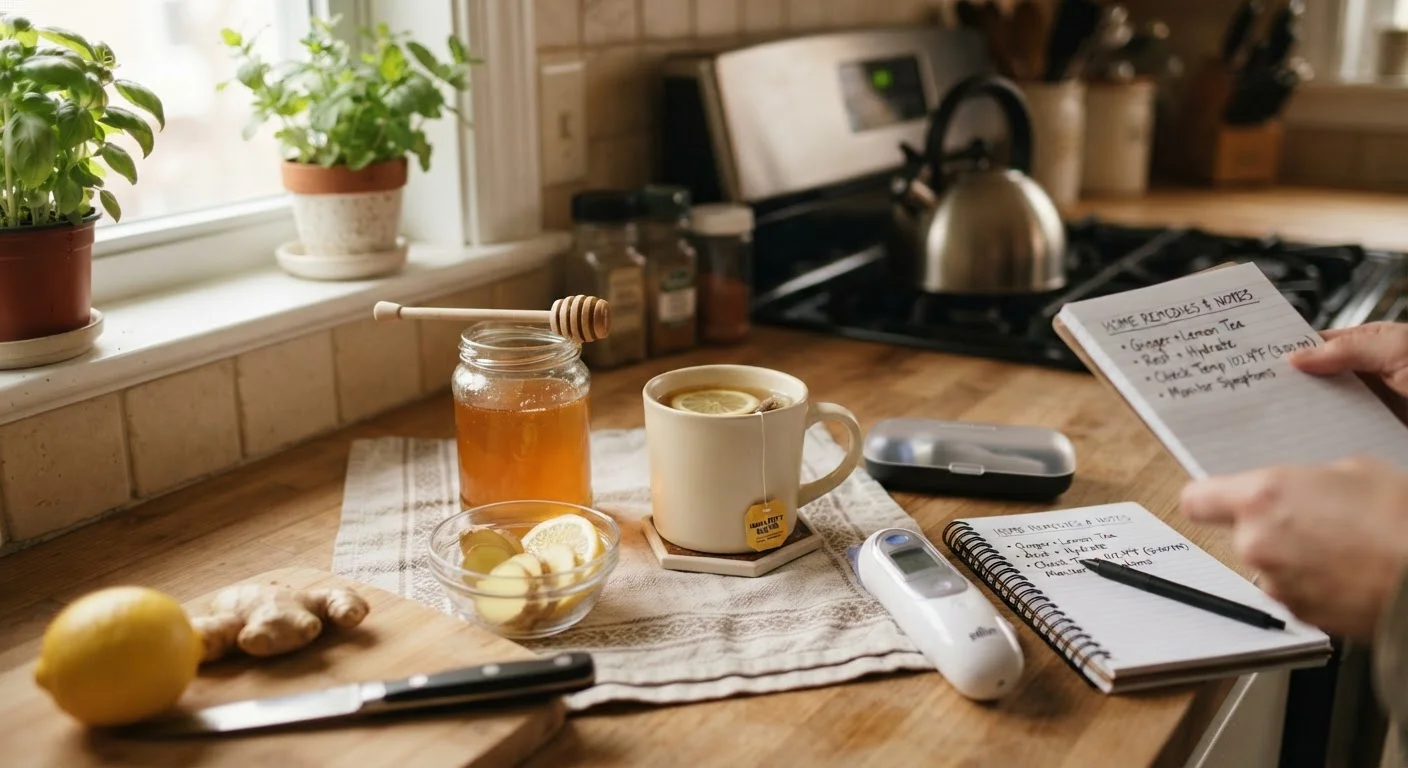
What Home Remedies Are Actually Designed to Do
Home remedies occupy a specific and legitimate space in healthcare: they are best suited to supporting the body's own recovery from minor, self-limiting conditions. A self-limiting condition is one that the immune system or natural healing processes will resolve within a predictable timeframe — think a common cold, mild indigestion, a superficial scrape, or a tension headache after a stressful day.
Traditional remedies and many evidence-informed natural approaches work primarily by easing discomfort, reducing inflammation at a low level, or supporting immune function during this recovery window. They rarely eliminate pathogens or repair structural damage. Understanding this distinction is what makes the difference between responsible self-care and inadvertently delaying necessary treatment.
For a grounded look at what research and tradition actually support, see our guide to common household remedies.
~80%
Primary care visits for self-limiting conditions
Research published in peer-reviewed family medicine journals suggests the majority of primary care consultations involve conditions that resolve without specific medical intervention.
3–5 days
Typical duration of a common cold
The U.S. Centers for Disease Control and Prevention notes that most common cold symptoms peak within two to three days and resolve within seven to ten days in healthy adults.
1 in 3
Adults who delay care for serious symptoms
Surveys by the American College of Emergency Physicians have found that a significant proportion of adults attempt self-treatment before seeking care, even for symptoms that warranted urgent attention.
Symptoms That Are Generally Suitable for Home Care
Several categories of complaints are widely recognized as appropriate starting points for home management in otherwise healthy adults:
- Mild upper respiratory symptoms: Runny nose, mild sore throat, and low-grade congestion associated with a common cold often respond to steam inhalation, honey-based preparations, and adequate hydration.
- Minor digestive upset: Occasional bloating, nausea, or mild indigestion can be addressed with ginger tea, peppermint, or rest — remedies with both traditional backing and some scientific support.
- Small, superficial skin irritations: Minor insect bites, mild sunburn, or small cuts that are not deep and are not showing signs of infection may be managed with soothing topical approaches. Learn more in our article on home remedies for minor skin irritations.
- Tension headaches and mild muscle soreness: Rest, hydration, warm compresses, and gentle movement are first-line comfort measures with a strong safety profile.
The common thread: symptoms are mild, localized, not accompanied by alarming signs, and consistent with a familiar pattern the person has experienced before.
Red-Flag Symptoms That Require Professional Attention
Certain symptoms should always prompt professional evaluation rather than home management. These include:
- Chest pain or pressure, particularly if radiating to the arm, jaw, or back
- Sudden difficulty breathing or shortness of breath at rest
- Neurological changes: sudden confusion, slurred speech, facial drooping, or loss of coordination
- High or persistent fever that does not follow a predictable cold or flu pattern
- Signs of infection: increasing redness, warmth, swelling, pus, or red streaks around a wound
- Severe or unusual pain — pain that is the worst of its kind or pain in unexpected locations
These are potential indicators of conditions requiring diagnosis and treatment that no home remedy can provide. When in doubt, understand where self-education ends and professional assessment begins.
Duration and Trajectory: The Two Most Important Signals
Beyond the nature of symptoms, two practical factors should guide your decision-making: how long the symptoms have lasted, and whether they are improving or worsening.
A sore throat on day one of a cold is very different from a sore throat on day eight that is getting worse. Minor digestive discomfort that passes in a few hours is not the same concern as recurring abdominal pain across multiple days. Most self-limiting conditions follow a predictable arc — symptoms peak and then gradually resolve. When that arc doesn't materialize, that is meaningful clinical information.
If you are managing symptoms at home and seeing no meaningful improvement after two to three days — or if symptoms are actively worsening — contacting a healthcare provider is the appropriate next step. This is not a failure of the remedy; it is the system working as intended.
“The art of medicine has always included knowing when to intervene and when to support the body's own healing. The difficulty lies in teaching people to recognize that boundary for themselves.”
— Richard Smith, Former editor, British Medical Journal
Special Populations: When the Threshold Shifts
The guidelines for home remedy use shift significantly for certain groups. Infants, young children, pregnant individuals, older adults, and people with chronic conditions such as diabetes, heart disease, or compromised immunity face different risk profiles for what might seem like minor symptoms.
A fever that an otherwise healthy adult could watch at home may require prompt attention in a young infant. An herbal supplement that is generally well-tolerated may carry risks during pregnancy. Older adults may present with atypical symptoms — a urinary tract infection, for example, can manifest as sudden confusion rather than the more recognizable burning sensation.
If you or someone in your care belongs to one of these groups, always consult a qualified healthcare professional before initiating home treatment for anything beyond the most minor complaints. This guidance applies regardless of the remedy's general reputation for safety.
For those newer to this practice, our introduction to home remedy practice offers a grounded starting point with realistic expectations.
This article is for general informational purposes only and does not constitute medical advice. Always consult a qualified healthcare professional for personal health concerns, diagnosis, or treatment decisions.
Frequently Asked Questions
Symptoms that are severe, sudden, worsening, or accompanied by red-flag signs like chest pain, shortness of breath, high fever, or neurological changes require prompt professional evaluation. If you are ever in doubt, contacting a healthcare provider is always the safer choice.
Some herbal and kitchen remedies can interact with medications — for example, ginger and garlic may affect blood clotting. Always inform your healthcare provider about any home remedies you use regularly, particularly if you take prescription drugs.
A mild fever in a healthy adult — generally below 103°F — that accompanies a cold or flu and responds to rest and fluids is typically self-limiting. However, very high fevers, fevers lasting more than a few days, or fever in infants, young children, or immunocompromised individuals should be assessed by a clinician.
Most home remedies do not eradicate infections the way prescription antibiotics or antivirals do. They may ease discomfort and support the body's natural recovery process. Suspected bacterial infections — such as strep throat or a urinary tract infection — generally require professional diagnosis and treatment.
If symptoms are not improving within the expected recovery window — typically a few days for minor complaints — or if they are worsening, developing new features, or significantly affecting your daily functioning, it is time to consult a healthcare provider.
The content on this site is for informational purposes only and is not a substitute for professional advice. Always consult a qualified professional for guidance specific to your situation.