

Start here
What Home Remedies Actually Are
Next
How Tradition and Science Intersect
Then
Setting Realistic Expectations
When you're ready
Core Safety Principles for Beginners
Apply it
Building Your First Home Remedy Practice
What Home Remedies Actually Are
Home remedies are health-supporting practices — typically using everyday food ingredients, plants, or simple preparations — intended to ease minor ailments or support general wellbeing. They are rooted in centuries of household tradition across virtually every culture on earth, from ginger-and-honey teas for sore throats to chamomile compresses for skin irritation.
It is important to distinguish home remedies from formal herbal medicine or clinical treatment. They occupy a practical, accessible middle ground: not a substitute for medical care, but a complement to healthy living for minor, self-limiting conditions. Home remedies across cultures reveals just how universally humans have drawn on their immediate environment for everyday healing.
Home remedy
A practice or preparation using common household or natural ingredients intended to ease minor health complaints, rooted in traditional household knowledge rather than clinical medicine.
Self-limiting condition
An illness or symptom that naturally resolves on its own within a defined period without requiring medical intervention — such as a common cold or mild indigestion.
Contraindication
A specific situation, condition, or medication combination in which a remedy or treatment should not be used because it may cause harm.
Traditional use
The historical application of a remedy within a cultural or folk medicine tradition, which provides context but does not by itself confirm safety or effectiveness.
Evidence base
The body of scientific research — including clinical trials and systematic reviews — that supports or questions the use of a remedy for a specific purpose.
How Tradition and Science Intersect
Many home remedies have survived generations precisely because they offered some measurable relief. Modern research has begun examining these traditional practices with more rigor — and the results are genuinely mixed. Some remedies show promising mechanisms; others have limited or inconclusive evidence; and a few have been shown to be ineffective or, in high doses, potentially harmful.
Ginger, for instance, has been studied for its anti-nausea properties, with several clinical trials supporting its use for nausea related to pregnancy and chemotherapy — though dosing and context matter. Honey has established antimicrobial properties and has been studied as a soothing agent for coughs in children. However, for every well-studied remedy, there are dozens that rely primarily on traditional use and anecdote.
Understanding this spectrum is foundational. What science says about common household remedies offers a deeper look at research behind everyday kitchen ingredients. For a related perspective on herbal practice, see our guide on starting out with herbal wellness.
Setting Realistic Expectations
One of the most important things a beginner can do is calibrate expectations honestly. Home remedies are not cures. They may support the body's natural recovery process, ease discomfort, or reduce mild symptoms — but they rarely address the root causes of illness, and they have clear limits.
Self-diagnosis is a meaningful risk. Online searches can inform, but they can also mislead. Our article on the limits of self-diagnosing common conditions outlines where self-education ends and professional assessment becomes essential.
Know when to step back and seek care
High fever, difficulty breathing, chest pain, sudden or severe symptoms, and signs of allergic reaction are never appropriate situations for home remedy management. These are medical emergencies. Do not delay professional care in favor of a home-based approach — doing so can worsen outcomes significantly.
Home remedies are most reliable for conditions that are mild, familiar, and genuinely self-limiting. Persistent, severe, or unexplained symptoms always warrant professional evaluation — not a wait-and-see approach with a herbal tea.
Core Safety Principles for Beginners
Approaching home remedies safely requires a few non-negotiable principles. First, preparation and storage matter as much as the ingredient itself. Improperly prepared or stored preparations can introduce contamination or lose efficacy. Using home remedies safely covers these principles in practical detail.
Second, interactions are real. Common ingredients like garlic, ginger, and turmeric can interact with medications, particularly blood thinners or immunosuppressants. Always inform your healthcare provider about any remedies you are using alongside prescribed treatments.
Third, special populations require extra caution. Remedies that are appropriate for a healthy adult may be unsuitable for children, pregnant individuals, older adults, or those managing chronic illness. When in doubt, consult a qualified healthcare professional before proceeding.
Start with a written remedy log
Keeping a simple written record of what remedy you used, when, how you prepared it, and what you observed is one of the most underrated beginner practices. It helps you identify what seems effective for your body, notice any adverse reactions promptly, and have an accurate record to share with your healthcare provider if needed.
Building Your First Home Remedy Practice
The most sustainable approach to home remedy practice is to start small and build knowledge deliberately. Choose three to five well-documented ingredients and learn everything about each one: its traditional uses, what research exists, how to prepare it correctly, and what contraindications apply.
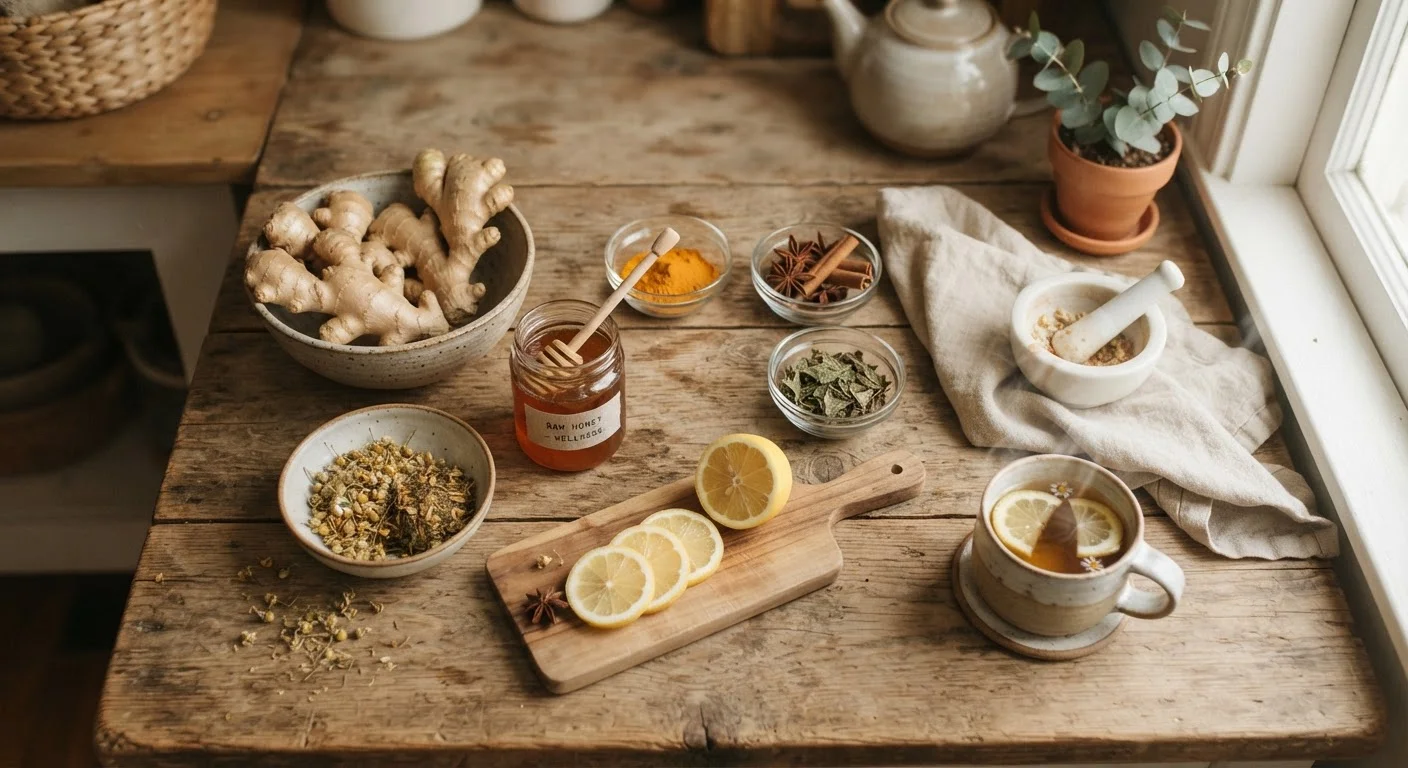
Common starting points include ginger (digestive support and nausea), honey (throat soothing, topical minor wound care), chamomile (mild relaxation and digestive ease), peppermint (headache and nasal congestion), and warm saline solution (nasal and throat irrigation). None of these are miracle treatments — but each has a reasonable evidence base alongside its traditional use.
Integrating home remedies into a broader approach to wellbeing amplifies their value. Consider reading about starting a holistic wellness routine without feeling overwhelmed for context on building sustainable health habits. For those managing specific conditions, natural approaches to common conditions provides a broader framework.
This article is for general informational and educational purposes only and does not constitute medical advice. Always consult a qualified healthcare professional before starting any new health practice, particularly if you have an existing health condition, are pregnant, or are taking medications.
Frequently Asked Questions
Home remedies are generally considered safe for healthy adults addressing minor ailments, but they are not universally appropriate. Children, pregnant or breastfeeding individuals, older adults, and people managing chronic conditions or taking medications should consult a healthcare provider before using any home remedy.
Look for peer-reviewed studies rather than relying solely on anecdotal testimonials or marketing claims. Many traditional remedies have been studied to varying degrees, but the quality and quantity of evidence differ significantly. Reliable health databases and professional guidance can help you evaluate specific remedies critically.
Yes — some botanicals and common kitchen ingredients can interact with medications. For example, ginger may affect blood-thinning agents, and high-dose garlic can influence certain drug metabolisms. Always disclose any home remedies to your prescribing clinician to avoid unintended interactions.
Home remedies are generally most appropriate for mild, self-limiting conditions such as a sore throat, minor digestive discomfort, or a tension headache. They are not substitutes for professional evaluation of persistent, severe, or unexplained symptoms.
Begin with a small selection of well-documented ingredients — such as ginger, honey, chamomile, and peppermint — and learn about each one thoroughly before expanding. Understanding proper preparation and storage is as important as the remedy itself.
Stop using a remedy and seek professional care if your symptoms worsen, do not improve within a reasonable timeframe, or are accompanied by warning signs such as high fever, severe pain, or difficulty breathing. Never delay necessary medical care in favor of home treatment.
The content on this site is for informational purposes only and is not a substitute for professional advice. Always consult a qualified professional for guidance specific to your situation.