

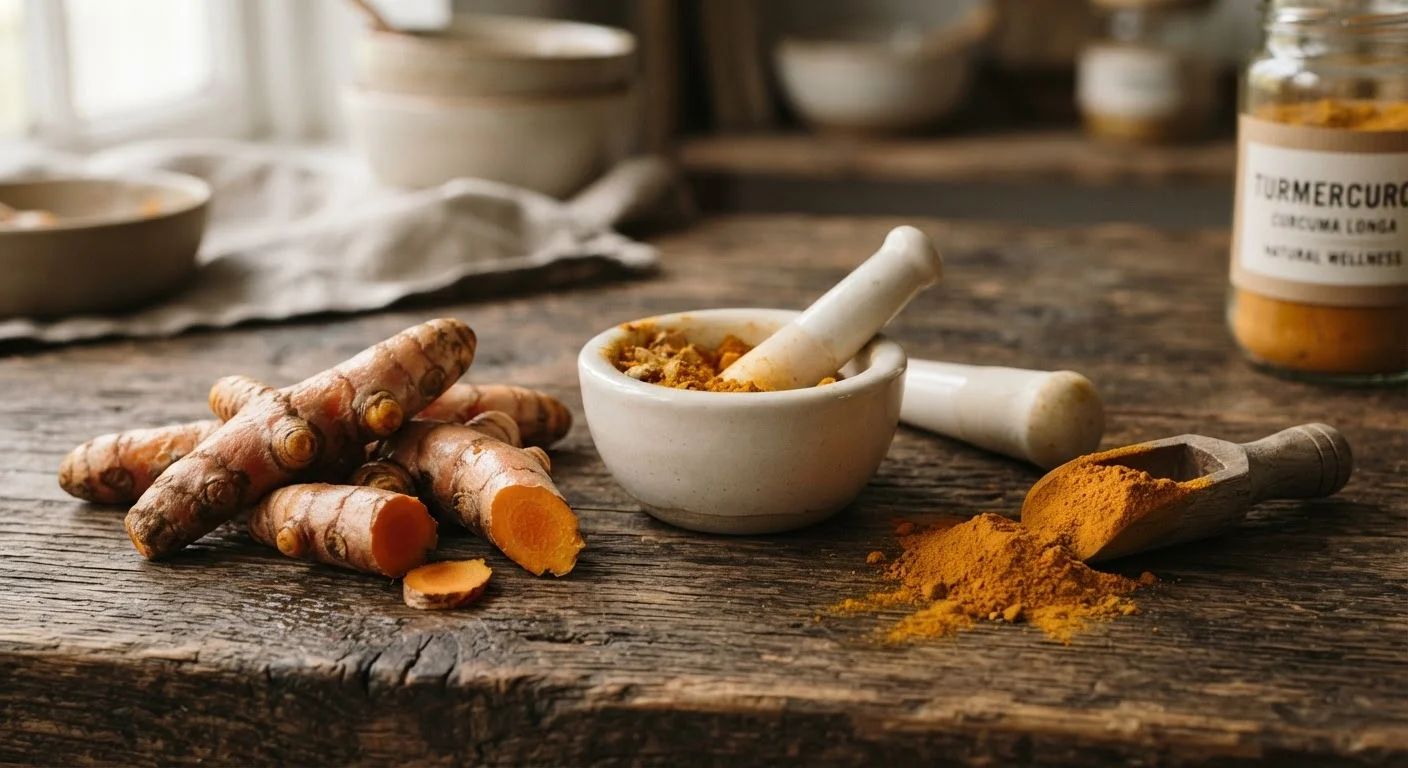
Why Curcumin Generates So Much Scientific and Public Interest
Turmeric has been used in Ayurvedic and traditional Chinese medicine for thousands of years, valued for its purported anti-inflammatory and digestive properties. Modern researchers have zeroed in on curcumin — the polyphenol responsible for turmeric's distinctive golden color — as the compound most likely to explain these traditional effects.
Laboratory studies have identified curcumin's ability to modulate several molecular pathways associated with inflammation, oxidative stress, and even tumor cell growth in cell cultures. These findings are genuinely intriguing to researchers. The problem arises when cell-culture and rodent data gets translated — prematurely and imprecisely — into health headlines promising that turmeric "cures" inflammation, cancer, or Alzheimer's disease.
Understanding what the research actually demonstrates, and where its boundaries lie, is essential for anyone considering turmeric or curcumin as part of a wellness approach.
Myth
Eating turmeric in food gives you a therapeutic dose of curcumin.
Fact
Culinary turmeric contains only 2–5% curcumin by weight, making food-level doses far below those studied in most clinical trials.
A teaspoon of turmeric powder (roughly 3 grams) delivers approximately 60–150 mg of curcumin at most. Most human studies examining curcumin's effects use doses ranging from 500 mg to several grams daily — amounts not achievable through cooking alone. While adding turmeric to food has cultural and culinary value, it is not equivalent to a supplemental curcumin intervention.
Myth
Science has proven curcumin fights cancer in humans.
Fact
Curcumin has shown anti-tumor activity in cell and animal studies, but evidence in human cancer patients remains preliminary and inconclusive.
In laboratory settings, curcumin has demonstrated the ability to interfere with cancer cell signaling pathways and induce apoptosis (programmed cell death) in certain cell lines. However, most human clinical trials involving curcumin and cancer have been small, short-term, and focused on safety or biomarker changes rather than survival outcomes. No major cancer research authority classifies curcumin as a proven cancer treatment. Framing preliminary findings as proof of efficacy is a significant overreach.
Myth
Curcumin supplements are safe for everyone to take freely.
Fact
Curcumin supplements can interact with medications and may pose risks for people with certain health conditions.
At high doses, curcumin has demonstrated blood-thinning (anticoagulant) properties, raising concerns for individuals on anticoagulant medications such as warfarin. It may also affect how the liver processes certain drugs via cytochrome P450 enzyme pathways. People with gallbladder disease, bleeding disorders, or those who are pregnant should exercise particular caution. The fact that curcumin is "natural" does not automatically make it safe at supplemental doses for all individuals.
Myth
All curcumin supplements on the market are equally effective.
Fact
Curcumin formulations vary significantly in their absorption and the quality of supporting evidence behind them.
Standard curcumin extract, piperine-enhanced formulas, phospholipid complexes, and nanoparticle formulations each have different absorption profiles. Some proprietary forms have undergone human pharmacokinetic studies; others have not. Supplement quality also varies, as the industry faces limited pre-market regulatory oversight in the US. Consumers should look for products with third-party testing verification and, ideally, discuss options with a healthcare provider before selecting a formulation.
Myth
Curcumin is proven to prevent or treat Alzheimer's disease.
Fact
Animal studies show some cognitive benefits, but human clinical trials on curcumin and Alzheimer's have not produced consistent positive results.
Several rodent studies found that curcumin reduced amyloid plaque accumulation — a hallmark of Alzheimer's pathology — sparking significant media excitement. However, controlled human trials, including one published in the American Journal of Geriatric Psychiatry, have produced mixed results, with some studies showing no significant cognitive benefit over placebo. The gap between animal models and human neurological disease is substantial, and curcumin's poor brain bioavailability compounds the challenge.
The Bioavailability Problem Most Headlines Ignore
One of the most important — and routinely underreported — facts about curcumin is its poor oral bioavailability. When consumed, curcumin is rapidly metabolized, poorly absorbed in the gastrointestinal tract, and quickly eliminated from the body. This means that even a meaningful dose may produce very low blood concentrations, limiting any systemic effect.
Researchers have explored strategies to address this, including combining curcumin with piperine (a compound in black pepper), encapsulating it in lipid-based nanoparticles, or using phospholipid complexes. Some formulations have shown improved absorption in small studies, but whether this translates to measurable clinical benefit in humans remains an active area of investigation — not an established fact.
~3%
Average curcumin content in turmeric powder
Research analyses consistently estimate that curcumin comprises approximately 2–5% of dried turmeric root by weight, with roughly 3% as a common midpoint estimate.
Over 100
Human clinical trials completed on curcumin
As of recent systematic reviews, over a hundred human trials have examined curcumin, though many are small-scale, short in duration, and use differing formulations, making direct comparison difficult.
This bioavailability gap is one reason why promising in-vitro (test tube) results have not consistently translated into clear human clinical outcomes, despite decades of research attention.
This article is for informational purposes only and does not constitute medical advice. Consult a qualified healthcare professional before making any changes to your health regimen.
The content on this site is for informational purposes only and is not a substitute for professional advice. Always consult a qualified professional for guidance specific to your situation.