

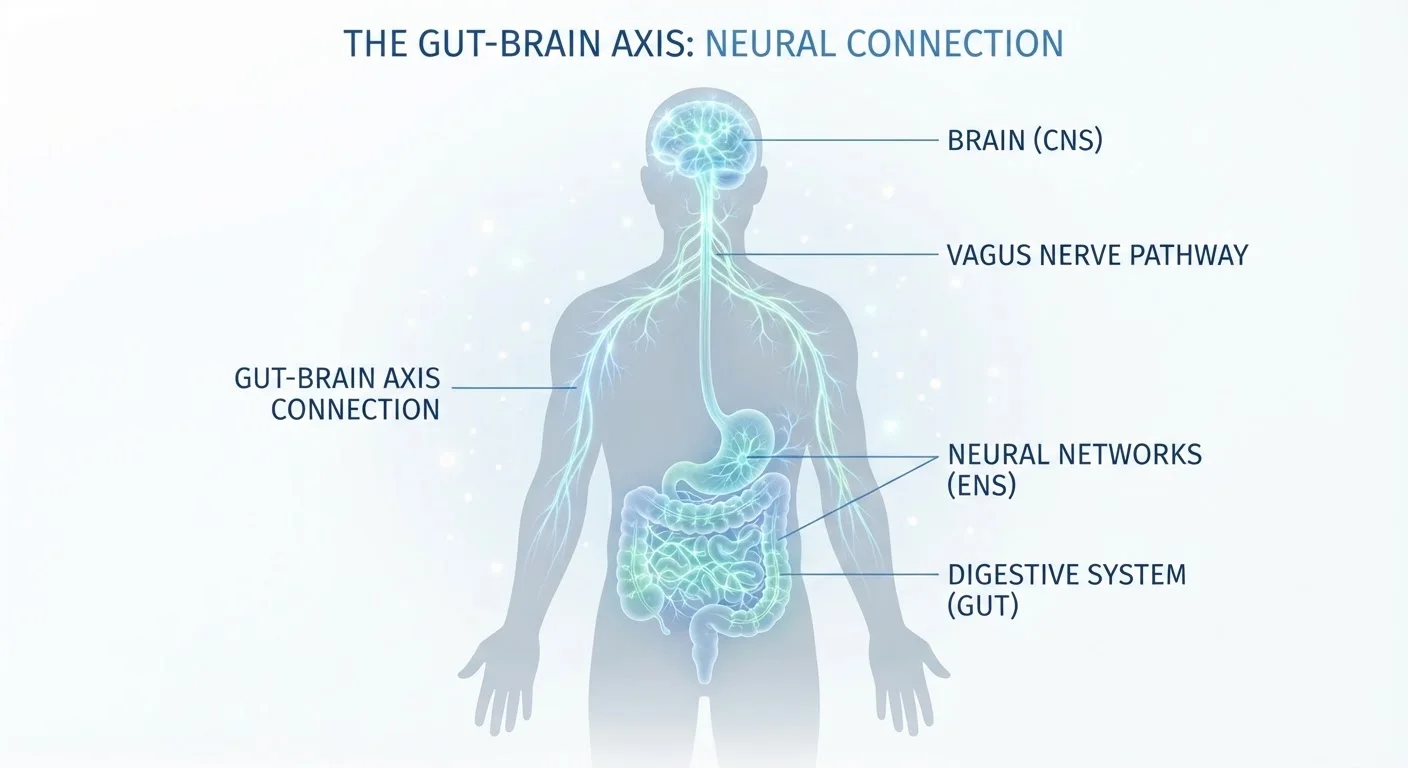
How the Gut and Brain Stay in Constant Conversation
Your digestive tract is sometimes called the "second brain" — not as a metaphor, but as a reflection of its extraordinary neural complexity. The enteric nervous system, a web of approximately 500 million neurons lining the gastrointestinal tract, operates semi-independently and communicates continuously with the central nervous system. This bidirectional dialogue, known as the gut-brain axis, involves three overlapping channels: the nervous system (primarily the vagus nerve), the endocrine system (hormones like cortisol and ghrelin), and the immune system.
Critically, communication flows in both directions. The brain sends signals that regulate digestion, motility, and gut immunity. But the gut sends even more signals upward — roughly 90% of vagal fibers carry information from gut to brain, not the other way around. This means that gut states — inflammation, microbial imbalance, or mechanical distension — are continuously informing brain function, mood, and perception of discomfort.
For a deeper look at how gut health intersects with your body's immune defenses, see how the digestive system shapes your body's defenses.
~90%
Vagal nerve signals traveling gut-to-brain
Neuroscience research consistently shows that the vast majority of vagus nerve fibers carry information from the gut to the brain, not the reverse.
95%
Of the body's serotonin produced in the gut
According to research published in peer-reviewed gastroenterology literature, the gastrointestinal tract is the primary site of serotonin synthesis in the human body.
500M+
Neurons in the enteric nervous system
The gut's intrinsic neural network rivals the complexity of the spinal cord, supporting its designation as the body's 'second brain' in neurogastroenterology.
Why Chronic Digestive Discomfort Persists
When digestive discomfort becomes chronic — lasting weeks or recurring regularly — it is rarely a simple mechanical issue. Research in neurogastroenterology points to several interacting factors that sustain symptoms over time.
- Visceral hypersensitivity: The gut's sensory neurons can become sensitized, amplifying pain signals from normal digestive activity. This is particularly documented in conditions like irritable bowel syndrome (IBS).
- Microbiome dysbiosis: An imbalance in gut microbial communities affects immune tone, gut barrier integrity, and even the production of neurotransmitter precursors like tryptophan. Dysbiosis can perpetuate both local inflammation and systemic effects.
- Chronic stress: Sustained psychological stress physically alters gut motility, increases intestinal permeability, and shifts microbial composition. The relationship is self-reinforcing — gut discomfort drives stress, and stress worsens gut function. Learn more in our article on how chronic stress and gut health interact.
- Sleep disruption: Poor sleep quality impairs the gut microbiome's circadian rhythms and weakens mucosal immune defenses. Emerging evidence suggests this creates a feedback loop where gut disruption further fragments sleep. Explore the research in sleep quality and gut health.
Evidence-Informed Strategies for Supporting Gut-Brain Health
While no single intervention resolves chronic digestive discomfort, several lifestyle-based strategies carry meaningful research support. These are best understood as foundational practices that work synergistically — not quick fixes.
Start with the Basics Before Supplements
Before exploring probiotic supplements or elimination diets, evidence consistently supports three foundational habits: increasing dietary fiber variety, reducing chronic psychological stress, and prioritizing consistent sleep. These address the gut-brain axis at multiple levels simultaneously and carry the strongest research backing for improving gut health over time. Always discuss significant dietary changes or supplement use with a healthcare provider, especially if you have an existing digestive condition.
Diet and the Microbiome
A diet rich in diverse plant fibers feeds beneficial gut bacteria, promoting production of short-chain fatty acids (SCFAs) that support gut barrier function and have anti-inflammatory properties. Fermented foods — such as plain yogurt, kefir, and kimchi — have been shown in clinical research to increase microbial diversity. Highly processed foods and excess added sugar are associated with reduced microbial diversity and increased intestinal inflammation.
Mind-Body Practices
Interventions targeting the stress response — including mindfulness-based stress reduction (MBSR), cognitive behavioral therapy (CBT), and gut-directed hypnotherapy — have demonstrated measurable benefit for functional gastrointestinal disorders in randomized trials. These approaches work partly by downregulating the HPA axis and reducing visceral hypersensitivity. For readers interested in the anxiety dimension, see our companion article on the gut-brain connection and everyday anxiety.
Traditional home remedies such as peppermint and ginger have also attracted scientific attention for their effects on gut motility and discomfort. For a grounded overview, see trusted home remedies for digestive discomfort, explained.
The gut's relationship with broader inflammatory processes is also an active research area. Our article on gut health, inflammation, and the microbiome examines what current science supports in that space.
This article is for general informational purposes only and does not constitute medical advice. If you are experiencing persistent or concerning digestive symptoms, please consult a qualified healthcare professional for personal evaluation and guidance.
Frequently Asked Questions
It is a two-way communication system linking your digestive tract and your brain through nerves, hormones, and immune signals. Activity in the gut influences mood and cognition, while mental states like stress directly alter gut function and microbiome composition.
Yes. Research shows that psychological stress activates the hypothalamic-pituitary-adrenal (HPA) axis, releasing cortisol that disrupts gut motility, increases intestinal permeability, and alters the microbiome. This is a well-documented physiological mechanism, not just a perception.
Persistent symptoms like bloating, irregular bowel habits, or abdominal pain may indicate imbalances in the gut microbiome, dysregulation of gut-brain signaling, or an underlying gastrointestinal condition. A healthcare provider can help identify the cause.
Emerging research suggests it can. Gut microbes produce neurotransmitters including serotonin precursors, and dietary patterns shape which microbes thrive. However, this is an evolving field and diet should not be viewed as a standalone mental health treatment.
Some are. Dietary fiber, fermented foods, stress reduction, and consistent sleep have meaningful research support for improving gut microbiome diversity and reducing digestive symptoms. Their effects vary between individuals, and they complement rather than replace medical care.
Consult a healthcare professional if symptoms are persistent, worsening, or accompanied by unintended weight loss, blood in stool, severe pain, or significant changes in bowel habits. These warrant prompt clinical evaluation, not self-management alone.
The content on this site is for informational purposes only and is not a substitute for professional advice. Always consult a qualified professional for guidance specific to your situation.