

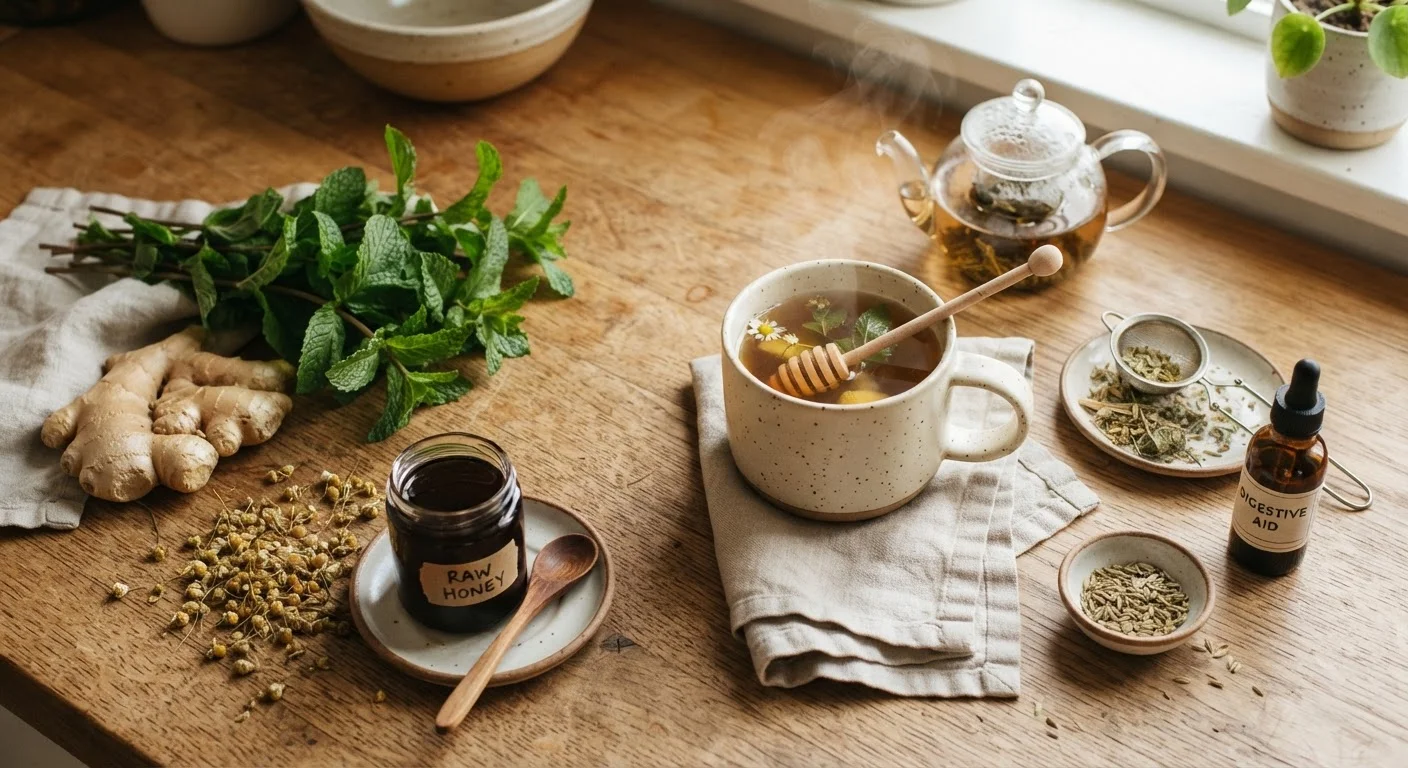
Why Home Remedies for Digestion Deserve a Closer Look
Bloating, indigestion, and stomach cramps are among the most common complaints in everyday health. For mild, occasional discomfort, many people reach for something already in their pantry — and there is good reason to take those instincts seriously. Generations of traditional healing practice, now increasingly examined through clinical research, suggest that several common ingredients genuinely influence how the digestive system behaves.
That said, not every folk remedy holds up equally under scrutiny, and understanding which ones carry real evidence behind them helps you make more informed choices. If you're new to approaching wellness this way, our beginner's guide to home remedy practice offers grounded context for setting realistic expectations.
The remedies below reflect a combination of long-standing traditional use and available scientific findings. They are intended as general information — not as medical advice or treatment guidance.
Ginger for Nausea and Slow Digestion
Ginger (Zingiber officinale) is one of the most studied natural remedies for digestive complaints. Its active compounds — gingerols and shogaols — appear to influence gut motility, the process by which food moves through the digestive tract, and may also have anti-nausea properties.
Multiple clinical reviews have found ginger helpful for nausea associated with pregnancy and motion sickness. Its role in general indigestion and bloating is supported by traditional Ayurvedic and Chinese medicine use, though evidence here is less conclusive. Ginger can be consumed as a tea made from fresh or dried root, or added to meals. Learn how ginger and peppermint differ in their mechanisms to decide which may suit your specific symptoms better.
Ginger's active compounds may support gut motility and reduce nausea through well-documented biological pathways.
Peppermint for Bloating and Intestinal Spasm
Peppermint (Mentha × piperita) is widely used for bloating, gas, and cramping. Its primary active compound, menthol, has antispasmodic properties — meaning it may help relax the smooth muscle of the intestinal wall, potentially relieving the cramping sensation associated with trapped gas or irritable bowel syndrome (IBS).
Enteric-coated peppermint oil capsules have been studied in randomized trials for IBS with promising results; peppermint tea, while less concentrated, is commonly used for milder symptoms. It is worth noting that peppermint may worsen heartburn in some individuals by relaxing the lower esophageal sphincter, so it is not universally suitable.
Peppermint's antispasmodic action may ease intestinal cramping, but it can worsen heartburn in some people.
Chamomile Tea for General Digestive Ease
Chamomile (Matricaria chamomilla) has been used across cultures for centuries to settle the stomach. It contains flavonoids and terpenoids believed to have mild antispasmodic and anti-inflammatory effects in the gastrointestinal tract. Traditional healing systems worldwide have long turned to chamomile for indigestion, particularly in Europe and Latin America, where it is known as manzanilla.
Laboratory and animal studies support some of its traditional uses, though large-scale human trials remain limited. Chamomile tea is generally well tolerated, though individuals with ragweed or related plant allergies should exercise caution, as cross-reactions are possible.
Chamomile's centuries-old reputation for settling the stomach has some laboratory-level biological support.
Warm Compresses for Abdominal Cramps
Applying gentle warmth to the abdomen is a simple, non-ingested approach to digestive discomfort. Heat promotes muscle relaxation and improves local circulation, which may help reduce the intensity of cramping caused by gas or intestinal spasm.
A warm compress, heating pad set to a low temperature, or a hot water bottle wrapped in a cloth can be applied to the lower abdomen for short periods. This remedy carries little risk when used correctly — avoiding direct skin contact with very hot sources — and is particularly accessible for those who prefer to avoid herbal preparations. It should not be used as a substitute for medical assessment when pain is sudden, severe, or unexplained.
Gentle abdominal warmth supports muscle relaxation and may reduce cramping intensity through simple physiological mechanisms.
Mindful Eating Pace and Posture
Two of the most overlooked contributors to bloating and indigestion are eating speed and body position during and after meals. Eating quickly causes excess air swallowing (aerophagia), which directly contributes to gas and bloating. Eating while slouched or lying down can slow gastric emptying and increase acid reflux risk.
Slowing the pace of meals, chewing thoroughly, and remaining upright for at least 30 minutes after eating are low-effort interventions with a reasonable evidence base. These behavioral adjustments are often discussed in the context of digestive physiology and represent a useful complement to any herbal or physical remedy.
Slowing down meals and maintaining upright posture afterward addresses root causes of gas and indigestion directly.
Fennel Seeds for Gas and Bloating
Fennel seeds (Foeniculum vulgare) are a traditional carminative — a substance thought to reduce the formation or aid the expulsion of gas in the gastrointestinal tract. Used widely in South Asian, Mediterranean, and Middle Eastern culinary and medicinal traditions, fennel seeds are commonly chewed after meals or steeped as a tea.
Their primary bioactive compounds include anethole and fenchone, which may have antispasmodic effects on intestinal smooth muscle. Clinical evidence remains limited, but the remedy is generally considered safe for most adults in culinary amounts. Fennel is one of many examples highlighted in surveys of traditional healing practices across cultures.
Fennel's carminative reputation spans multiple food traditions, with some biological plausibility supporting its use for gas.
Putting It All Together
Digestive discomfort is rarely caused by a single factor. Stress, eating habits, sleep, and gut microbiome health all intersect in ways that can make symptoms feel unpredictable. For a deeper understanding of why gut symptoms sometimes persist despite lifestyle changes, explore the gut-brain connection and what emerging research says about this two-way relationship.
Tracking Symptoms Helps Identify Patterns
Keeping a simple food and symptom journal for one to two weeks can reveal triggers you might not notice in the moment — whether a specific food, meal timing, or stressful event. This information is also extremely useful to share with a healthcare provider if symptoms persist or worsen. You don't need a formal app; a brief daily note works well.
Home remedies work best as part of a broader approach to digestive wellness — one that includes mindful eating, adequate hydration, stress management, and regular physical activity. If your symptoms are frequent, worsening, or accompanied by other signs such as unexplained weight loss, blood in the stool, or persistent pain, please consult a healthcare professional promptly. These remedies are tools for everyday comfort, not substitutes for clinical evaluation.
This article is for informational purposes only and does not constitute medical advice. Always consult a qualified healthcare provider before starting any new health regimen, especially if you are pregnant, nursing, elderly, managing a chronic condition, or taking medications.
The content on this site is for informational purposes only and is not a substitute for professional advice. Always consult a qualified professional for guidance specific to your situation.