

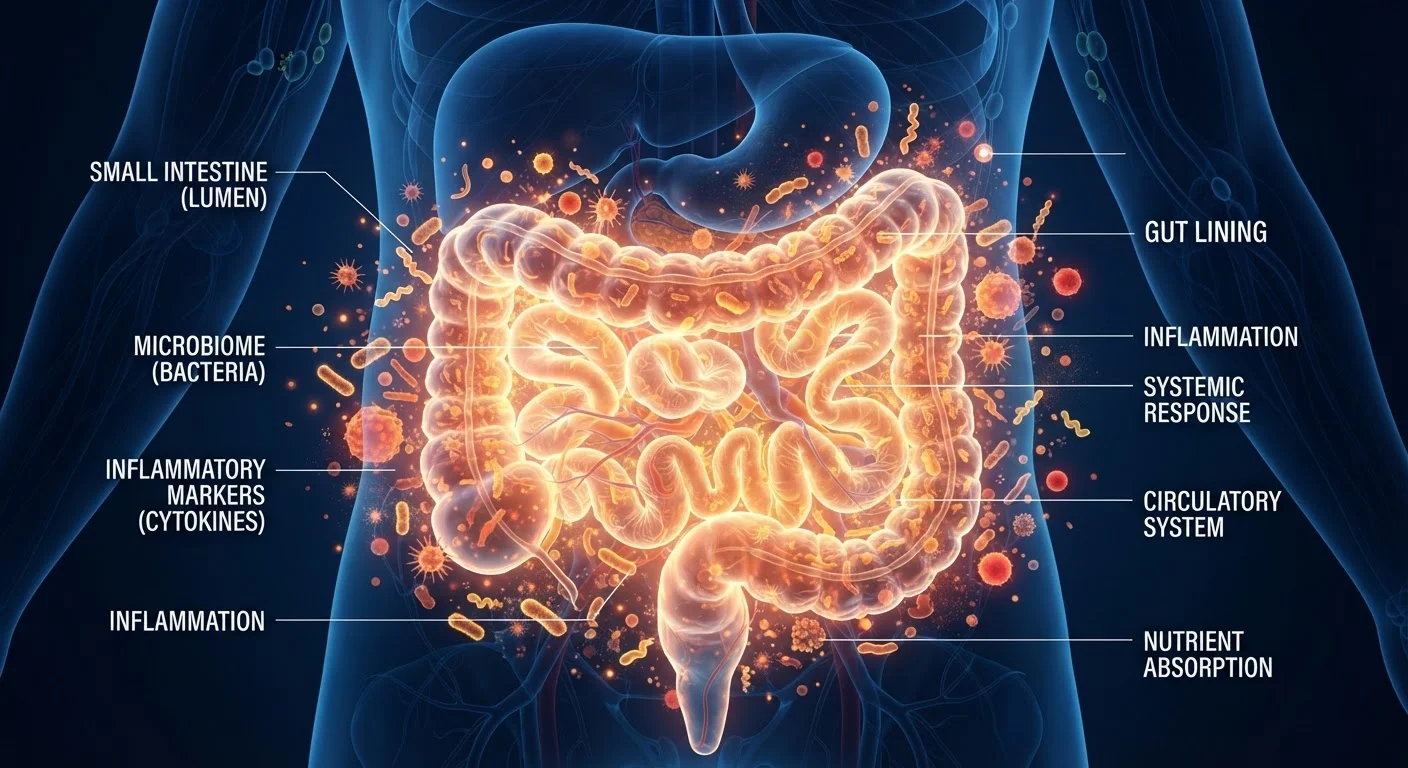
Your Gut Is an Immune Organ
Most people think of the gut primarily as a digestion machine. In reality, roughly 70–80% of the body's immune cells are housed in and around the gastrointestinal tract, according to immunology research. This makes the gut one of the most immunologically active sites in the entire body — and a central player in how inflammation begins, spreads, or resolves.
The microbiome — the collective genome and community of microorganisms residing in the digestive tract — is not a passive passenger. These microbes actively train immune cells, produce short-chain fatty acids (SCFAs) that have anti-inflammatory properties, and help maintain the integrity of the gut lining. When the microbiome is in balance, this system supports measured, proportionate immune responses. When it is disrupted, the consequences can extend far beyond digestion.
For a deeper look at how this immune-gut relationship functions day to day, see our guide to the gut-immune axis.
Dysbiosis, Leaky Gut, and the Inflammation Cascade
Dysbiosis — a state in which the diversity and balance of gut bacteria is disrupted — has been observed alongside elevated inflammatory markers in a range of conditions including rheumatoid arthritis, metabolic syndrome, and irritable bowel disease. Researchers are working to understand whether dysbiosis is a cause, a consequence, or both.
One proposed pathway involves the intestinal epithelial barrier: the single-cell-thick lining that separates gut contents from the bloodstream. When this barrier is compromised — a state sometimes called increased intestinal permeability — microbial byproducts such as lipopolysaccharides (LPS) can pass into circulation. LPS molecules are recognized by immune receptors throughout the body, triggering an immune alarm that, when chronically activated, sustains low-grade systemic inflammation.
70–80%
Of immune cells located in or near the gut
Widely cited in immunology literature summarizing gastrointestinal mucosal immunity research.
~38 trillion
Estimated bacterial cells in the human body
Based on a widely referenced 2016 estimate by Sender et al. published in Cell, roughly matching the number of human cells.
1,000+
Distinct bacterial species identified in the human gut
The Human Microbiome Project and related large-scale sequencing efforts have catalogued over a thousand gut-resident bacterial species.
This low-grade, persistent inflammation is distinct from the acute inflammation that heals a wound. Instead, it operates silently over months and years, and is associated with a wide spectrum of chronic pain conditions and metabolic disruptions. Importantly, this is an area of active investigation — the causal chain in humans is not yet fully established for all conditions.
Factors That Shift Microbiome Composition
The microbiome is not static. Research across large population cohorts has identified several modifiable factors that meaningfully alter microbial diversity:
- Diet: High-fiber, plant-diverse diets are consistently associated with greater microbial richness. Ultra-processed foods and diets low in fermentable fiber tend to reduce diversity.
- Antibiotic use: Antibiotics are life-saving but broadly disruptive to the microbiome, sometimes producing changes that persist for months.
- Chronic stress: The gut-brain axis runs bidirectionally — stress hormones alter gut motility and microbial composition, while gut signals influence mood and stress perception. Read more about this in our article on how stress fuels inflammation.
- Sleep quality: Disrupted sleep patterns are linked to shifts in gut bacterial populations and increased inflammatory cytokines.
- Physical activity: Regular moderate exercise is associated with higher microbial diversity and greater SCFA production.
Supporting Microbiome Diversity Through Daily Habits
Eating a variety of plant foods — aiming for broad diversity rather than large quantities of any single item — is one of the most accessible ways to nourish beneficial gut bacteria. Even modest increases in dietary fiber variety have been shown in research to meaningfully improve microbial richness over weeks. Pairing this with consistent sleep and stress management practices may compound the benefit, though individual results vary and no outcome is guaranteed.
Understanding these levers matters because they are, to varying degrees, addressable through lifestyle changes — though results are individual and gradual rather than immediate or guaranteed.
What Diet Can (and Cannot) Do
Of all modifiable factors, diet has the strongest evidence base for influencing microbiome composition. Mediterranean-style and high-fiber dietary patterns are associated with greater bacterial diversity and lower circulating inflammatory markers in epidemiological research. Fermented foods — yogurt, kefir, kimchi, kombucha — have also shown promise in small but rigorous trials for increasing microbial diversity.
For a comprehensive look at what current nutritional science says about eating patterns and inflammation, see our article on anti-inflammatory eating.
It is worth being clear about the limits: dietary changes support a healthier microbial environment but do not reverse specific disease processes on their own. Anyone experiencing persistent pain, unexplained inflammation, or digestive symptoms should seek evaluation from a qualified healthcare provider rather than relying solely on dietary intervention.
This article is for informational and educational purposes only. It does not constitute medical advice, diagnosis, or treatment. Always consult a qualified healthcare professional regarding any health concerns or before making changes to your diet, supplement routine, or medical care.
Frequently Asked Questions
Research suggests gut dysbiosis may contribute to inflammation-related pain, but the relationship is complex and not fully understood. Improving gut health through diet and lifestyle changes may support reduced inflammation in some individuals. However, no single intervention guarantees pain relief, and a healthcare provider should guide any treatment approach.
Dysbiosis is an imbalance in the composition of gut microorganisms, often characterized by reduced bacterial diversity. It is thought to impair the gut's protective barrier and promote the release of compounds that activate immune pathways, potentially driving low-grade systemic inflammation. The precise mechanisms are still being studied.
Fiber-rich foods — vegetables, legumes, whole grains — and fermented foods like yogurt, kefir, and sauerkraut are associated with greater microbial diversity. These dietary patterns are also linked to lower inflammatory markers in population-level research. Individual responses vary, and a registered dietitian can offer personalized guidance.
Increased intestinal permeability is a measurable phenomenon recognized in research settings and observed in certain conditions such as celiac disease and inflammatory bowel disease. The broader concept of 'leaky gut syndrome' as a standalone diagnosis, however, is not yet formally recognized in mainstream clinical medicine. Scientists continue to investigate its role.
Chronic psychological stress can alter gut motility, change the composition of microorganisms, and impair the intestinal barrier — all of which may promote inflammatory signaling. The gut and brain communicate bidirectionally via the gut-brain axis, meaning stress and gut health influence each other in an ongoing feedback loop.
Probiotic research is promising but inconsistent — specific strains, doses, and outcomes vary widely across studies. Some trials show modest reductions in inflammatory markers with certain probiotic supplementation, but there is no universally recommended protocol. Speak with a healthcare provider before beginning any supplement regimen.
The content on this site is for informational purposes only and is not a substitute for professional advice. Always consult a qualified professional for guidance specific to your situation.