

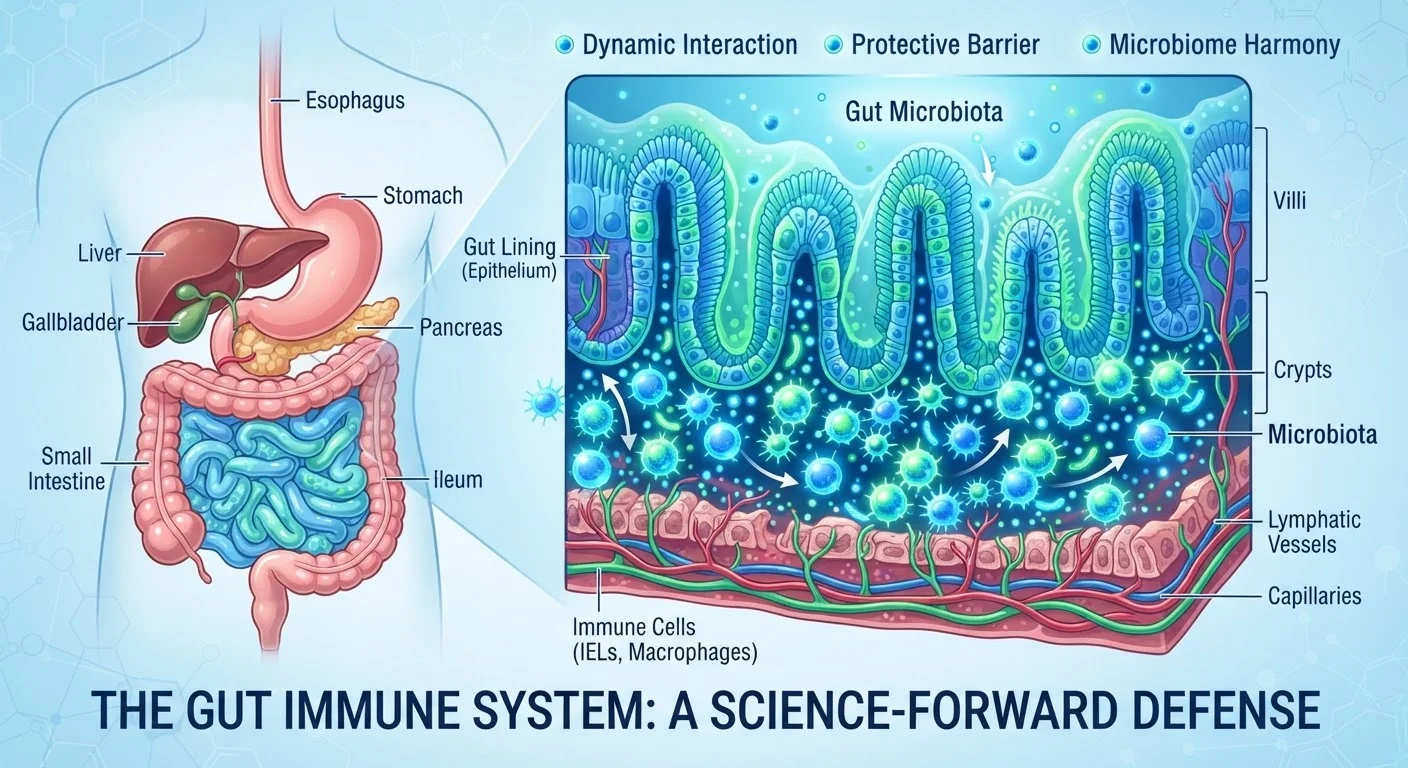
Why the Gut Is an Immune Organ
Most people associate the immune system with white blood cells and lymph nodes, but a substantial portion of the body's immune activity takes place in the digestive tract. The intestinal lining is in constant contact with food particles, pathogens, and the trillions of microorganisms that make up the gut microbiome. To manage this exposure, the gut has evolved its own dense network of immune structures.
Gut-associated lymphoid tissue (GALT) — which includes clusters of immune cells called Peyer's patches — sits embedded within the intestinal wall. These structures act as surveillance stations, sampling what passes through the gut and instructing immune cells on how to respond. This is why disruptions in gut health rarely stay local: they ripple outward into systemic immune function.
If you're new to these concepts, our beginner's overview of immune and gut health provides a solid foundation for understanding the key terminology.
~70%
Of immune tissue located in or near the gut
Estimates from immunology research consistently place a majority of the body's immune cells within the gastrointestinal tract and associated lymphoid tissues.
38 trillion
Estimated microbial cells in the human gut
A widely cited 2016 study in Cell revised earlier estimates, suggesting microbial cells in the body are roughly equal in number to human cells, with the gut hosting the vast majority.
3–4 days
Time for diet to begin shifting gut microbiome
Research by David et al. (Nature, 2014) found measurable changes in gut microbial composition within days of significant dietary change.
The Microbiome as Immune Educator
The gut microbiome — the ecosystem of bacteria, fungi, viruses, and other microbes living in the digestive tract — does far more than assist with digestion. It plays a central role in educating and calibrating the immune system, particularly during early life but also throughout adulthood.
Beneficial gut bacteria produce short-chain fatty acids (SCFAs) through the fermentation of dietary fibre. SCFAs such as butyrate help maintain the integrity of the gut lining and support the activity of regulatory immune cells that dampen excessive inflammatory responses. A microbiome with low diversity — common after antibiotic use, high-sugar diets, or chronic stress — produces fewer of these protective compounds.
Research also links microbiome composition to the body's ability to tolerate harmless substances, such as food proteins and environmental antigens. An imbalanced microbiome (a state called dysbiosis) has been associated with heightened inflammatory states and a greater risk of autoimmune conditions, though causality in humans is still being studied.
For a deeper look at how dietary fibre fits into this picture, see what research links fibre, gut flora, and immune function.
“The gut microbiome functions as a kind of metabolic organ that continuously interacts with the immune system — its composition influences not just digestion, but systemic inflammation and disease susceptibility.”
— Eran Segal, Computational biologist and microbiome researcher, Weizmann Institute of Science
What Weakens the Gut-Immune Connection
Several modern lifestyle factors are consistently associated with reduced gut microbial diversity and compromised intestinal barrier function:
- Ultra-processed diets: Low in fibre and high in additives, these diets reduce populations of beneficial bacteria and increase inflammatory markers in research models.
- Chronic stress: Prolonged activation of the stress-response system alters gut motility and microbial composition. This connects the gut-immune axis to mental health — a relationship explored further in how the gut-brain axis may influence everyday anxiety.
- Poor sleep: Sleep deprivation impairs both immune responses and gut microbiome balance, as many microbial populations follow circadian rhythms.
- Overuse of antibiotics: While medically necessary in many situations, antibiotics eliminate beneficial bacteria alongside harmful ones, sometimes requiring months for full microbiome recovery.
Understanding which habits are undermining your gut and immune health is the first step toward meaningful change. Auditing your daily gut health habits is a practical place to start.
Evidence-Informed Strategies for Supporting Both Systems
Supporting the gut-immune axis does not require dramatic interventions. The most consistent evidence points to a set of sustainable, everyday practices:
- Increase dietary fibre variety: Different fibre types feed different bacterial species. Rotating vegetables, legumes, whole grains, and fruits provides a broader nutritional base for a diverse microbiome.
- Include fermented foods: Yogurt, kefir, kimchi, miso, and sauerkraut contain live cultures that may support microbial diversity. Research published in peer-reviewed journals has found associations between fermented food intake and markers of immune regulation.
- Manage chronic stress: Mind-body practices such as yoga, meditation, and diaphragmatic breathing have shown measurable effects on gut motility, stress hormones, and inflammatory markers in clinical studies.
- Prioritise sleep consistency: Aligning sleep schedules with natural light cycles supports both immune and microbial circadian rhythms.
- Limit unnecessary antibiotic use: Only use antibiotics when prescribed by a healthcare professional and complete the full course as directed.
This article is for informational purposes only and does not constitute medical advice. Always consult a qualified healthcare professional before making significant changes to your diet, supplements, or health routine, especially if you have a pre-existing health condition.
Frequently Asked Questions
Gut bacteria interact directly with immune cells lining the intestinal wall, helping calibrate how aggressively or tolerantly the immune system responds. A diverse microbiome supports immune cells called regulatory T-cells, which prevent excessive inflammation. Poor gut health can disrupt this balance, potentially contributing to chronic inflammation or increased susceptibility to infection.
Foods rich in dietary fibre — such as vegetables, legumes, and whole grains — feed beneficial bacteria that support immune regulation. Fermented foods like yogurt, kefir, kimchi, and sauerkraut introduce live beneficial microorganisms. A varied, plant-rich diet is consistently associated with greater gut microbial diversity in research studies.
Yes. Chronic psychological stress activates the body's stress-response hormones, which can alter gut motility, reduce microbial diversity, and suppress certain immune functions simultaneously. The gut-brain axis means emotional stress has measurable physical effects on digestive and immune tissues.
Increased intestinal permeability — commonly called 'leaky gut' — refers to a weakening of the tight junctions between intestinal cells, allowing larger molecules to pass into the bloodstream. Research supports its role in certain inflammatory and autoimmune conditions, though the concept is still being refined. It is not yet a standardised clinical diagnosis, so consult a doctor if you have concerns.
Some strains of probiotics have shown promise in supporting immune markers in research settings, particularly for reducing duration of common colds or supporting gut barrier integrity. However, effects are strain-specific and context-dependent. Speak with a healthcare provider before starting any probiotic supplement, especially if you have an underlying health condition.
Research suggests that dietary changes can begin shifting gut microbial composition within days, though meaningful, sustained changes typically take weeks to months. Consistency matters more than speed — gradual, lasting dietary and lifestyle adjustments are more effective than short-term interventions.
The content on this site is for informational purposes only and is not a substitute for professional advice. Always consult a qualified professional for guidance specific to your situation.