
The False Divide Between Strong and Flexible
Walk into most gyms and you'll encounter an unspoken separation: the weight room on one side, the stretching mats on the other. This physical divide reflects a common misconception — that strength and flexibility are competing goals, and that pursuing one compromises the other.
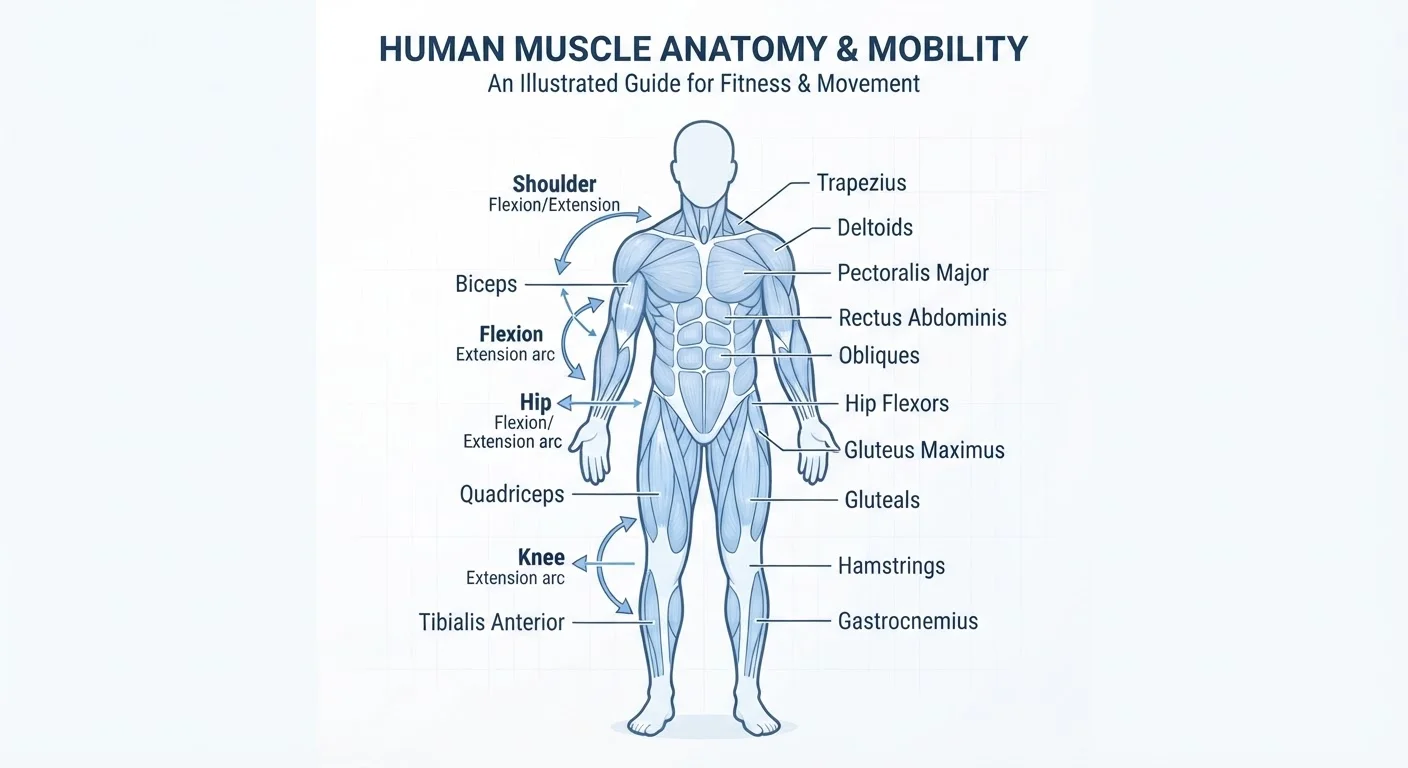
The evidence doesn't support that split. Muscles are elastic structures that produce force most effectively when they can move through their full natural range. A hamstring that can't lengthen fully will limit hip hinge mechanics during a deadlift. A tight hip flexor will undermine glute activation in a squat. Conversely, passive flexibility without supporting strength leaves joints poorly stabilized — increasing, not decreasing, the risk of strain.
This is the core insight: strength and flexibility are not opposing ends of a spectrum — they are complementary capacities that amplify each other when trained together. For a broader foundation on this topic, see our comprehensive resource on strength and flexibility training.
What the Science Says About Full-Range Training
Exercise physiology research has consistently shown that resistance training performed through a full range of motion produces flexibility gains comparable to static stretching alone — and in some studies, superior ones. The mechanism involves the lengthening of muscle fibers under load, which stimulates adaptations in both the contractile tissue and the surrounding connective structures.
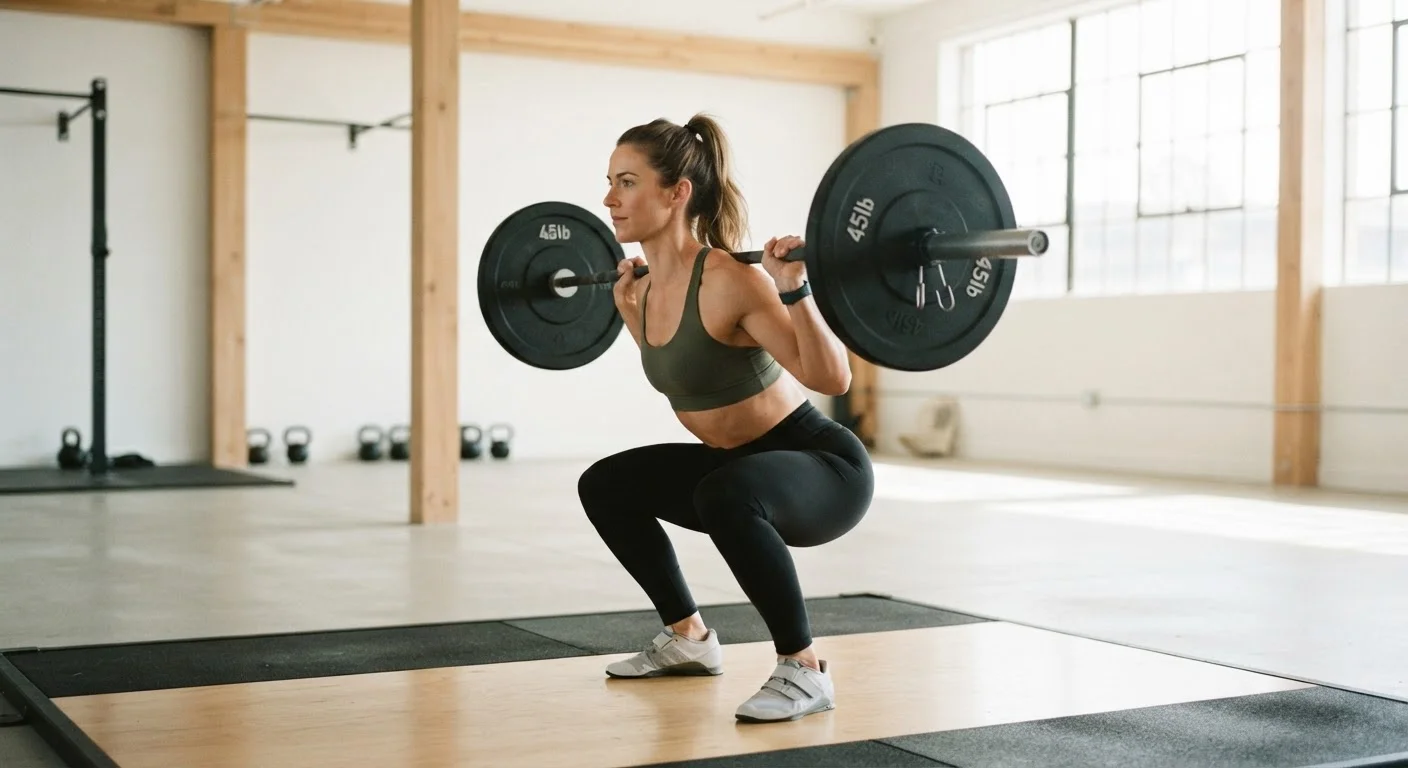
This principle has a practical name in training: strength through length. Exercises like the Romanian deadlift, deep goblet squat, and Bulgarian split squat all demand that a muscle both lengthen and generate force simultaneously — the exact combination that drives integrated adaptation.
≈ Equal
Flexibility gains: full-range lifting vs. static stretching
Multiple peer-reviewed studies, including a 2021 review in the Journal of Strength and Conditioning Research, found resistance training through full range of motion produced flexibility improvements comparable to dedicated stretching protocols.
6–8 weeks
Timeline for measurable flexibility improvement
Exercise science research generally shows that consistent, progressive flexibility training produces measurable range-of-motion gains within six to eight weeks in healthy adults.
Understanding how to apply progressive challenge to flexibility — the same way you would to strength — is a key skill for long-term development. Our article on applying progressive overload to flexibility work explains this principle in depth.
What Happens When You Train Only One
Training exclusively for strength without mobility work often produces a predictable pattern: short, stiff muscles that generate impressive force in a narrow range — but struggle with everyday demands like reaching overhead, squatting to the floor, or rotating through the spine. Over time, these limitations create compensatory movement patterns that load joints unevenly and raise injury risk.
Training only for flexibility, on the other hand, can produce hypermobility without control. Joints that move freely but lack muscular support to stabilize them are vulnerable — particularly under load or during sudden directional changes.
Test Your Active vs. Passive Range
A useful self-check: compare how far you can move a joint passively (with external help or gravity) versus actively (under your own muscular control). A large gap between the two suggests flexibility without supporting strength — an area worth training deliberately. If the gap is wide in multiple joints, consider working with a qualified movement coach.
The most functional bodies — from athletes to aging adults staying active through their later decades — tend to demonstrate what researchers call active range of motion: the ability to move fluidly and with control through positions that are both strong and open. For a look at how these capacities change across a lifetime, see our guide on strength and flexibility across the decades.
Practical Ways to Train Both Together
Integrating strength and flexibility doesn't require doubling your training time. Several approaches naturally build both simultaneously:
- Full-range resistance training: Prioritize exercises that take muscles to end-range under load — deep squats, full overhead press, single-leg Romanian deadlifts.
- Controlled articular rotations (CARs): Joint circling movements performed with active muscular engagement, which build both awareness and strength at the edges of range.
- Isometric holds at end-range: Pausing for several seconds at the longest position of a movement reinforces both flexibility and stability simultaneously.
- Movement modalities that blend both: Yoga, Pilates, and calisthenics each integrate strength and flexibility by design. Our comparison of yoga, Pilates, and calisthenics can help you find the right fit.
When you're ready to structure these approaches into a sustainable weekly plan, our guide to building a weekly strength and flexibility routine offers a practical framework.
This article is for general informational purposes only and does not constitute medical or fitness advice. Always consult a qualified healthcare or exercise professional before beginning a new training program, particularly if you have existing injuries or health conditions.
Frequently Asked Questions
Not inherently. Research suggests that resistance training through a full range of motion can improve or maintain flexibility. Problems arise when training uses partial ranges repeatedly without complementary mobility work, which can shorten effective muscle length over time.
General guidance favors dynamic mobility work before strength sessions and static stretching after. Extended static stretching before heavy lifting may temporarily reduce force output, so save deep holds for your cool-down. Always warm up the joints and tissues first regardless of session type.
Noticeable gains in flexibility can appear within four to eight weeks of consistent practice. Strength adaptations typically become measurable within six to eight weeks. Both qualities require ongoing progressive training to sustain and build upon initial gains.
Yes, with appropriate programming. Both qualities become increasingly important for healthy aging, supporting balance, independence, and fall prevention. Older adults should consult a qualified healthcare or fitness professional before beginning a new training program, especially with any existing joint or health conditions.
Yoga is one effective method that naturally combines both qualities, particularly styles like Ashtanga and Vinyasa that load muscles isometrically through sustained poses. It's not the only path — calisthenics and Pilates also integrate both. See how these approaches compare in our related guide.
The content on this site is for informational purposes only and is not a substitute for professional advice. Always consult a qualified professional for guidance specific to your situation.