
The 20s and 30s: Peak Capacity and the Subtle Shift
For most people, muscular strength and aerobic capacity peak somewhere in the late 20s to early 30s. Connective tissue is resilient, recovery is fast, and the body adapts readily to new training stimuli. These years often feel like a physical baseline — a standard to which later decades are compared.
What many people don't realize is that the physiological groundwork for later-life capacity is laid precisely during this period. Bone density, muscle fiber composition, and movement habits established in the 20s and 30s all influence how the body responds to ageing. A sedentary lifestyle during peak years can accelerate declines that would otherwise be gradual.
From the mid-30s onward, muscle protein synthesis begins to slow slightly, and without sufficient stimulus — through resistance training or physically demanding activity — lean mass starts a gradual decline. This is not cause for alarm; it is simply useful information. Prioritizing both strength and flexibility during this window pays dividends in every subsequent decade.
Build Your Base Before You Need It
The strength and mobility you build in your 20s and 30s creates a physiological reserve that slows later-life decline. Think of consistent training during peak years as a long-term investment rather than a short-term performance goal. Even modest, regular activity during this period significantly influences how the body responds to ageing.
The 40s and 50s: Managing Change Without Surrendering Capacity
By the 40s, most adults begin to notice tangible changes: recovery takes longer, joints feel less supple in the morning, and it may require more deliberate effort to maintain previous fitness levels. Hormonal shifts — including declining estrogen and testosterone — contribute to changes in muscle mass, fat distribution, and bone density.
Flexibility often becomes a more pressing concern during this period. Collagen fibers in tendons and ligaments gradually lose elasticity, and years of repetitive postures (desk work, driving) can create habitual tightness in the hips, thoracic spine, and shoulders. Mobility work stops being optional and becomes a core part of a balanced routine.
~3–8%
Muscle mass lost per decade after age 30
Research estimates suggest adults lose roughly 3–8% of muscle mass per decade without sufficient physical activity, with the rate accelerating after age 60.
~30%
Reduction in flexibility by age 70 vs young adulthood
Studies on joint range of motion suggest adults may experience roughly 20–30% reduction in flexibility by their 70s compared to young adulthood, depending on activity levels and joint site.
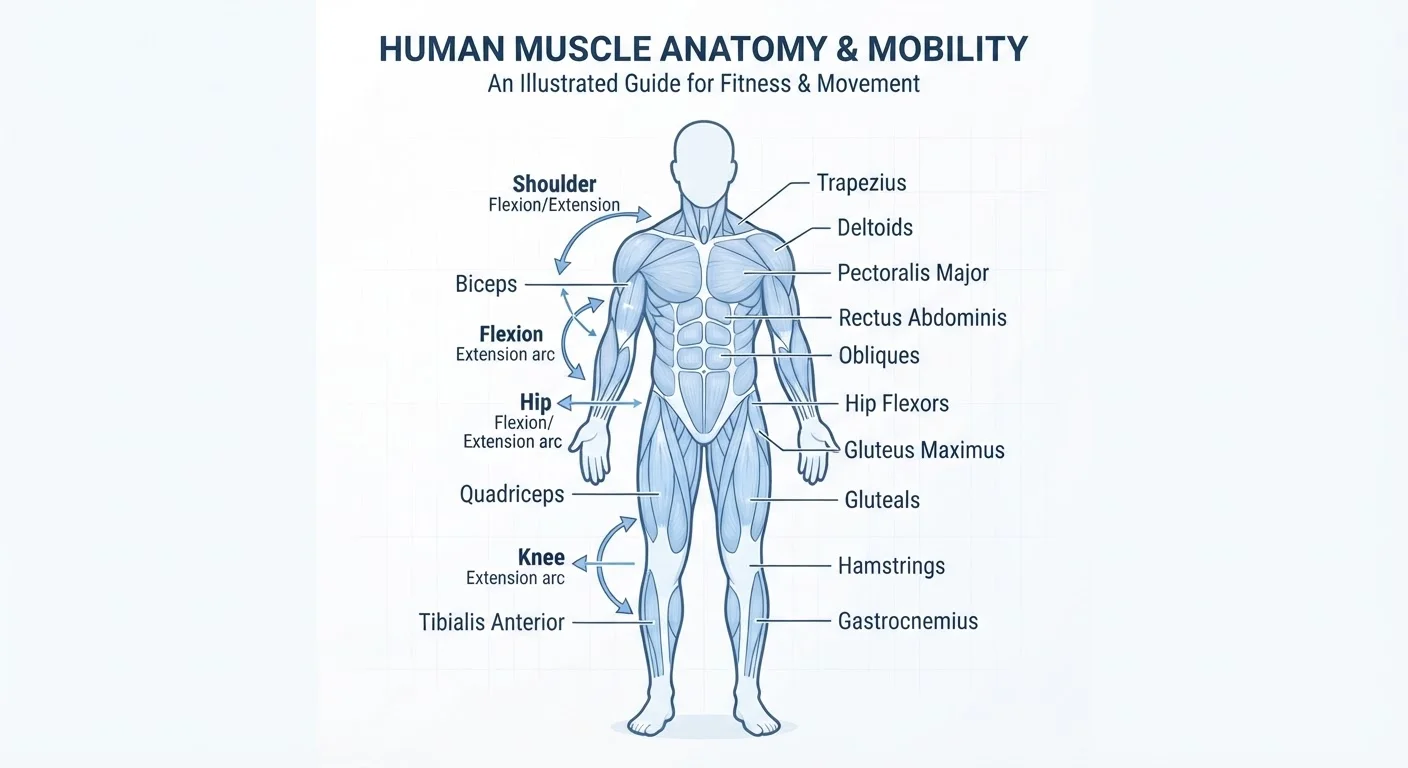
The 50s tend to accelerate these trends. Sarcopenia — the age-related loss of skeletal muscle — becomes more pronounced, making consistent resistance training increasingly important. Research indicates that progressive overload principles apply just as effectively to older adults as to younger ones. The same principles of progressive overload used in strength training can also be applied systematically to improve range of motion over time.
Functional movement quality — the ability to squat, hinge, push, pull, and rotate — becomes a more meaningful training goal than raw performance metrics. See how home fitness principles shift through the 40s and 50s for practical programming ideas.
The 60s and Beyond: Preserving What Matters Most
From the 60s onward, the primary training goal for many adults shifts toward preserving independence, reducing fall risk, and maintaining the strength and mobility needed for everyday life. This is not a retreat from fitness — it is a refinement of purpose.
Balance and proprioception (the body's sense of its own position in space) deserve dedicated attention, as both decline with age and contribute significantly to fall risk. Exercises that challenge balance — single-leg movements, controlled transitions between positions — support neuromuscular coordination alongside strength.
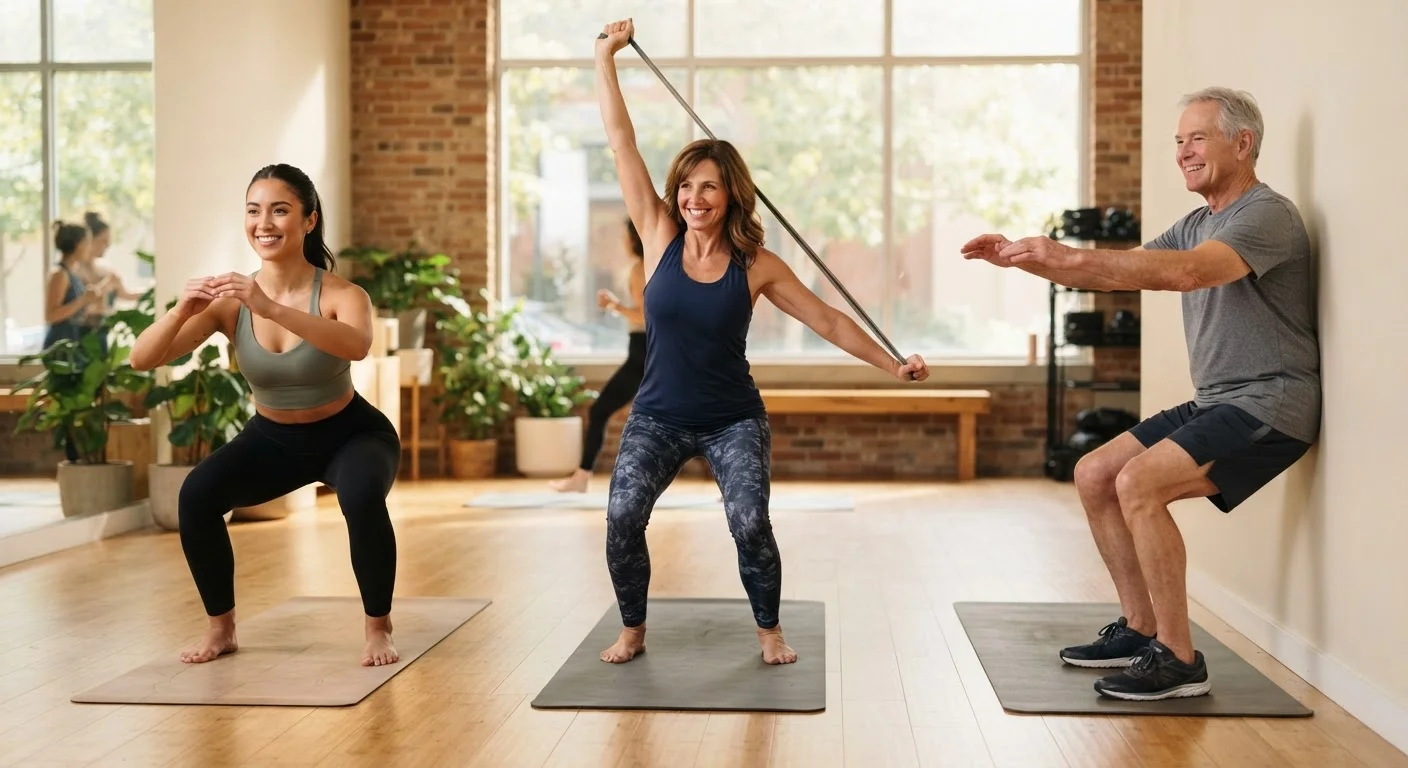
Contrary to a common misconception, older adults respond robustly to resistance training. Muscle protein synthesis, though slower, still occurs in response to mechanical stimulus. Exercises don't need to be extreme to be effective; bodyweight movements, resistance bands, and moderate free weights all provide sufficient stimulus when applied consistently with appropriate progression.
For a broader view of how daily movement needs evolve across the lifespan, the guide to active living across the decades offers additional context. And for a comprehensive framework covering training principles, programming, and recovery, the comprehensive strength and flexibility resource provides an end-to-end reference.
This article is for general informational purposes only and does not constitute medical advice. Individuals with existing health conditions, injuries, or other concerns should consult a qualified healthcare professional before beginning or modifying any exercise program.
Frequently Asked Questions
Muscle strength generally peaks in the late 20s to early 30s. A gradual decline typically begins around the mid-30s, with more noticeable changes occurring after age 50. Regular resistance training can significantly slow this process at every stage.
Yes. Research consistently shows that adults in their 60s, 70s, and beyond can increase muscle mass and strength through progressive resistance training. The rate of gain may be slower than in younger adults, but meaningful improvements are achievable.
Flexibility declines partly due to changes in collagen — the protein in tendons and ligaments — which becomes stiffer and less elastic over time. Reduced habitual movement also plays a significant role. Regular stretching and mobility work can partially counteract these changes.
General public health guidance suggests that adults perform flexibility exercises at least two to three days per week. Daily gentle mobility work is generally safe and may provide additional benefit for joint comfort and range of motion.
A combination of resistance training, aerobic activity, and mobility work provides the broadest benefits. Functional exercises — movements that mirror everyday tasks like squatting, reaching, and carrying — are especially valuable for maintaining independence and reducing injury risk.
It is never too late to benefit from physical activity. Studies show that previously sedentary older adults who begin structured exercise programs experience measurable improvements in strength, balance, and mobility. Always consult a healthcare professional before starting a new exercise program, especially with existing health conditions.
The content on this site is for informational purposes only and is not a substitute for professional advice. Always consult a qualified professional for guidance specific to your situation.