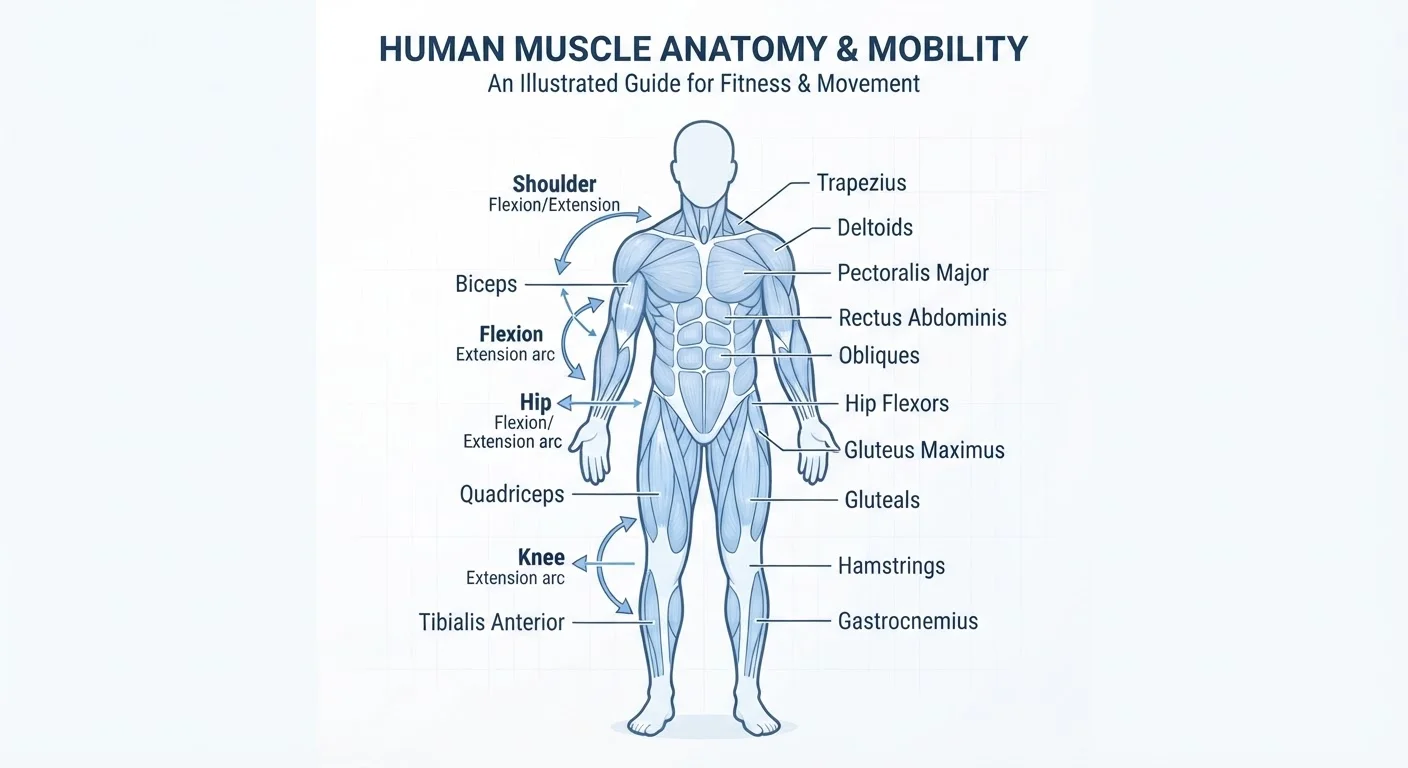


Why Balanced Development Matters
Most fitness programs prioritize one quality — strength or flexibility — at the expense of the other. The result is a body that may be powerful but restricted, or supple but structurally weak. Balanced physical development means training both qualities together, so that strength is expressed through a full range of motion and flexibility is supported by muscular control.
This integrated approach is the foundation of functional fitness: the ability to move efficiently and safely in real life, not just under controlled gym conditions. Whether you're managing an active lifestyle, returning from a period of inactivity, or building on an existing routine, understanding how these two qualities interact is essential.
For a broader look at training without gym equipment, see our complete guide to home-based fitness. And if you're entirely new to this type of training, our grounded introduction to strength and mobility is a practical starting point.
2–3x
Injury risk reduction with combined training
Research in the Journal of Strength and Conditioning Research suggests that combining mobility and resistance training significantly lowers musculoskeletal injury rates compared to resistance training alone.
8–12 weeks
Typical timeline for measurable flexibility gains
Sports medicine literature generally indicates that consistent static and dynamic stretching over 8–12 weeks produces clinically meaningful improvements in range of motion.
150 min
Weekly moderate activity recommended by health authorities
The U.S. Department of Health and Human Services Physical Activity Guidelines recommend at least 150 minutes of moderate-intensity activity per week for adults.
Core Principles of Functional Strength
Functional strength is built around movement patterns rather than isolated muscles. The primary patterns — push, pull, hinge, squat, carry, and rotate — mirror the demands of everyday movement and athletic activity. Training these patterns develops strength that transfers beyond the gym.
Progressive Overload
Strength adapts when the body is challenged slightly beyond its current capacity. This principle, called progressive overload, means gradually increasing resistance, volume, or complexity over time. It applies equally to bodyweight exercises and weighted training.
Movement Quality Before Intensity
Before adding load, a movement should be controlled, symmetrical, and pain-free. This applies to beginners and experienced athletes alike.
Start with Movement Quality, Not Load
Before adding resistance, confirm you can perform each movement pattern through a full, pain-free range. Rushing to add weight before movement quality is established is one of the most common causes of stalled progress and overuse injury. Even experienced exercisers benefit from periodic technique resets.
Compound Over Isolated
Multi-joint exercises like squats, deadlifts, rows, and press variations train multiple muscle groups simultaneously and require active stabilization — making them more efficient and more functional than single-joint isolation work for most training goals.
Perform your mobility work immediately after strength sets, not just at the end of a session — this capitalizes on elevated tissue temperature and reinforces joint range under load.
Warm, post-exertion tissue is more pliable, and pairing mobility drills with strength work creates neuromuscular associations that accelerate lasting range-of-motion gains.
When selecting strength exercises, prioritize movements that also require active flexibility — such as deep squats, Romanian deadlifts, and overhead pressing — to build both qualities simultaneously.
Compound movements that demand end-range control train the nervous system to feel safe and strong through the full joint arc, which is a more durable adaptation than passive stretching alone.
Mobility and Flexibility: What's the Difference?
These terms are often used interchangeably, but they describe distinct qualities:
- Flexibility is the passive capacity of a muscle or connective tissue to lengthen. It describes how far a tissue can be stretched when external force is applied.
- Mobility is the active, neuromuscular ability to control movement through a joint's available range. It combines flexibility with strength and motor control.
High flexibility without mobility can actually increase injury risk — the nervous system won't allow force production in ranges it doesn't trust. This is why training active control through end-range positions is more valuable than passive stretching alone.
Practices like yoga and mindful movement are powerful tools for developing both. Explore how yoga and meditation support holistic physical health for complementary movement strategies.
“Strength without flexibility is incomplete, and flexibility without strength is fragile. The goal is to develop a body that is both capable and resilient across a full range of motion.”
— Stuart McGill, Professor Emeritus of Spine Biomechanics, University of Waterloo
Programming Strength and Flexibility Together
Effective programming doesn't separate strength days from flexibility days — it weaves both into every session. A simple structure looks like this:
- Dynamic warm-up (5–10 min): Joint circles, controlled leg swings, and mobility drills prepare tissue and prime the nervous system.
- Strength work (20–40 min): Compound movements using progressive overload. Rest periods can include targeted mobility drills relevant to the working joints.
- Flexibility and cooldown (10–15 min): Static stretching and passive holds are most effective when tissue is already warm. Focus on areas of restriction identified during the session.
For a detailed breakdown of how to structure your training week, our weekly routine guide walks through practical scheduling strategies that prevent overloading while maintaining training frequency.
Pain Is Not Progress
Sharp, joint-localized, or persistent pain during training is a signal to stop — not push through. Distinguishing between muscle fatigue and tissue pain is essential for safe training. If discomfort persists beyond 48 hours or worsens with movement, consult a qualified healthcare or physical therapy professional before continuing.
Recovery Strategies That Support Progress
Adaptation happens during recovery, not during training. Without adequate recovery, progressive overload produces fatigue rather than improvement. Key recovery strategies include:
- Sleep: Most adaptation and tissue repair occurs during sleep. Adults generally need 7–9 hours per night to support consistent training progress.
- Active recovery: Light movement — walking, gentle yoga, or easy cycling — on rest days promotes circulation and reduces stiffness without adding training stress.
- Nutrition: Adequate protein supports muscle repair and growth. Carbohydrates replenish energy stores. General nutritional guidance is beyond the scope of this article; consult a registered dietitian for individualized advice.
- Stress management: Chronic psychological stress elevates cortisol, which can impair both recovery and tissue repair. Mind-body practices are a practical complement to physical training. Learn more at our mind-body wellness hub.
Special Populations: Consult First
If you have a pre-existing musculoskeletal condition, are pregnant, are over 65, or are managing a chronic health condition, consult a licensed healthcare provider or certified physical therapist before beginning a new strength or flexibility program. General guidance in this article is not a substitute for individualized medical advice.
Getting Started and Building Consistency
The most effective training program is one you can sustain. Consistency over months and years produces far greater results than brief periods of intense effort followed by inactivity.
Begin with two to three sessions per week, each integrating both strength and flexibility work. Track progress not just by load lifted but by improvements in range of motion, ease of movement, and recovery quality. These qualitative markers often signal meaningful adaptation before numbers change.
For those managing everyday health conditions, movement-based approaches can support wellbeing alongside conventional care. Explore the common conditions hub for natural approaches to everyday health challenges that may be relevant to your training context.
Building lasting physical capacity is a long-term practice. Prioritize process over outcome, adjust programming when life demands shift, and return to fundamentals whenever progress stalls. The principles covered in this guide — functional strength, active mobility, integrated programming, and consistent recovery — form a framework that supports physical health across a lifetime.
This article is for general informational and educational purposes only and does not constitute medical advice, diagnosis, or treatment. Always consult a qualified healthcare professional before beginning any new exercise program.
The content on this site is for informational purposes only and is not a substitute for professional advice. Always consult a qualified professional for guidance specific to your situation.