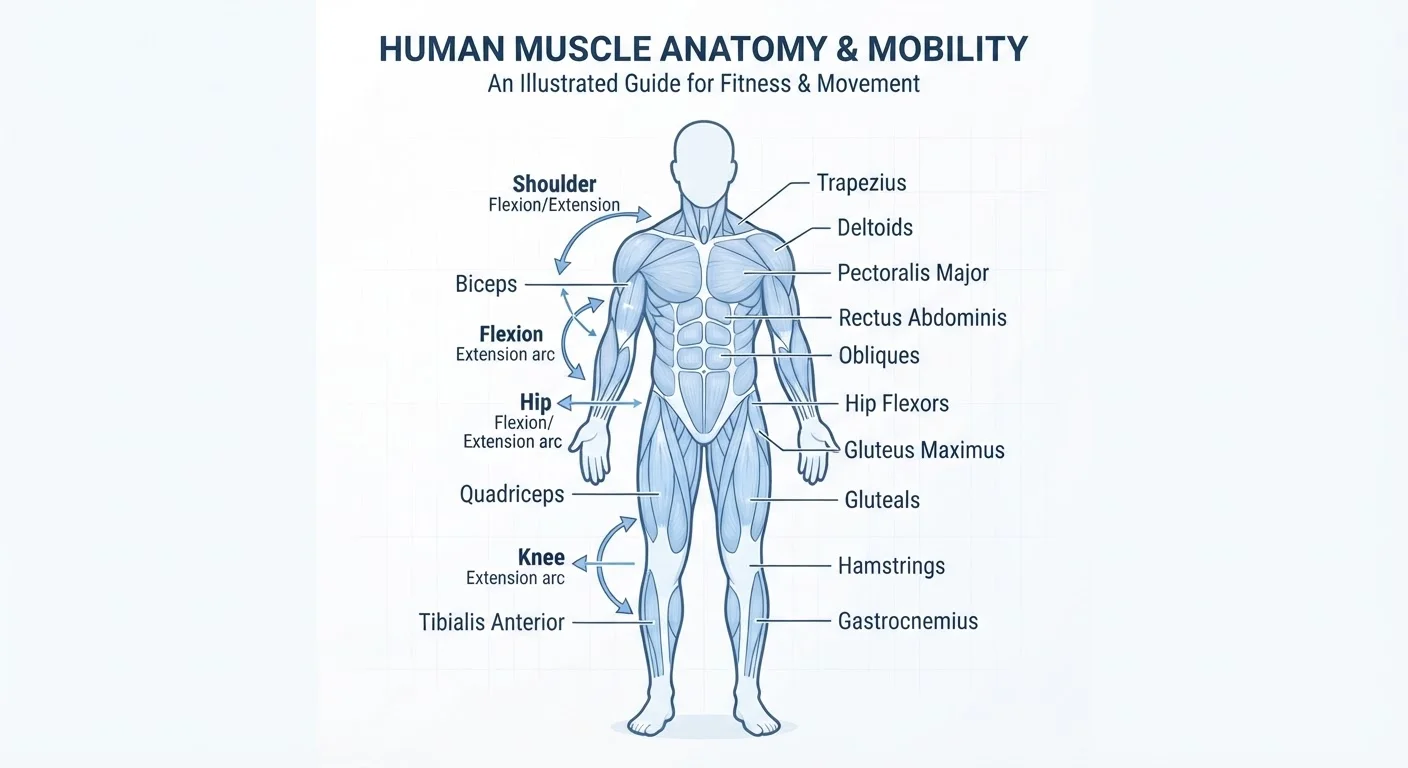

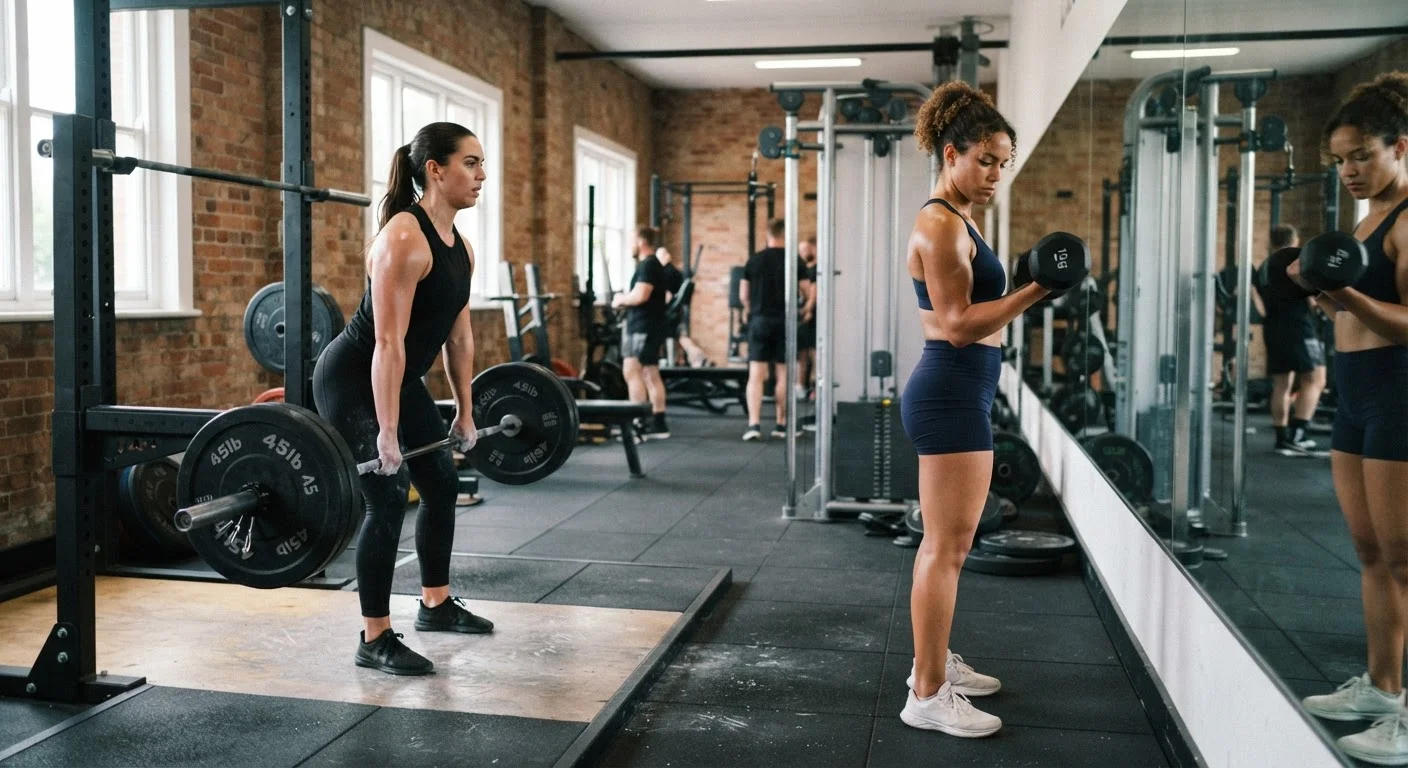
Option A
Functional Strength Training
The performance-first, movement-centered approach.
Best for: Anyone who wants to move better, reduce injury risk, and build real-world physical capacity that carries over into daily life.
Option B
Aesthetic Muscle Building
The appearance-focused, hypertrophy-driven method.
Best for: Those whose primary goal is increasing visible muscle size, body symmetry, and physique definition through targeted resistance training.
Defining the Two Approaches
When people talk about getting stronger, they often mean two quite different things. Functional strength refers to the ability to produce force across the movement patterns you actually use — lifting, pushing, pulling, rotating, and stabilizing under load. Aesthetic muscle building, sometimes called bodybuilding-style or hypertrophy training, focuses on increasing muscle size and visual definition, often through isolation exercises targeting specific muscle groups.
Both approaches use resistance training as their core tool, and both will produce stronger muscles. The meaningful differences lie in how exercises are selected, why they're performed, and what outcomes each prioritizes. Understanding that distinction shapes your entire approach to programming, recovery, and long-term progress. For a broader look at how strength and flexibility interrelate, see why flexibility and strength work together.
| Criterion | Functional Strength | Aesthetic Muscle Building |
|---|---|---|
| Primary goal | Movement performance and capacity | Muscle size and visual definition |
| Exercise type | Multi-joint, compound movements | Isolation and compound mix |
| Rep range focus | Varies; often 3–8 for strength | Typically 8–15 for hypertrophy |
| Planes of motion | Multi-planar, 3D movement | Often single-plane isolation |
| Stability emphasis | High — trains stabilizers explicitly | Lower — often uses fixed equipment |
| Real-world carry-over | High — mirrors daily movement | Moderate — builds raw muscle capacity |
| Injury resilience focus | Central to programming logic | Secondary to hypertrophy goals |
| Best suited for | Performance, longevity, rehab base | Physique goals, muscle symmetry |
How Each Approach Shapes Movement and Muscle
Functional strength training is built around compound, multi-joint movements that mirror real-life demands: squats, deadlifts, carries, rows, and presses that engage multiple muscle groups simultaneously and train the body to coordinate force across joints. The emphasis is on movement quality — how well your body controls load through a full range of motion — rather than maximizing the size of any one muscle. The eight foundational movement patterns provide a clear framework for building this kind of strength systematically.
Aesthetic muscle building, by contrast, often relies heavily on isolation exercises — cable curls, leg extensions, lateral raises — that allow precise targeting of individual muscles to maximize their hypertrophic response. Rep ranges typically sit in the 8–15 range with shorter rest periods to maximize metabolic stress and muscle damage, two of the primary drivers of hypertrophy alongside mechanical tension.
58%
Strength retained with compound training
Research published in the Journal of Strength and Conditioning Research suggests multi-joint compound exercises produce comparable or superior strength gains to isolation exercises for most muscle groups.
3 planes
Planes of motion in functional training
Functional training programs typically incorporate movement across the sagittal, frontal, and transverse planes — mirroring the three-dimensional demands of daily life and sport.
8–15 reps
Optimal hypertrophy rep range
Exercise science consensus, summarized in reviews such as those by Schoenfeld (2010), identifies mechanical tension, metabolic stress, and muscle damage as the three primary drivers of hypertrophy.
The practical result: a functional training approach tends to improve how you perform in physical tasks, while aesthetic training tends to change how you look in a mirror. Neither outcome is inherently superior — they serve different goals.
Injury Risk, Longevity, and Real-World Carry-Over
One distinction that matters for long-term health is how each approach handles stability, mobility, and injury resilience. Functional training explicitly trains the stabilizer muscles, proprioception (the body's sense of its own position), and movement patterns under realistic load conditions. This can reduce injury risk in everyday activities and sport — though no training method eliminates injury risk entirely.
Aesthetic training, when performed with good technique and appropriate load progression, is also safe and beneficial for most healthy adults. The concern sometimes raised is that heavy isolation work without a strong movement foundation can create muscular imbalances — for example, overdeveloping the chest and front of the shoulder while undertraining the upper back. These imbalances can gradually influence posture and joint mechanics. This is why many exercise professionals recommend building a movement foundation before specializing in high-volume isolation work.
A Note on Special Populations
Older adults, those recovering from injury, and people managing chronic conditions should approach both functional and aesthetic training with additional care. Movement-based programming under the guidance of a qualified physical therapist or certified trainer can be particularly beneficial for these groups. Always consult a healthcare professional before changing your training approach if you have an existing health condition.
For readers comparing broader training goals, strength versus endurance home training covers another important axis of physical development worth understanding alongside the functional-vs-aesthetic question.
Building a Program That Draws on Both
In practice, the most robust training programs don't treat these as mutually exclusive camps. A well-designed routine might anchor workouts around functional compound lifts — deadlifts, squats, push variations, pull variations — then add targeted accessory work to develop specific muscles or address weak points. This structure delivers both movement competency and the hypertrophic stimulus for muscle growth.
The comprehensive guide to strength and flexibility training outlines programming principles that support exactly this kind of balanced development. Similarly, yoga, Pilates, and calisthenics offer movement-based alternatives that blend functional strength with flexibility work.
The key is aligning your training structure with your primary goal while accounting for the full picture of physical health — not just how muscles look, but how they move, recover, and hold up over time.
This article is for general informational purposes only and does not constitute medical or personal training advice. Consult a qualified healthcare or fitness professional before beginning any new exercise program, particularly if you have an existing health condition or injury.
The content on this site is for informational purposes only and is not a substitute for professional advice. Always consult a qualified professional for guidance specific to your situation.