

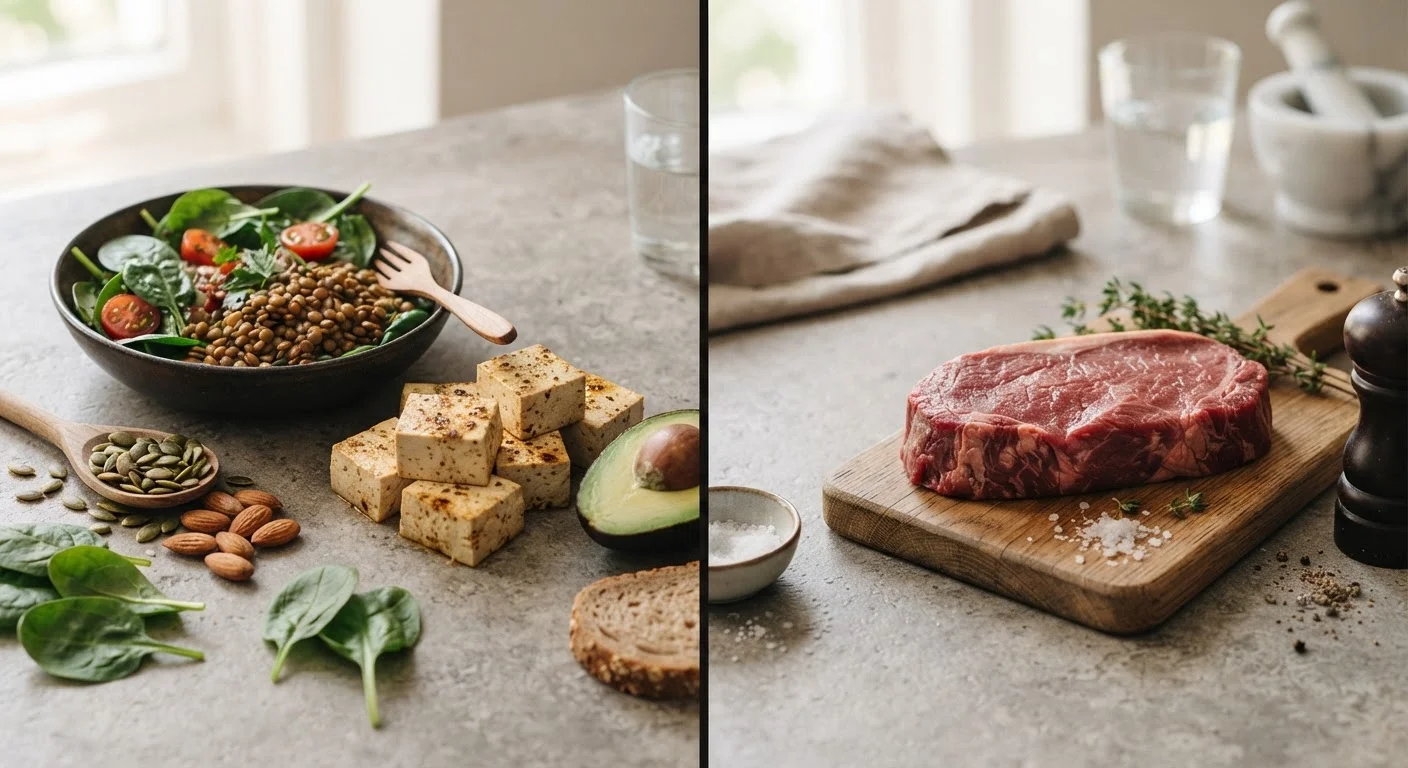
Option A
Haem Iron
The efficiently absorbed, animal-derived form of dietary iron.
Best for: Individuals who eat meat, poultry, or fish and want to maintain iron status with less dietary planning.
Option B
Non-Haem Iron
The plant-sourced form that requires strategic eating for optimal uptake.
Best for: Vegetarians, vegans, and flexitarians who rely on legumes, grains, and leafy greens to meet iron needs.
How Haem and Non-Haem Iron Differ at a Biological Level
Dietary iron arrives in two chemically distinct forms, and the distinction begins at the molecular level. Haem iron is derived from haemoglobin and myoglobin in animal tissues — primarily red meat, poultry, and seafood. It enters intestinal cells via a dedicated transporter (HCP1) largely intact, which is why absorption rates remain relatively consistent regardless of what else is on the plate.
Non-haem iron, found in legumes, whole grains, nuts, seeds, and leafy greens, exists as free ionic iron (Fe³⁺) in food. Before absorption, it must be reduced to Fe²⁺ by an enzyme called duodenal cytochrome B (Dcytb) on the surface of intestinal cells. This extra step — and the fact that non-haem iron is far more reactive to other dietary compounds — is what makes it considerably more sensitive to the surrounding food environment.
This is not a flaw in plant foods; it is simply a biological reality that, once understood, can be navigated with practical meal-planning. To understand the broader nutritional picture of eating this way, see our article on plant-based eating trade-offs.
| Criterion | Haem Iron | Non-Haem Iron |
|---|---|---|
| Food sources | Meat, poultry, seafood | Legumes, grains, seeds, vegetables |
| Typical absorption rate | 15–35% | 2–20% |
| Absorption pathway | HCP1 transporter, direct | Requires Fe³⁺ → Fe²⁺ reduction first |
| Effect of meal composition | Minimal influence | Strongly influenced by co-consumed foods |
| Enhanced by vitamin C | No significant effect | Yes — meaningfully increases uptake |
| Inhibited by tea/coffee | Minimally | Yes — polyphenols reduce absorption |
| Inhibited by phytates | Minimally | Yes — especially from whole grains and legumes |
| Dietary planning required | Low | Moderate to high |
Absorption Rates and What Influences Them
Haem iron is absorbed at an estimated 15–35% efficiency, and this rate does not vary dramatically with meal composition. Non-haem iron, by contrast, absorbs at 2–20% — a range so wide that dietary context can effectively double or halve the amount your body actually takes in.
Several factors enhance non-haem iron absorption:
- Vitamin C (ascorbic acid): Consumed in the same meal, vitamin C reduces Fe³⁺ to the more absorbable Fe²⁺ and forms a soluble chelate that resists inhibition. Even modest amounts — a squeeze of lemon juice on lentils, or bell pepper in a bean dish — can significantly boost uptake.
- Organic acids: Citric and malic acids in fruits and vegetables provide a similar enhancing effect.
- The meat factor (for omnivores): Even small amounts of meat in a mixed meal appear to enhance non-haem iron absorption, a mechanism not yet fully explained.
Conversely, several common dietary components inhibit non-haem iron absorption when consumed at the same meal:
- Phytates: Present in whole grains and legumes, phytates bind iron. Soaking, fermenting, or sprouting reduces phytate content.
- Polyphenols: Tannins in tea and coffee, and certain compounds in red wine, bind non-haem iron. Spacing these beverages away from iron-rich meals is a practical workaround.
- Calcium: High-calcium foods or supplements taken simultaneously can compete with iron absorption at the intestinal transporter level.
2–3×
Higher iron intake targets sometimes cited for plant-based eaters
Some nutrition bodies have suggested plant-based eaters may need substantially more total dietary iron than omnivores due to lower non-haem bioavailability, though guidance varies by organisation.
Up to 3×
Increase in non-haem iron absorption with vitamin C
Research published in nutritional biochemistry literature indicates that ascorbic acid consumed in the same meal can increase non-haem iron absorption several-fold compared to eating without it.
~60%
Reduction in non-haem absorption from tannins in tea
Studies on tea polyphenols have demonstrated absorption inhibition rates that make timing of tea consumption a genuinely meaningful practical consideration for iron-conscious plant-based eaters.
For a deeper look at how meal composition shapes iron uptake, how other nutrients affect iron absorption covers the mechanisms in detail.
Practical Implications for Plant-Based Eaters
When meat is reduced or removed from the diet, the body's iron supply shifts entirely to non-haem sources. This does not inevitably lead to deficiency — many long-term vegetarians and vegans maintain adequate iron status — but it does require deliberate dietary patterns that omnivores may not need to think about.
Plant foods richest in non-haem iron include cooked lentils and beans, tofu, tempeh, pumpkin seeds, fortified cereals, quinoa, and dark leafy greens such as spinach and Swiss chard. Pairing these with vitamin C-rich foods at the same meal (think tomatoes, citrus, broccoli, or capsicum) is one of the most evidence-supported strategies for improving uptake.
Because plant-based eaters rely entirely on the more variable non-haem form, some nutrition authorities suggest their iron intake targets may need to be higher than standard recommendations — though specific figures should be confirmed with a registered dietitian rather than applied as a personal prescription. Whole-food plant-based eating structured around diverse legumes, seeds, and vegetables naturally provides multiple iron sources, but planning still matters.
Regular blood work to monitor serum ferritin and haemoglobin is a sensible step for anyone who has recently transitioned away from meat. If you are also navigating protein needs on a plant-forward diet, protein on a plant-based diet offers relevant context. For those who have not fully eliminated meat, flexitarian eating approaches may provide useful middle ground.
This article is for general informational purposes only and does not constitute medical or nutritional advice. Consult a qualified healthcare professional or registered dietitian before making significant changes to your diet, particularly if you have a health condition or are in a life stage with elevated nutritional needs.
The content on this site is for informational purposes only and is not a substitute for professional advice. Always consult a qualified professional for guidance specific to your situation.