

Our Verdict
Plant-based eating offers meaningful health advantages backed by substantial research, particularly for cardiovascular and metabolic health. However, it is not nutritionally effortless — several key nutrients demand consistent planning or targeted supplementation. The quality of foods chosen within a plant-based framework matters enormously; a diet built on whole foods performs very differently from one relying on processed substitutes.
Best suited for health-conscious adults willing to invest some planning into meal composition, particularly those with cardiovascular risk factors or an interest in reducing ultra-processed food intake.
What 'Plant-Based' Actually Means
Plant-based eating sits on a spectrum rather than a fixed definition. At one end, a fully vegan diet eliminates all animal products. At the other, a flexitarian approach emphasizes plants while allowing occasional animal foods. In between lie vegetarian and pescatarian patterns, each with different nutritional profiles.
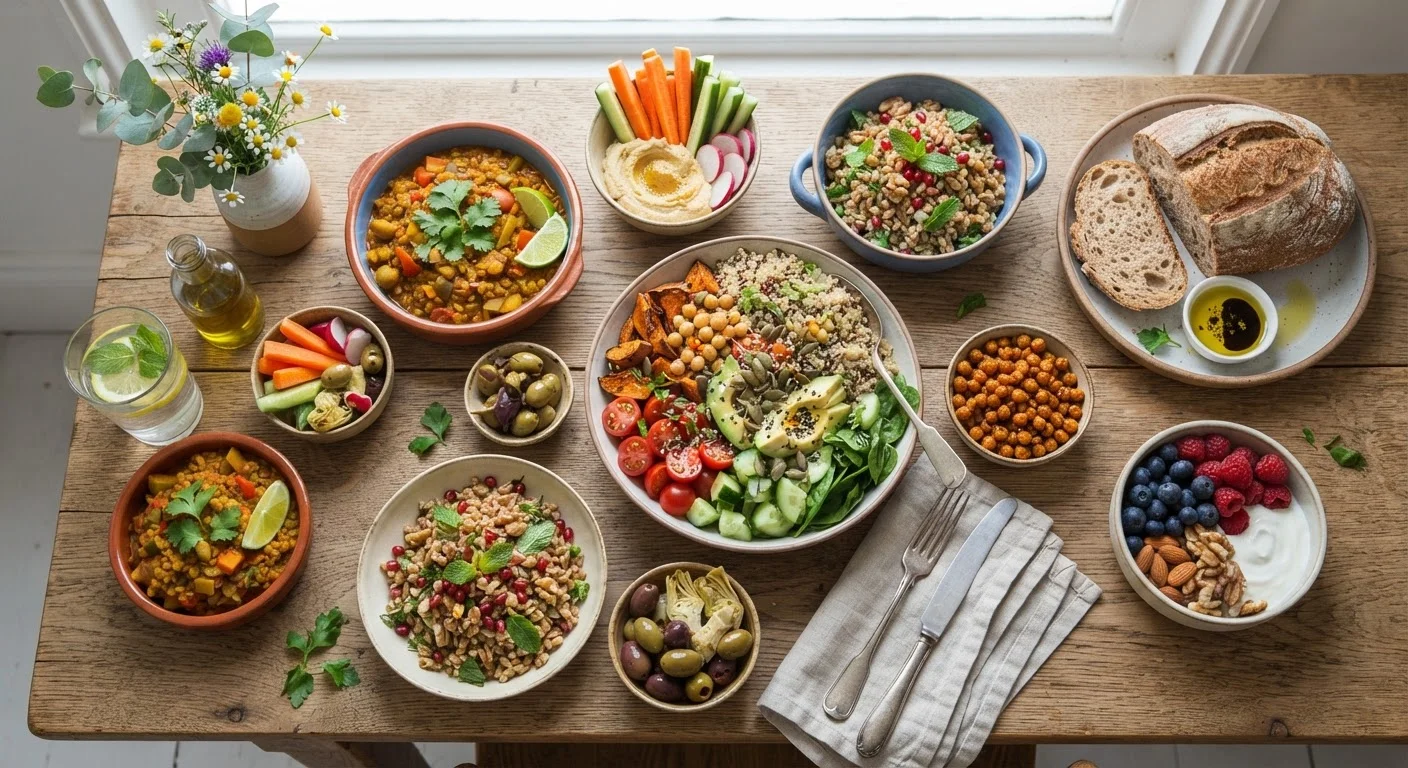
What unites these approaches is an emphasis on vegetables, fruits, legumes, whole grains, nuts, and seeds as dietary foundations. The Natural Diet Plans space covers a range of these frameworks, but what matters most in practice is the quality of foods chosen within whatever pattern a person adopts. A plant-based label does not automatically confer nutritional benefit — highly processed plant-based products may share little with a whole-food approach. For a side-by-side comparison, flexitarian eating offers a useful middle-ground perspective.
The Genuine Advantages
Research consistently supports several benefits associated with well-constructed plant-based diets. These include favorable effects on body weight, blood pressure, blood lipids, and insulin sensitivity. For a deeper look at the evidence, see plant-based diets and chronic disease.
Supports cardiovascular health through multiple pathways
Plant-based diets tend to reduce LDL cholesterol, blood pressure, and inflammatory markers — each an independent risk factor for heart disease. These effects appear consistently across large observational studies and controlled trials.
Naturally high fiber intake benefits gut health
Most Americans consume well below recommended fiber targets; plant-based diets typically invert this, promoting diverse gut microbiome composition and regular digestive function.
Associated with healthy body weight maintenance
Population data show plant-based eaters tend to have lower average BMIs, likely due to higher fiber and water content in whole plant foods, which supports satiety with fewer calories.
Rich in antioxidants and anti-inflammatory compounds
Fruits, vegetables, legumes, and whole grains provide phytonutrients — including flavonoids and carotenoids — that are absent from animal foods and associated with reduced oxidative stress.
May reduce type 2 diabetes risk
Whole-food plant-based diets are associated with improved insulin sensitivity and blood glucose regulation, according to both epidemiological and intervention research.
~10g/day
Average US fiber deficit vs. recommended intake
According to USDA dietary data, most American adults consume roughly 10–15 grams of fiber daily against a recommended 25–38 grams, a gap plant-based diets typically close.
~3%
Conversion rate of ALA to DHA in the body
Research estimates suggest less than 5% of the plant-derived omega-3 ALA is converted to the longer-chain DHA, underlining the challenge for those avoiding fish entirely.
Beyond disease risk, plant-forward diets tend to be naturally higher in dietary fiber, antioxidants, and phytonutrients — compounds found exclusively in plant foods that support diverse physiological functions. The Nutrients & Superfoods hub covers many of these compounds in depth.
The Real Nutritional Challenges
Reducing or eliminating animal foods creates predictable nutritional gaps that require active management rather than passive hope. These are not theoretical concerns — they are well-documented in clinical and population data.
Vitamin B12 is absent from unfortified plant foods
B12 is produced by microorganisms and found reliably only in animal products. Vegans and many vegetarians require supplementation or consistent use of fortified foods to avoid deficiency, which can affect neurological function.
Non-heme iron is less bioavailable than animal iron
Plant foods contain non-heme iron, which the body absorbs less efficiently than the heme iron in meat. Consuming vitamin C alongside iron-rich plant foods improves absorption, but overall intake needs careful attention.
Long-chain omega-3 fatty acids are limited
EPA and DHA — the omega-3 forms most relevant to cardiovascular and brain health — are found primarily in fatty fish. ALA from flaxseed and walnuts converts to EPA and DHA only inefficiently in the body.
Calcium and vitamin D require deliberate sourcing
Without dairy, calcium intake depends on fortified plant milks, tofu set with calcium salts, and leafy greens such as kale. Vitamin D from sunlight and fortified foods or supplements is important for both groups.
Zinc and iodine may fall below optimal levels
Phytates in legumes and grains can inhibit zinc absorption, while iodine — plentiful in seafood and dairy — is inconsistently present in plant foods and often low in plant-based eaters not using iodized salt.
Social and practical barriers can reduce adherence
Dining out, travel, and family meals often involve limited plant-forward options, creating friction that contributes to diet abandonment. Why people abandon plant-based diets examines these barriers in depth.
Whole-Food vs. Processed Plant-Based Products
Not all plant-based foods are nutritionally equivalent. Ultra-processed plant-based meat alternatives, snack foods, and desserts may be high in sodium, saturated fat, and refined starches. The nutritional advantages associated with plant-based eating in research largely reflect whole-food dietary patterns — not processed substitutes. Checking ingredient lists and prioritizing minimally processed options makes a significant difference in nutritional outcomes.
Protein is a frequent point of confusion. Complete proteins containing all essential amino acids are common in animal foods but achievable on plant-based diets through varied legume, grain, and seed combinations. Protein on a plant-based diet separates the myths from the nutritional science here.
Those who struggle with vegetable variety face additional complexity. Nutrient-dense eating for people who don't love vegetables offers practical strategies for broadening dietary variety without forcing disliked foods.
Making the Shift Sustainably
Overhauling a diet overnight rarely produces lasting change. A gradual, structured approach — adding more plant foods incrementally rather than removing animal foods abruptly — tends to be more sustainable and reduces the risk of inadvertent nutritional shortfalls. See transitioning to a whole-food diet without overhauling your life for practical, incremental steps.
It also helps to understand how whole foods compare to fortified alternatives. Fortified plant-based milks and cereals can contribute meaningfully to nutrient intake, but they are not nutritionally equivalent to whole-food sources across all parameters. Whole foods vs. fortified foods explores those trade-offs directly.
Anyone with existing health conditions, or those in special populations including pregnancy, childhood, or older adulthood, should consult a registered dietitian before significantly restructuring their diet. A healthcare professional can assess individual nutrient status through appropriate testing and help build a plan suited to personal needs.
This article is for general informational and educational purposes only and does not constitute medical or dietary advice. Always consult a qualified healthcare professional before making significant changes to your diet or supplement routine.
The content on this site is for informational purposes only and is not a substitute for professional advice. Always consult a qualified professional for guidance specific to your situation.