

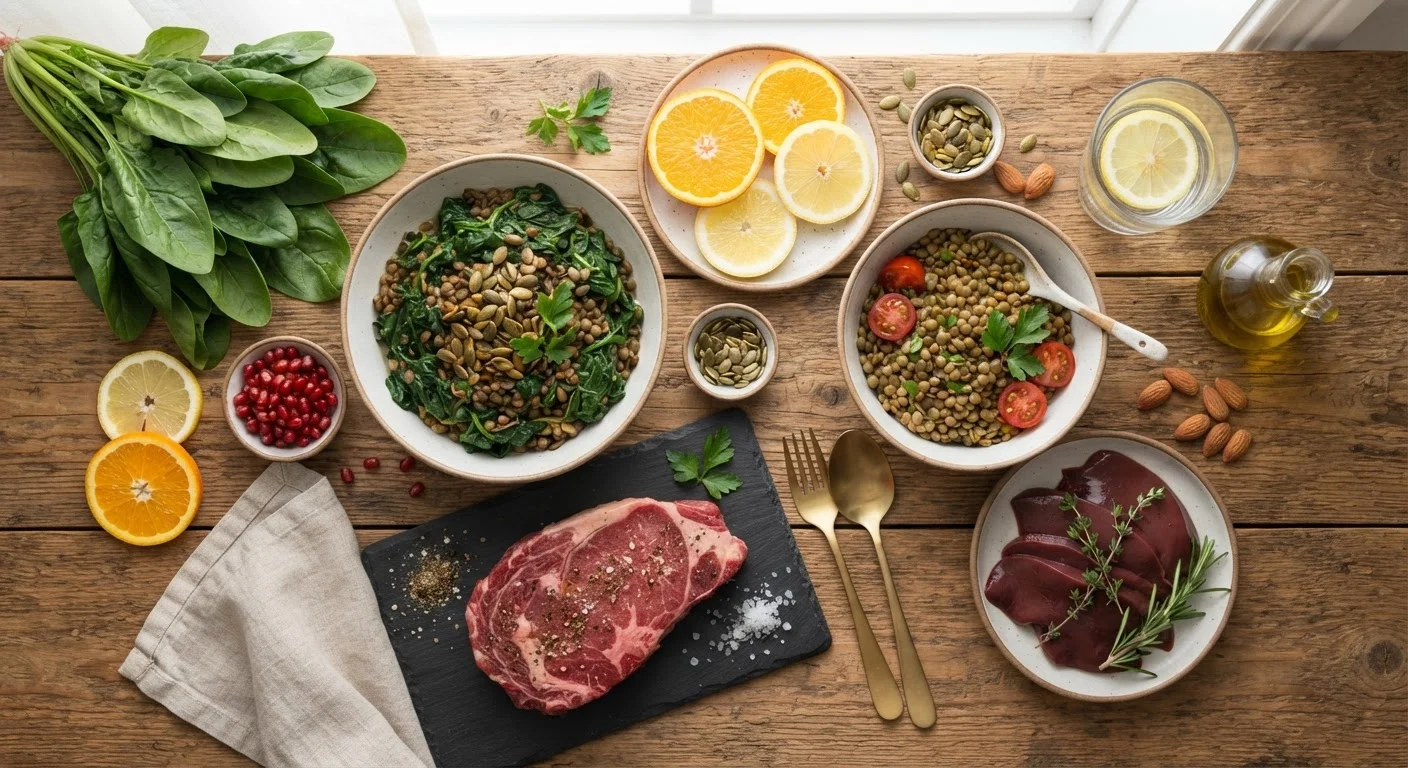
The Two Forms of Dietary Iron
Not all dietary iron is the same. The iron found in animal products — particularly red meat, poultry, and fish — is called haem iron, and it is absorbed with relative efficiency by the body, largely independent of what else you eat. The iron in plant foods — legumes, dark leafy greens, fortified cereals, tofu, nuts, and seeds — is called non-haem iron, and its absorption is considerably more variable.
For anyone relying heavily on plant sources, understanding what helps and what hinders non-haem iron absorption isn't an optional nutrition detail — it's a practical necessity. This distinction is explored in depth in our guide on plant-based iron vs haem iron.
Foods and Nutrients That Enhance Iron Absorption
Several dietary factors can meaningfully increase the amount of non-haem iron your digestive system absorbs:
2–6x
Increase in non-haem iron absorption with vitamin C
Research published in nutritional science literature shows vitamin C can multiply non-haem iron absorption by two to six times when consumed in the same meal.
2–20%
Absorption rate of non-haem iron
Non-haem iron absorption varies widely based on dietary context, compared to 15–35% for haem iron, according to established nutritional physiology.
~62%
Reduction in iron absorption from tea consumed with meals
Studies have shown that drinking tea alongside a meal can reduce non-haem iron absorption by approximately 62%, compared with drinking water.
- Vitamin C (ascorbic acid): Perhaps the most well-documented absorption enhancer, vitamin C converts non-haem iron from its less soluble ferric form (Fe³⁺) to its more readily absorbed ferrous form (Fe²⁺). Pairing foods like spinach or lentils with bell peppers, citrus, or strawberries in the same meal takes advantage of this mechanism.
- The 'meat factor': Compounds in animal muscle tissue — distinct from the iron content itself — appear to enhance non-haem iron absorption when both food types are eaten together. This may partly explain why omnivorous diets tend to produce stronger iron status even when plant sources are present.
- Fermented and sprouted foods: Fermentation and sprouting break down phytates, compounds naturally present in legumes and grains that bind to iron and impede absorption. Sourdough bread, fermented lentils, and sprouted beans may offer improved iron bioavailability compared to their unprocessed counterparts.
- Acidic cooking environments: Cooking in cast iron cookware or adding acidic ingredients like tomato to recipes has been shown to modestly increase the iron content of food while also supporting conversion to the more absorbable ferrous form.
A Simple Pairing Rule to Remember
When building an iron-rich meal from plant sources, include at least one vitamin C-rich ingredient in the same dish. Think lemon juice over lentils, tomatoes in bean stews, or citrus segments in a spinach salad. This habit requires no supplementation and works within everyday cooking.
Foods and Compounds That Inhibit Iron Absorption
Just as some dietary combinations support iron uptake, others can significantly reduce it. Key inhibitors include:
- Tannins and polyphenols: Found in tea, coffee, red wine, and some herbal infusions, these compounds bind to non-haem iron in the gut and form complexes the body cannot absorb. Consuming tea or coffee within an hour of an iron-rich meal can substantially reduce iron uptake.
- Calcium: Calcium competes with iron at shared intestinal absorption channels. Dairy-rich meals, or taking calcium supplements at the same time as iron-rich foods, can diminish iron absorption for both haem and non-haem sources — one of the few dietary factors shown to inhibit both forms. This is worth noting when considering how nutrient pairs interact, much like the relationship described in our article on vitamin D and calcium.
- Phytates (phytic acid): Present in whole grains, legumes, nuts, and seeds, phytates are strong iron chelators. While these foods are nutritious overall, their phytate content can reduce the net iron absorbed. Soaking, fermenting, or sprouting these foods before cooking substantially reduces phytate load.
- Oxalates: Found in spinach, beet greens, and some other vegetables, oxalates can reduce the bioavailability of the iron in those same foods — which is why spinach, despite its iron content, is not as reliable a source as its reputation suggests.
Understanding these interactions is central to closing micronutrient gaps — a broader issue explored in our guide to micronutrient gaps in everyday diets.
Iron Inhibitors Don't Mean Avoid These Foods
Whole grains, legumes, tea, and dairy are nutritious foods with broad health benefits. The goal is not to eliminate them but to be strategic about timing and pairing — particularly for those who depend heavily on plant-based iron or have clinically identified iron insufficiency. A varied, whole-food diet remains the foundation of good nutritional health.
Practical Strategies for Optimizing Iron Absorption
Translating the science into everyday eating habits doesn't require rigid meal planning. A few consistent practices can make a meaningful difference, particularly for individuals with elevated iron needs:
- Pair non-haem iron foods with vitamin C sources in the same meal — for example, adding lemon juice to lentil soup or serving bean dishes with a side of tomatoes or roasted peppers.
- Delay tea and coffee by at least one hour before and after iron-rich meals, especially if you rely on plant-based iron sources.
- Separate calcium-rich foods or supplements from your primary iron-containing meals where practical.
- Prepare legumes and grains thoughtfully — soaking dried beans overnight and discarding the soaking water reduces phytate content before cooking.
- Consider meal composition rather than obsessing over timing alone. The quality and combination of foods in a single meal matters more than the precise hour you eat — a point supported by evidence reviewed in our article on nutrient timing myths.
This article is for general informational purposes only and does not constitute medical advice. If you have concerns about your iron levels, nutritional status, or dietary needs — particularly during pregnancy or with a diagnosed health condition — please consult a qualified healthcare professional.
Frequently Asked Questions
Yes, research consistently shows that tannins and polyphenols in coffee and tea can bind to non-haem iron in the digestive tract, significantly reducing its absorption. The effect is most pronounced when these beverages are consumed during or immediately after a meal. Spacing them at least one hour away from iron-rich meals is a practical strategy for those concerned about their iron status.
Studies indicate vitamin C can increase non-haem iron absorption by two to six times when consumed in the same meal. It works by converting iron into a more soluble, absorbable form. A simple approach is pairing iron-containing plant foods with vitamin C-rich sources like bell peppers, citrus juice, or tomatoes.
Calcium competes with iron for absorption pathways, so consuming calcium-rich foods or supplements at the same time as iron may reduce uptake of both minerals. Where possible, separating iron supplements or iron-rich meals from dairy products and calcium supplements by a couple of hours is advisable. Always discuss supplementation timing with a qualified healthcare provider.
Cooking does not significantly destroy iron itself, but certain preparation methods affect how much the body can absorb. Soaking, sprouting, and fermenting legumes and grains reduce phytate content, a major inhibitor of non-haem iron absorption. These techniques can meaningfully improve the bioavailability of iron from plant-based sources.
Beyond vitamin C, the so-called 'meat factor' — compounds found in animal muscle tissue — can enhance non-haem iron absorption even when both haem and non-haem sources are eaten in the same meal. Fermented foods may also support gut conditions favorable to iron absorption, though the evidence is still developing.
People who follow vegetarian or vegan diets, menstruating individuals, pregnant people, and those with gastrointestinal conditions such as celiac disease or inflammatory bowel disease face higher risks of inadequate iron absorption. These groups benefit most from intentional dietary pairing strategies and regular monitoring by a healthcare provider.
The content on this site is for informational purposes only and is not a substitute for professional advice. Always consult a qualified professional for guidance specific to your situation.