

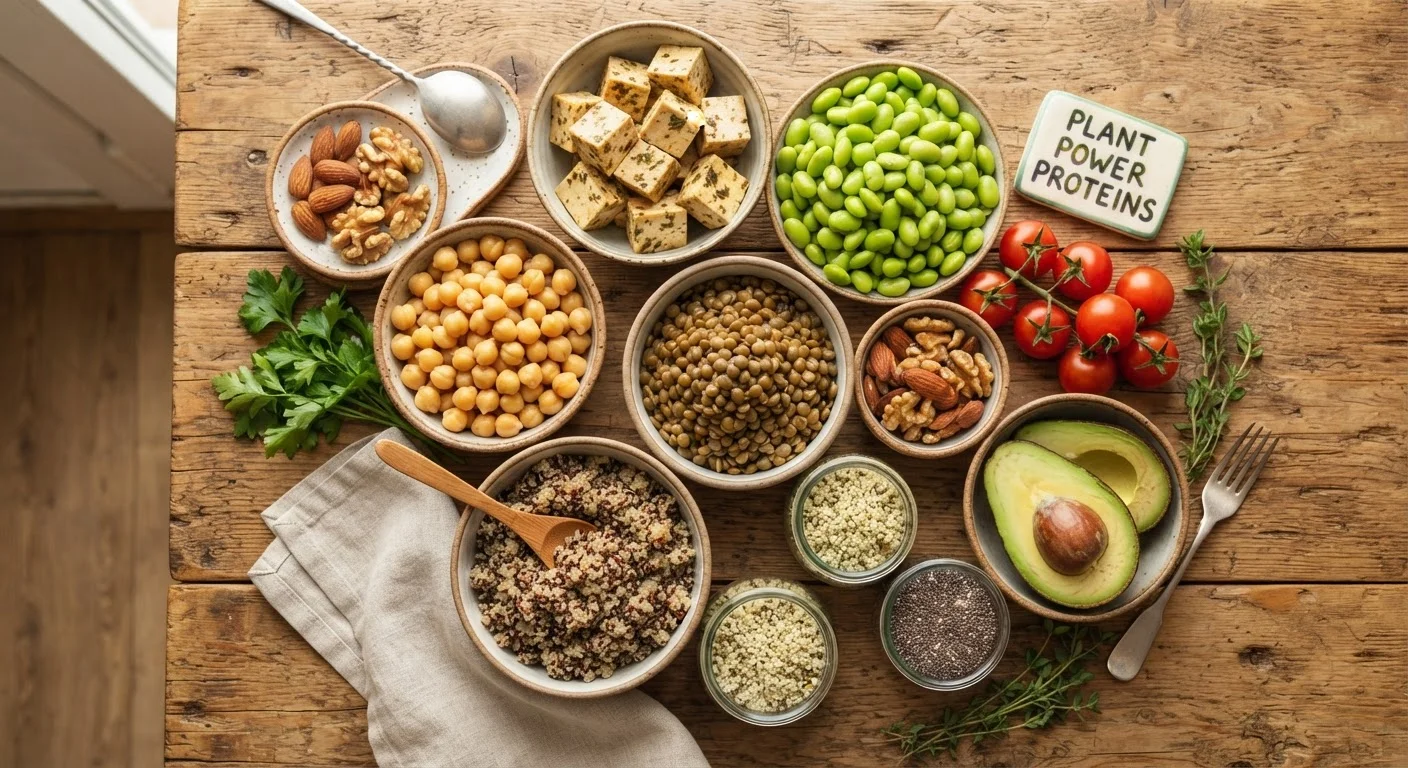
Why Protein Myths Persist on Plant-Based Diets
Few nutritional topics generate as much debate — or as many misconceptions — as protein on plant-based diets. The concern is understandable: protein is essential for muscle synthesis, immune function, enzyme production, and dozens of other physiological processes. When animal foods are reduced or removed, many people reasonably wonder whether their protein needs can realistically be met.
The short answer, supported by major nutrition authorities including the Academy of Nutrition and Dietetics, is yes — with thoughtful food selection. But the longer answer requires examining several persistent myths that continue to shape how people approach plant-forward eating. Understanding the science behind protein quality, completeness, and digestibility helps separate genuine planning considerations from unfounded fears.
For a broader foundation, see our overview of what whole-food plant-based eating actually involves before diving into the protein-specific detail below.
Myth
Plant foods don't contain complete proteins, so plant-based diets are inherently protein-deficient.
Fact
Many plant foods contain all essential amino acids, and dietary variety across the day reliably covers any gaps without requiring precise food combining at each meal.
The "complete protein" concern originates from older research suggesting most plant proteins were deficient in one or more essential amino acids. While it's true that some plant proteins — such as grains — are lower in lysine, and legumes are lower in methionine, this matters far less in practice than it sounds in theory.
Quinoa, soy, buckwheat, hemp seeds, and amaranth are genuinely complete proteins. More importantly, the body maintains a free amino acid pool throughout the day, drawing from multiple foods rather than requiring a single meal to be complete. Eating rice at lunch and lentils at dinner produces the same amino acid availability as eating them together. The Academy of Nutrition and Dietetics confirmed this position in its most recent position paper on vegetarian diets.
Myth
Plant protein is so poorly absorbed that you need to eat dramatically more food to match animal protein intake.
Fact
Plant protein digestibility is somewhat lower on average, but the practical difference is modest and easily addressed through normal dietary variety.
Protein digestibility is measured using a metric called the Digestible Indispensable Amino Acid Score (DIAAS), which replaced the older PDCAAS system. Some plant proteins do score lower than animal proteins on this scale — isolated pea protein scores around 0.82 compared to whey at approximately 1.09.
However, whole dietary patterns — not individual foods in isolation — determine actual amino acid delivery. Combining a range of legumes, grains, vegetables, nuts, and seeds throughout the day compensates effectively for the digestibility differences of any single food. Some nutrition researchers estimate that plant-based eaters may benefit from modestly higher total protein intake (around 10–20% more) to account for digestibility, but this is achievable through ordinary food volume rather than dramatic dietary overhaul.
Myth
Athletes and highly active people cannot get enough protein from plants to support performance and muscle growth.
Fact
Current evidence supports that plant-based diets can adequately fuel athletic performance and muscle protein synthesis when total protein intake meets training demands.
Research comparing plant-based and omnivorous athletes has found comparable muscle mass and strength gains when total protein intake is equivalent. A study published in Sports Medicine found no significant difference in muscle thickness gains between groups consuming matched protein from plant versus animal sources during resistance training.
Leucine — the branched-chain amino acid most critical for triggering muscle protein synthesis — is present in meaningful amounts in soy, lentils, and hemp seeds. Athletes following plant-based diets typically need to be intentional about total daily protein intake and leucine-rich food inclusion, but this is a planning consideration, not a physiological barrier. Those with elite performance goals are best served by working with a sports dietitian for individualized guidance.
Myth
Soy protein is inferior to animal protein and may be harmful due to its estrogen-like compounds.
Fact
Soy protein is nutritionally high-quality and extensive research has not established harm from soy isoflavones in normal dietary amounts for most healthy adults.
Soy contains phytoestrogens called isoflavones, which bind weakly to estrogen receptors. This has generated concern about hormonal disruption, but decades of population research — including studies of high-soy-consuming Asian populations — have not demonstrated adverse hormonal effects from typical dietary intake of whole soy foods.
Regulatory bodies including the U.S. Food and Drug Administration have acknowledged soy protein's nutritional quality. Soy receives a DIAAS score comparable to several animal proteins, making it one of the most nutritionally complete plant protein sources available. Individuals with specific thyroid conditions or hormone-sensitive diagnoses should discuss soy intake with their physician, as personalized guidance may differ from general population findings.
For a broader view of how plant-based diets relate to long-term health outcomes, our article on plant-based diets and chronic disease examines what the research currently supports.
Myth
Protein supplements are necessary for anyone following a plant-based diet.
Fact
Most people following a well-planned, varied plant-based diet can meet protein requirements through whole foods alone without supplementation.
Protein supplementation can be a convenient tool for some individuals — particularly athletes with very high demands or those with limited appetite — but it is not a requirement for plant-based eating. Whole food sources offer protein alongside fiber, micronutrients, and phytochemicals that isolated supplements do not provide.
A diet that regularly includes legumes, whole grains, tofu or tempeh, nuts, and seeds provides substantial protein across the day. For context, a meal pattern including a half-cup of edamame, a lentil-based lunch, tofu in an evening stir-fry, and a handful of hemp seeds can deliver 70–90 grams of protein — sufficient for many adults — entirely from food. Exploring the full range of nutrients and superfoods can help identify practical, whole-food protein sources.
Practical Protein Planning on a Plant-Based Diet
Understanding the myths is one thing; translating that knowledge into everyday eating is another. The most protein-dense whole plant foods include lentils, black beans, edamame, tempeh, tofu, seitan, hemp seeds, and quinoa. A single cup of cooked lentils provides roughly 18 grams of protein — comparable to a modest serving of poultry.
18g
Protein per cup of cooked lentils
Lentils are among the most protein-dense legumes and also provide substantial fiber, iron, and folate.
~10–20%
Estimated additional protein to offset digestibility differences
Some nutrition researchers suggest plant-based eaters may benefit from modestly higher total protein intake to account for lower average digestibility of plant proteins.
0.82
DIAAS score for isolated pea protein
The Digestible Indispensable Amino Acid Score (DIAAS) rates protein quality; pea protein scores comparably well relative to many whole food proteins.
Variety matters more than any single food. Eating across legume, grain, nut, seed, and vegetable categories throughout the day naturally delivers a broad amino acid profile without requiring precise meal-by-meal calculation. This is consistent with how most omnivores meet their protein needs — through dietary pattern, not protein engineering.
Individuals with higher demands — older adults experiencing age-related muscle loss, pregnant or breastfeeding individuals, or those recovering from illness — may benefit from more deliberate planning. These groups should consult a registered dietitian to assess needs personally. For a candid look at where plant-based diets sometimes fall short nutritionally, our article on why people abandon plant-based diets covers the most common gaps. Similarly, plant-based eating trade-offs offers a balanced assessment of what shifts when animal foods are reduced.
This article is for general informational and educational purposes only and does not constitute medical or dietary advice. Consult a qualified healthcare professional or registered dietitian before making significant changes to your diet, especially if you have an underlying health condition or specific nutritional requirements.
The content on this site is for informational purposes only and is not a substitute for professional advice. Always consult a qualified professional for guidance specific to your situation.