

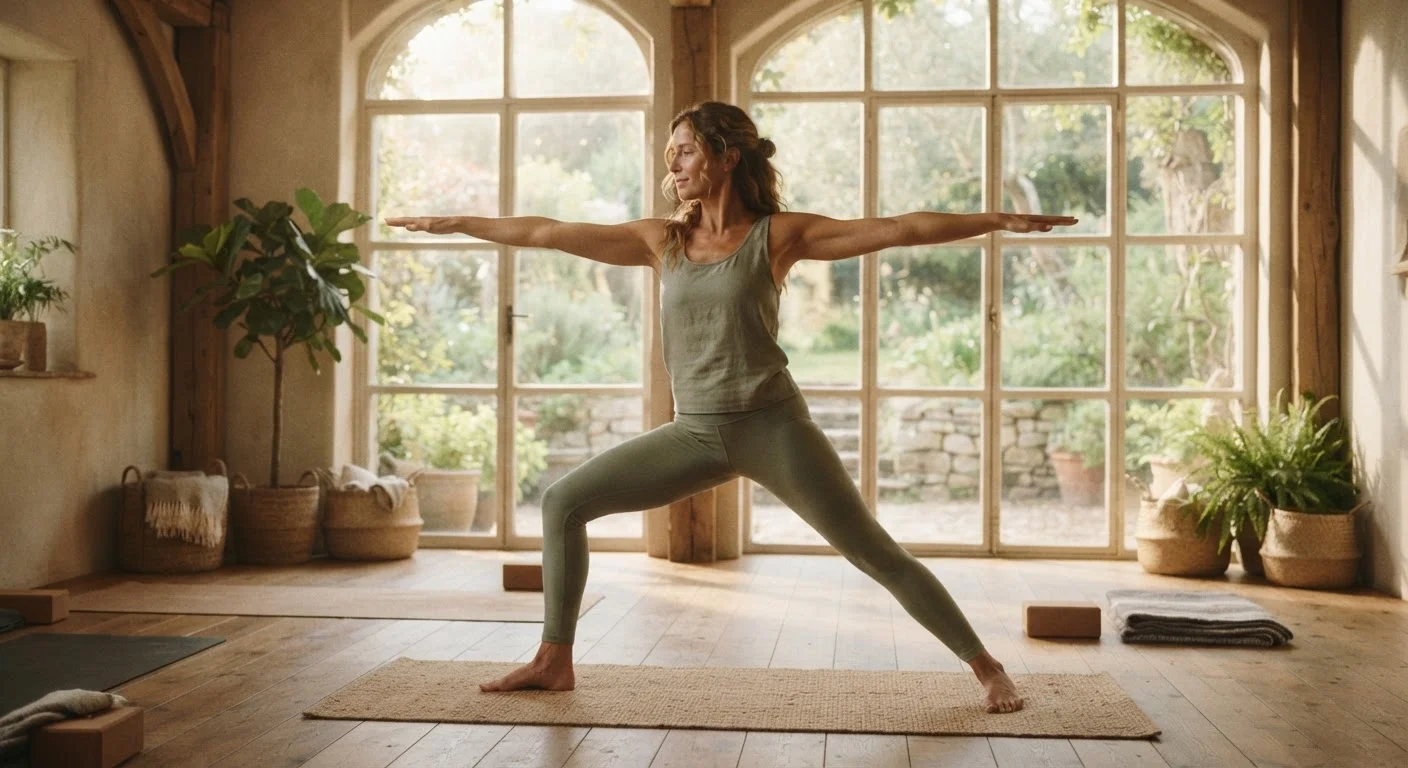
The Breath-Movement Partnership Explained
In yoga, breath is not a background function — it is the organizing principle of the practice. When teachers say "let the breath lead," they mean the body should only move once the breath initiates the action. An inhale lifts the chest and opens the front body; the exhale releases and deepens. Every transition, every hold, every exit from a pose is governed by this rhythm.
This is meaningfully different from simply "remembering to breathe" during exercise. Breath-led movement means the nervous system uses breath as a timing signal, coordinating muscle activation, spinal decompression, and joint support in sequence. When done consistently, it produces the fluid, intentional quality that distinguishes practiced yogis from those who are just moving through shapes.
For a deeper look at how this same breath awareness extends into seated practice, see how pranayama bridges yoga and meditation.
Why Inhale and Exhale Are Assigned Specific Roles
The distinction between when to inhale and when to exhale is not arbitrary. It is rooted in how the diaphragm and core structures interact with the spine:
- Inhaling expands the ribcage, lengthens the spine, and naturally lifts and opens — making it the right breath for movements like rising from a forward fold, extending the arms overhead, or lifting into a backbend.
- Exhaling contracts the deep abdominal muscles, creates core stability, and softens tension — making it ideal for folding forward, twisting deeper, or lowering into a lunge.
When practitioners reverse this — exhaling into a backbend or inhaling into a forward fold — the muscular support the breath provides is working against the direction of movement rather than with it. The result is effort that feels harder than it should and alignment that tends to collapse under load.
~70%
Yoga injuries linked to overstretching or improper alignment
A frequently cited finding in yoga injury literature suggests a large proportion of practice-related injuries involve pushing beyond appropriate range — a risk that breath-awareness is specifically designed to mitigate.
4–6 sec
Exhale length associated with parasympathetic activation
Respiratory research indicates that extended exhales in this range tend to increase heart rate variability, a marker of parasympathetic nervous system dominance, supporting relaxation responses during yoga practice.
What Happens When Breath and Movement Disconnect
Breath-holding is probably the most common sign that breath has lost its leading role. It appears most often in challenging poses — arm balances, deep hip openers, or prolonged standing sequences — when the mind prioritizes effort over awareness. The consequences are tangible:
- Increased muscular tension: Without the relaxing signal of a steady exhale, muscles grip more than necessary, reducing range of motion and amplifying fatigue.
- Reduced proprioceptive feedback: Breath rhythm keeps practitioners tuned into their bodies. Without it, subtle warning signals — a joint complaining, a muscle over-stretched — are easier to miss.
- Sympathetic activation: Interrupted breathing keeps the stress response engaged, which works directly against yoga's goal of cultivating calm presence.
Even experienced practitioners drift from breath awareness during difficult sequences. Noticing the drift and returning — without judgment — is itself a central skill of the practice. This same quality of returning attention is explored further in breath-anchored meditation techniques.
A Simple Breath-Check During Practice
Pause at any point in your session and ask: "Am I breathing?" If the answer is uncertain, you have drifted from breath-led movement. Take two full, unhurried breath cycles before continuing. Over time, this self-check becomes automatic — and is one of the most effective self-corrections available to any practitioner.
Practical Ways to Rebuild the Habit
For beginners and intermediate practitioners alike, breath-led movement is less a natural instinct than a cultivated discipline. A few approaches that yoga teachers commonly recommend:
- Start with simpler poses: Practicing breath timing in foundational postures like Tadasana builds the habit before adding complexity.
- Count your breath: A four-count inhale and four-count exhale gives the mind something concrete to track, making it harder to unconsciously hold.
- Slow the sequence down: Breath-led movement is easiest to learn at a pace that gives the breath room to genuinely lead. Rushing — even in beginner classes — is a common disruptor.
- Use rest intentionally: Poses like Child's Pose reset breath rhythm mid-practice. Skipping these recovery moments — similar to skipping Savasana — has real costs. See why in our piece on the hidden cost of skipping rest in yoga.
This article is for general informational and educational purposes only and is not a substitute for professional medical or fitness advice. If you have any health conditions, injuries, or concerns, consult a qualified healthcare provider before beginning or modifying a yoga practice.
Frequently Asked Questions
Most yoga traditions encourage nasal breathing throughout practice. Breathing through the nose warms and filters air, supports nervous system regulation, and helps maintain the slower, steadier rhythm that breath-led movement requires. Some vigorous practices may allow mouth exhales, but nasal breathing is generally the standard guidance.
In a traditional sun salutation, each movement corresponds to a specific inhale or exhale — for example, inhale to sweep arms overhead, exhale to fold forward, inhale to lengthen the spine in a halfway lift. Following this breath map keeps the sequence smooth and internally connected rather than rushed.
Lightheadedness can result from breathing too rapidly, breathing more deeply than usual without acclimation, or from changes in carbon dioxide levels during extended breathwork. If this occurs, return to natural breathing, rest in Child's Pose, and consult a qualified instructor. Anyone with respiratory or cardiovascular conditions should speak with a healthcare provider before practicing pranayama.
Breath-holding during poses — especially strength-demanding ones — can raise intra-abdominal pressure, increase cardiovascular strain, and reduce proprioceptive awareness, making alignment harder to maintain. It is generally considered poor technique and a signal to ease back on the intensity of the pose.
Conscious, diaphragmatic breathing activates the parasympathetic nervous system, which counteracts the stress response. Research suggests that slow, rhythmic breathing paired with movement may support emotional regulation and reduce perceived anxiety. This is general educational information — speak with a mental health professional for personalized guidance.
The content on this site is for informational purposes only and is not a substitute for professional advice. Always consult a qualified professional for guidance specific to your situation.