

Why Breath Works as a Meditation Anchor
The breath is unusual among bodily processes: it operates automatically, yet we can also control it consciously. This dual nature makes it an exceptionally effective object of meditation attention. By choosing to regulate the breath intentionally — drawing on principles from pranayama (a Sanskrit term meaning "extension of the life force," often translated as breath regulation) — a meditator gains a concrete, always-available focal point that also produces measurable physiological shifts.
Research in psychophysiology suggests that slow, rhythmic breathing patterns can engage the vagus nerve and shift autonomic balance toward parasympathetic dominance — the body's rest-and-digest state. This is why breath-focused practice often feels calming rather than effortful. Unlike visualization or mantra, the breath requires no memorization and leaves no moment where the anchor disappears. For a broader comparison of structural differences between mantra and breathwork approaches, see Mantra Meditation vs. Breathwork Meditation.
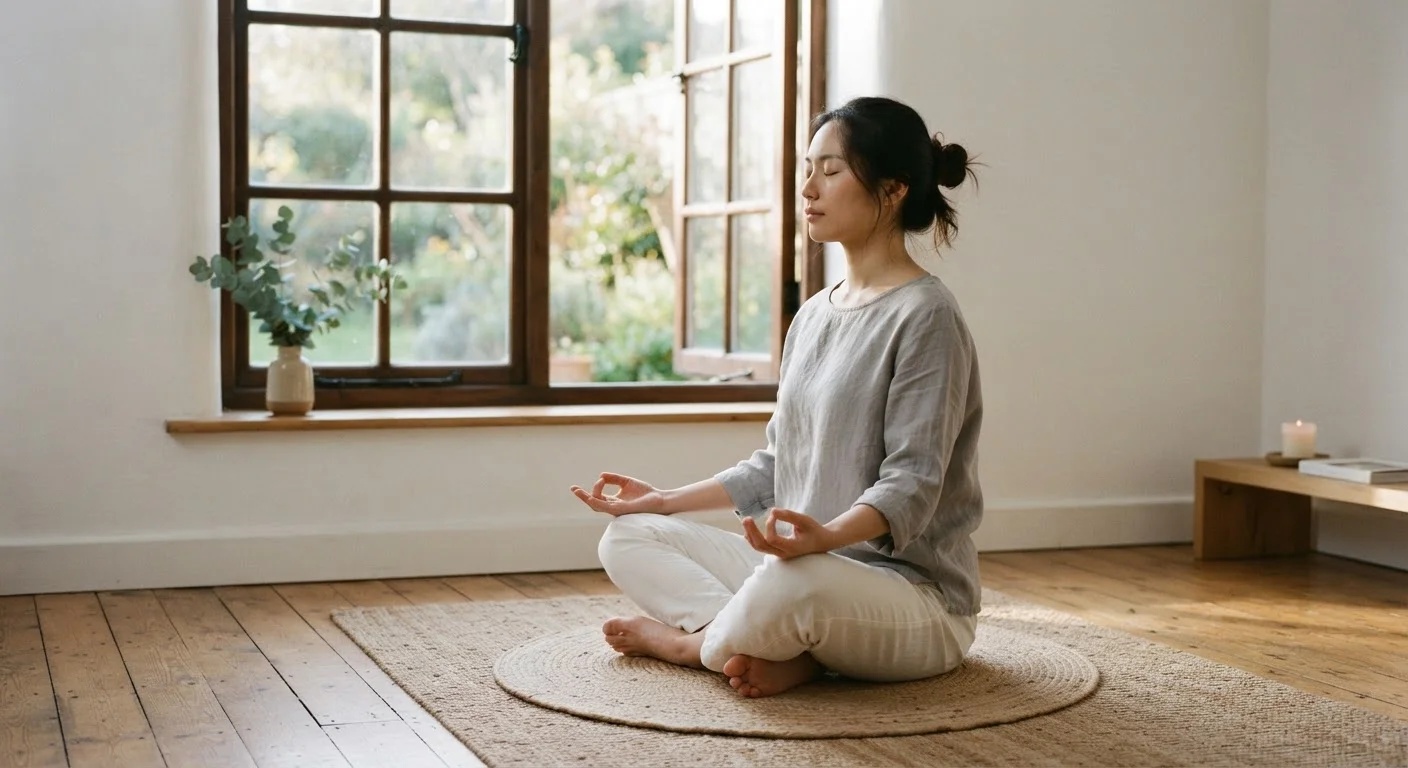
Pranayama also has a long relationship with seated posture. A stable, grounded physical base allows the diaphragm to move freely, which in turn sustains the breath patterns described below. Seated poses that build spinal length and hip openness directly support this freedom of breath.
What you will need
Core Pranayama-Informed Techniques for Stillness
The following techniques are drawn from classical yogic tradition and are widely taught in contemporary meditation and yoga settings. They range from foundational breath observation to more structured ratio-based patterns. Choose one as your primary anchor per session rather than cycling through all of them.
Establish a Comfortable Seated Base
Sit in a position that allows your spine to lengthen upward without tension — cross-legged on the floor, kneeling with a bolster, or upright in a chair. Rest your hands palm-down on your thighs. Close your eyes or soften your gaze downward at a 45-degree angle. Spend one to two minutes simply noticing the natural rhythm of your breath without changing it. This baseline observation is itself a form of meditation.
Practice Diaphragmatic Breathing (Foundation Layer)
Place one hand on your belly, just below the navel. Inhale slowly through the nose, allowing the abdomen to expand outward before the chest rises. Exhale through the nose, letting the belly draw gently back toward the spine. This is diaphragmatic breathing — the physiological foundation for all pranayama techniques. Practice this pattern for 10–15 breath cycles, or approximately two to three minutes, before progressing.
Apply Extended Exhalation (2:1 Ratio Breathing)
Inhale through the nose for a comfortable count of four. Exhale through the nose for a count of eight — twice the length of the inhale. This extended exhalation pattern, sometimes called Vishama Vritti (uneven breath), is associated with increased parasympathetic activation. Do not strain; if an eight-count exhale feels forced, use a four-count inhale and six-count exhale instead. Sustain this ratio for five minutes before moving to the next technique or transitioning into open awareness.
Introduce Nadi Shodhana (Alternate Nostril Breathing)
Nadi Shodhana ("channel purification") is a classical pranayama technique using alternating nostril airflow to balance the breath and, by extension, attention. Bring your right hand to a Vishnu mudra position: fold the index and middle fingers toward the palm, leaving the thumb, ring finger, and pinkie extended. Rest the left hand palm-up on the left knee.
- Close the right nostril with the right thumb. Inhale slowly through the left nostril for four counts.
- Close both nostrils gently (use the ring finger to close the left). Hold for four counts — this is a brief, gentle retention called kumbhaka.
- Release the right nostril. Exhale through the right for eight counts.
- Inhale through the right for four counts.
- Close both nostrils. Hold for four counts.
- Release the left nostril. Exhale through the left for eight counts.
This completes one full cycle. Repeat for five to ten cycles, then release the hand and return to natural breathing.
Transition into Open Awareness Meditation
After completing your chosen breath technique, release deliberate control of the breath entirely. Allow it to return to its natural, unguided rhythm. Now simply sit and observe — notice the sensation of breath at the nostrils, the rise and fall of the chest, any sounds in the environment. When the mind wanders, use the next natural inhale as a return signal: the sensation of breath entering the nostrils is your anchor point. Stay in this open awareness for five to fifteen minutes.
Consistency Matters More Than Duration
A 15-minute breath-anchored session practiced daily tends to produce more noticeable shifts in mental clarity and emotional regulation than an occasional hour-long session. Begin with a modest, achievable time commitment and increase gradually. Tracking your sessions in a simple journal can help you notice patterns over weeks. For those who prefer active forms, movement-based meditation offers an effective complement on days when seated stillness feels inaccessible.
For practitioners who also integrate movement, understanding how breath leads movement in yoga can deepen appreciation of why these rhythms translate so naturally into stillness practice. And if you want to embed this into a daily rhythm, structuring a morning routine around breathwork and meditation offers a practical sequencing framework.
This article is for informational purposes only and is not a substitute for professional medical advice. If you have a cardiovascular, respiratory, or neurological condition, or are pregnant, consult a qualified healthcare provider before attempting breath retention or extended breath control practices.
The content on this site is for informational purposes only and is not a substitute for professional advice. Always consult a qualified professional for guidance specific to your situation.