

What Savasana Is Actually Doing
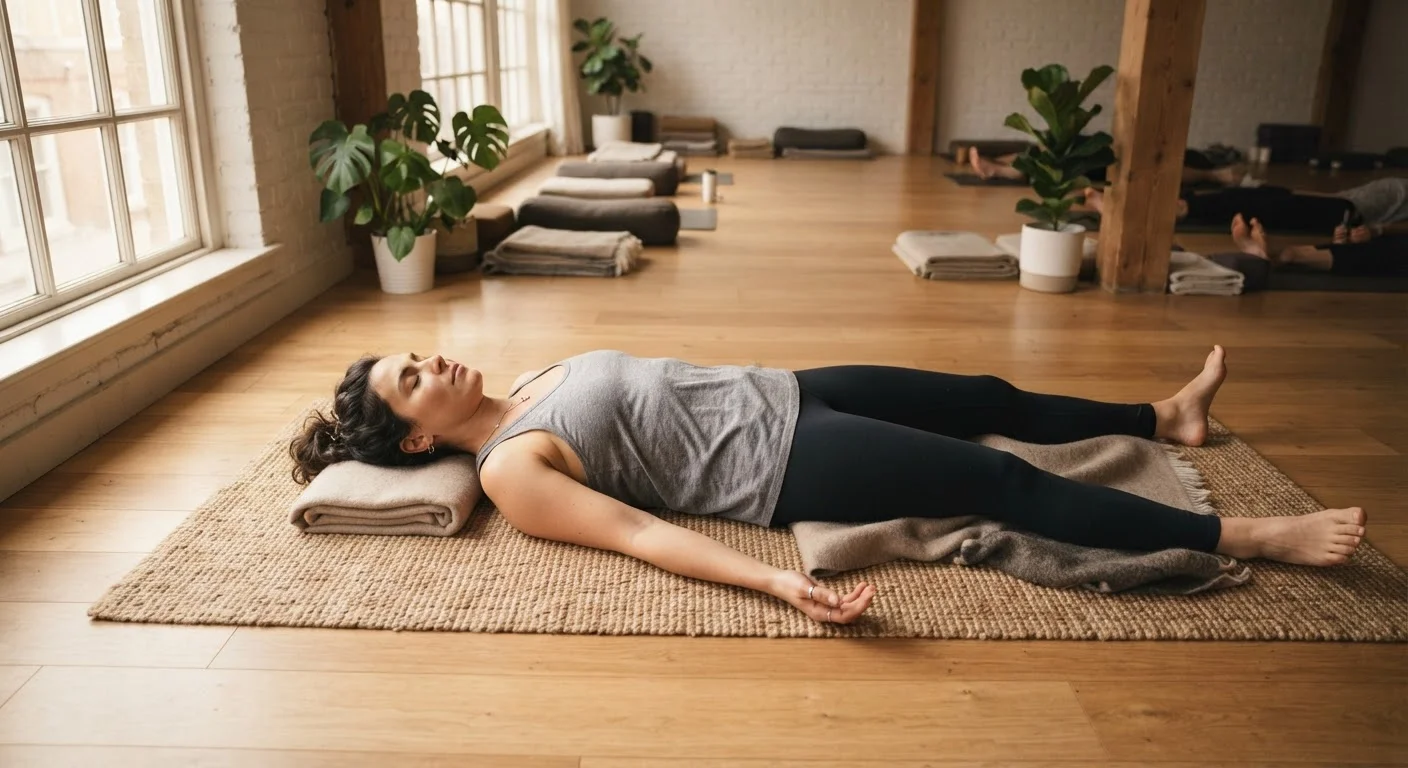
Savasana — typically practiced lying flat on the back, arms slightly away from the body, eyes closed — marks the close of most yoga sessions. To an observer, it looks like rest. Physiologically, something more specific is happening.
During active yoga, the body engages the sympathetic nervous system to meet the demands of movement, balance, and sustained effort. Savasana provides the conditions for the parasympathetic nervous system — sometimes called the "rest and digest" branch — to reassert itself. Heart rate and breathing slow, muscle tension releases, and the body begins consolidating the work just completed. This is not metaphorical; it reflects well-established principles of autonomic nervous system function.
Skipping this phase is a bit like interrupting sleep before deep sleep cycles can occur: the session happened, but some of its benefits remain unintegrated. As explored in our piece on what happens when rest is chronically skipped, the body needs deliberate recovery time to process the demands placed on it — and yoga practice is no exception.
Savasana Is Not Optional Rest
In classical yoga tradition, Savasana (Corpse Pose) is considered among the most important postures in a session — not a cooldown or a reward. Shortening it consistently may undermine recovery benefits that accumulate over time. If time is a genuine constraint, consider shortening the active portion of practice rather than eliminating Savasana entirely.
Common Mistakes Practitioners Make With Savasana
Most people who shortchange Savasana are not being careless — they are responding to real pressures or operating on mistaken assumptions about what the pose is for. The mistakes below are patterns that show up across experience levels, from beginners to long-term practitioners.
Leaving class or ending a home practice the moment the final pose is complete, skipping Savasana entirely.
Why it happens: Practitioners often view Savasana as downtime rather than practice, and a packed schedule makes lying still feel unproductive or indulgent.
Staying in Savasana physically while mentally drafting to-do lists, checking the time, or rehearsing conversations.
Why it happens: The body is still but the mind has not received any guidance or anchor, so habitual mental activity fills the silence immediately.
Rushing the transition out of Savasana — sitting up abruptly and moving straight into packing up or conversation.
Why it happens: There is no clear ritual for exiting, so the default is an abrupt return to normal pace — undoing much of the settling that just occurred.
Treating Savasana as optional only when tired, rather than as a consistent structural component of every practice.
Why it happens: Practitioners associate Savasana with fatigue management rather than physiological integration, so they skip it on days they feel energised.
Skipping Savasana in shorter sessions because there "isn't time," cutting what feels least essential.
Why it happens: When time is tight, active poses feel more justifiable than stillness, so Savasana is the first element dropped.
For a broader look at how recovery choices affect overall progress, our guide to common training mistakes covers parallels in strength and flexibility work. The principle is consistent: what happens after effort matters as much as the effort itself.
Building a Practice That Honors Rest
Integrating Savasana properly is partly a scheduling decision and partly a philosophical one. Practically, it means accounting for it when you plan a session — whether that is a class, a home practice, or a morning routine that combines yoga and meditation. A session without closure is incomplete in the same way that breath disconnected from movement produces a less coherent practice.
Restlessness in Savasana May Signal Stress
If lying still for even a few minutes feels genuinely intolerable — producing anxiety, irritability, or an urgent need to move — this may be worth exploring with a mental health professional. Difficulty tolerating stillness is sometimes associated with anxiety disorders or chronic stress states. This is not something to push through without support.
Philosophically, treating stillness as equally valid to movement is one of the deeper invitations yoga extends. The principles of mindful movement that inform effective yoga — interoception, body awareness, present-moment attention — all find their clearest expression in Savasana, where there is nothing to do but notice.
~5–10 min
Recommended Savasana duration per session
Yoga therapy guidelines and traditional teaching generally suggest one minute of Savasana for every ten minutes of active practice.
60–90 sec
Time for acute stress response to begin subsiding
Research on autonomic nervous system recovery suggests that sustained, deliberate stillness and slow breathing can begin shifting the body toward parasympathetic dominance within roughly sixty to ninety seconds.
If you practice with an injury or physical limitation that makes floor-based Savasana uncomfortable, modifications are available — supported versions using bolsters, blankets, or a reclined chair position can preserve the restorative intent. Our guide to practicing yoga with an injury offers relevant principles for adapting without losing the essence of the pose.
This article is for general informational and educational purposes only and does not constitute medical advice. Consult a qualified healthcare professional before beginning or modifying any exercise practice, particularly if you have an existing health condition.
The content on this site is for informational purposes only and is not a substitute for professional advice. Always consult a qualified professional for guidance specific to your situation.