

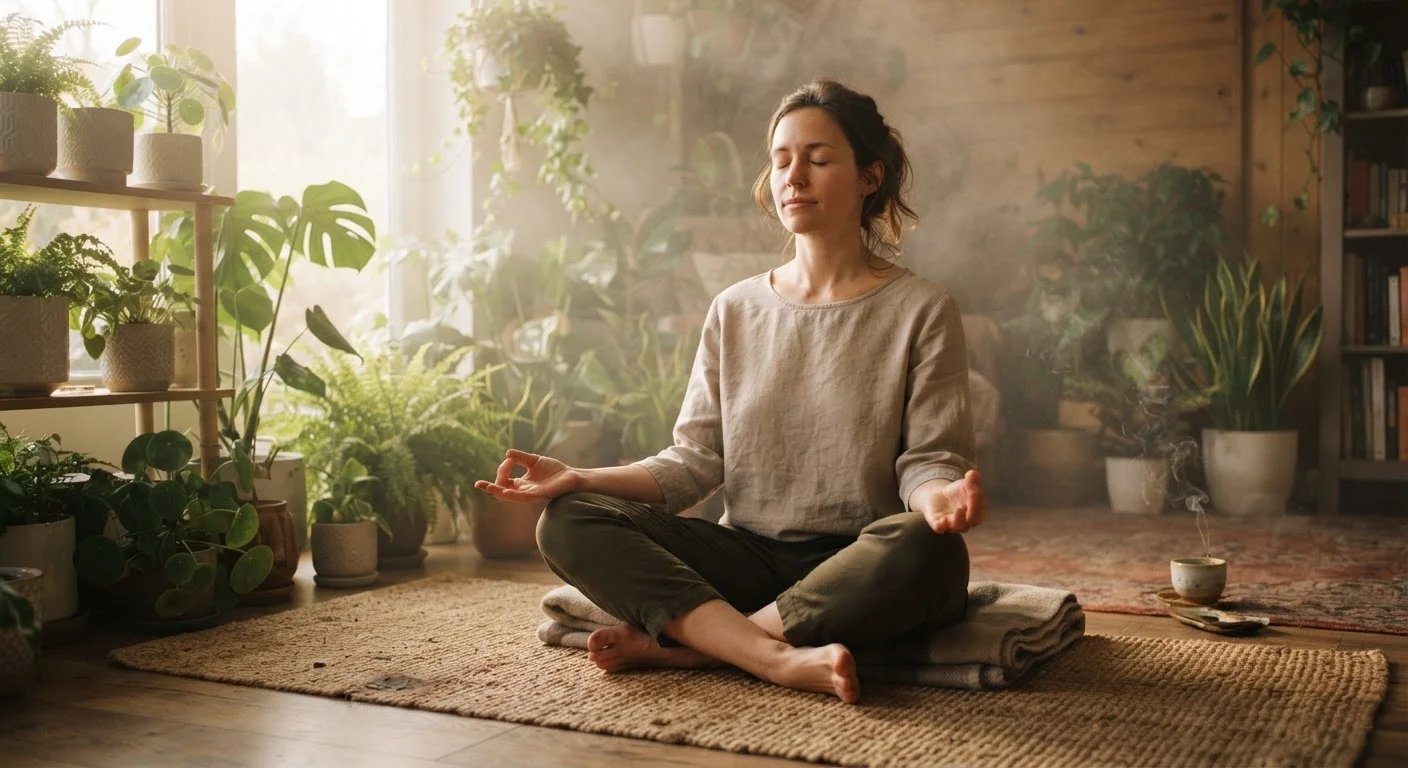
Where Movement Ends and Stillness Begins
Anyone who has transitioned abruptly from a fast-paced yoga class to a meditation cushion knows the challenge: the body may be warm and open, but the mind is still catching up. Pranayama — conscious breath regulation — is the classical answer to this gap. It serves as a deliberate transition layer, helping practitioners shift from physical engagement to inward observation.
In Patanjali's eight-limb framework, pranayama does not appear at the beginning or the end of practice. It is positioned precisely after asana (physical posture) and before pratyahara (sensory withdrawal), which itself leads toward dharana (concentration) and dhyana (meditation). This sequence was not incidental — it reflects an understanding that the breath is uniquely capable of bridging outer and inner experience. For a deeper look at how breath and movement interact in asana, see why breath leads movement in yoga.
How Breath Regulation Affects the Nervous System
The breath is one of the few physiological functions that operates both automatically and voluntarily. This dual nature is what makes pranayama practically powerful. By consciously slowing the exhale, extending pauses, or synchronizing breath with attention, a practitioner can directly influence the autonomic nervous system — shifting emphasis from sympathetic (alert, active) to parasympathetic (calm, restorative) activity.
Research published in peer-reviewed journals, including work cited in the journal Frontiers in Human Neuroscience, has examined slow-paced breathing and its associations with heart rate variability and self-reported relaxation. While the science is still developing and individual responses vary, the general relationship between slower breathing rates and reduced physiological arousal is reasonably well-supported. This is why breathwork is increasingly explored alongside yoga for conditions involving stress and tension — see what evidence suggests about yoga and breathwork for chronic pain for a careful review of that evidence.
4th of 8
Position of pranayama in Patanjali's yogic framework
In the classical Yoga Sutras, pranayama sits between asana and pratyahara, structurally bridging physical and contemplative practice.
~6 breaths/min
Slow breathing rate linked to parasympathetic effects
Multiple studies have associated breathing rates around six cycles per minute with increased heart rate variability and self-reported relaxation, though individual results vary.
5–10 min
Common introductory pranayama session length
Yoga teachers and researchers often use sessions of five to ten minutes in clinical and classroom settings to observe measurable shifts in reported stress and focus.
Core Pranayama Techniques and Their Purposes
Not all pranayama techniques work the same way or serve the same goal. Understanding the spectrum helps practitioners choose appropriately:
- Diaphragmatic breathing: The foundation of most pranayama. Focuses on full, belly-led inhalation that maximizes lung capacity and promotes parasympathetic activation.
- Nadi Shodhana (Alternate Nostril Breathing): Involves alternating breath between nostrils using hand mudras. Often described in traditional texts as balancing and centering; frequently used before meditation.
- Ujjayi (Victorious Breath): A gentle throat constriction creates an audible breath used during asana practice to maintain rhythm and internal focus.
- Bhramari (Humming Bee Breath): An extended exhalation through humming, associated with calming the mind and reducing sensory distraction.
- Kapalabhati (Skull-Shining Breath): A vigorous practice involving rapid, forceful exhalations — used to energize rather than calm, and generally not appropriate before meditation.
The choice of technique matters. Using an energizing practice immediately before seated meditation can work against the goal of stillness. Matching breath practice to intended outcome is a skill developed over time. Mindful movement principles that support yoga also inform how breath selection shapes practice quality.
Match Your Breath Practice to Your Goal
Before choosing a technique, clarify your intention: calming practices like Nadi Shodhana or Bhramari are better suited before meditation, while energizing practices like Kapalabhati are better suited for the beginning of movement practice. Starting with diaphragmatic breathing is a sound, safe foundation regardless of your goal.
Pranayama as a Standalone Practice
While pranayama is often taught within a full yoga class, it can also be practiced independently — seated, lying down, or even standing. As a standalone session, it occupies a middle ground between physical yoga and formal meditation: it is more structured than open awareness but less anchored to posture than asana. This flexibility makes it accessible to people who may not practice yoga postures but want a contemplative entry point.
For those interested in how breathwork compares to other contemplative methods, breathwork, meditation, and mindfulness differ in meaningful ways — each has its own structure, mechanisms, and appropriate applications. Similarly, if you practice breath-focused sitting alongside other techniques, comparing mantra meditation and breathwork meditation can clarify the structural differences worth knowing.
This article is for informational and educational purposes only and does not constitute medical advice. Always consult a qualified healthcare professional before beginning any new breathing or movement practice, especially if you have a pre-existing health condition.
Frequently Asked Questions
Regular breathing is automatic and unconscious. Pranayama involves deliberate attention to the rate, depth, pattern, and pauses of each breath. This intentional quality is what makes it a meditative tool rather than a simple physical function.
Many introductory pranayama techniques, such as diaphragmatic breathing or simple ratio breathing, are accessible to beginners without prior yoga training. However, advanced techniques involving extended breath retention are best learned with a qualified instructor to avoid lightheadedness or strain.
Conscious breath regulation slows mental activity and reduces physiological arousal, making it easier to sustain focused attention during meditation. Many traditions use it as a deliberate gateway practice before sitting in stillness. For more depth, see <a href="/yoga-meditation/meditation-practices/breath-as-an-anchor-pranayama-informed-techniques-for-deeper-stillness">pranayama-informed techniques for deeper stillness</a>.
Most gentle breath awareness practices are broadly safe, but certain techniques are not appropriate for people with cardiovascular conditions, respiratory disorders, pregnancy, or anxiety disorders. Always consult a qualified healthcare professional before beginning any new breathwork practice.
Even five to ten minutes of intentional breathwork can meaningfully shift mental readiness for meditation. The appropriate duration varies by technique, individual, and practice goal — there is no universal prescription.
The content on this site is for informational purposes only and is not a substitute for professional advice. Always consult a qualified professional for guidance specific to your situation.