

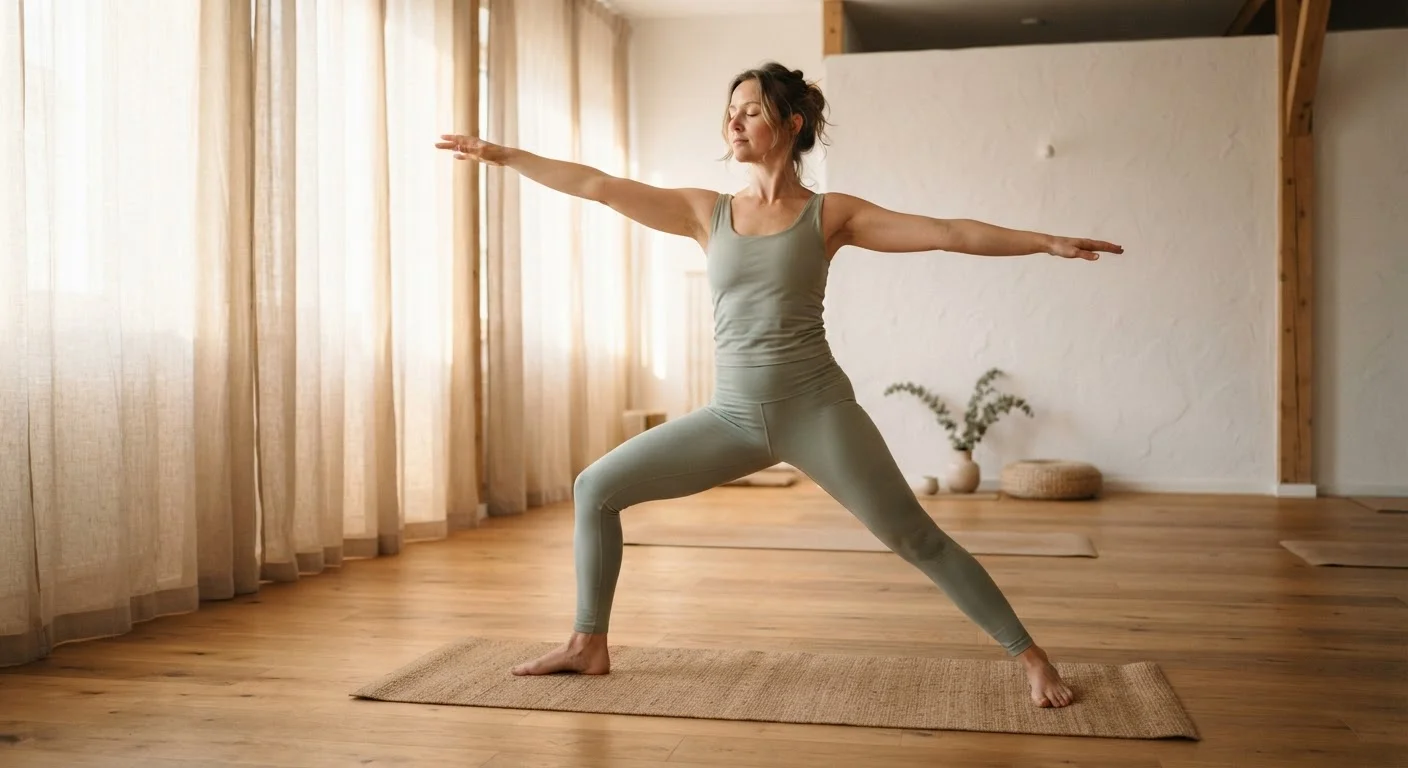
What Mindful Movement Actually Means in Yoga
Yoga is often introduced as a flexibility practice or stress-relief tool — both accurate, but incomplete. At its core, classical yoga is a system of mindful movement: deliberate physical action performed with continuous, non-judgmental attention. This distinction matters because it shifts the practitioner's role from executing shapes to cultivating awareness.
Mindful movement does not simply mean moving slowly. It means sustaining moment-to-moment attention on sensation, breath, alignment, and intention simultaneously. Research in contemplative neuroscience suggests this form of sustained interoceptive attention — noticing internal body signals — may support emotional regulation and reduce stress reactivity, though findings are still emerging and individual results vary.
For a broader look at how yoga's physical and contemplative dimensions fit together, see Building a Unified Yoga and Meditation Practice from the Ground Up.
| Origin of 'mindful movement' | Rooted in classical yoga philosophy (Patanjali's Yoga Sutras, est. ~400 CE) and later adopted in modern mind-body medicine frameworks |
| Key nervous system mechanism | Slow, breath-led movement activates the parasympathetic nervous system, supporting a shift away from stress response (General physiological consensus) |
| Number of limbs in classical yoga | 8 (ashtanga), of which asana — physical posture — is the third (Patanjali's Yoga Sutras) |
| Core attentional skill developed | Interoceptive awareness — sensing internal body signals in real time |
| Suitable for | All experience levels; principles apply equally to beginners and advanced practitioners |
| Requires | No equipment beyond a stable, non-slip surface; props (blocks, straps) support safe alignment |
Core Principles Defined
Understanding a handful of foundational concepts clarifies what separates mindful yoga from generic exercise. The glossary below defines the terms most practitioners encounter — and most frequently misunderstand.
Interoception
The brain's capacity to sense internal body states — heartbeat, breathing, muscular tension, and organ sensation. Interoceptive awareness is central to mindful movement because it allows practitioners to respond to what the body is actually doing rather than what they assume it is doing.
Breath Synchronisation
The practice of initiating each yoga movement with a specific phase of the breath — typically inhale for expansion and exhale for folding or grounding. When breath leads movement, pacing becomes organic and the nervous system is less likely to be caught off-guard by sudden effort.
Pratyahara
Often translated as 'withdrawal of the senses,' pratyahara refers to the deliberate turning of attention inward, away from external distractions. In yoga philosophy it is the fifth of Patanjali's eight limbs and forms the bridge between physical posture practice and meditation.
Drishti
A specific, softly focused gaze point used during yoga postures and transitions. Drishti stabilises both physical balance and mental attention, reducing the tendency for the mind to wander toward peripheral stimuli.
Sankalpa
A heartfelt intention or resolve set at the beginning of a practice session. Unlike a goal, a sankalpa is stated in the present tense and reflects a quality or orientation the practitioner wishes to embody — such as steadiness or openness — rather than an outcome to achieve.
Proprioception
The sensory system that tracks the position, movement, and force of different body parts in space. Yoga practice, particularly balancing poses, trains proprioceptive accuracy, which supports coordination and reduces injury risk.
Vinyasa
Literally 'to place in a special way,' vinyasa refers to the linking of movement and breath in a continuous, flowing sequence. In modern usage it also describes a style of yoga class built around these breath-synchronised transitions.
Ahimsa
A foundational ethical principle in yoga philosophy meaning non-harming or non-violence. Applied to physical practice, ahimsa guides practitioners to distinguish between productive discomfort and harmful pain — and to act accordingly.
Breath synchronisation is arguably the most immediately practical principle. In most yoga traditions, each movement is initiated by an inhale or exhale — not the other way around. When breath leads, the nervous system has a moment to prepare for what follows. Why Breath Leads Movement in Yoga explores the physiological reasons this sequencing matters.
Drishti (a fixed, soft gaze point) anchors attention and reduces the proprioceptive noise that comes from scanning the room. It functions as an external focal point that supports internal concentration — a bridge between physical and meditative practice. Learn more about pranayama's connecting role in Breath as the Bridge.
Sankalpa (intention-setting) is a contemplative habit used at the start of practice. It is not goal-setting in the conventional sense; it is a brief, present-tense orientation toward a quality — steadiness, openness, ease — that the practitioner returns to when distraction arises.
Applying These Principles Across Your Practice
Knowing a principle is not the same as embodying it. The following approaches help translate concepts into lived experience on the mat.
- Begin with body scanning. Before the first movement, take two to three minutes to notice sensation without trying to change it. This activates interoceptive attention from the outset.
- Treat transitions as poses. The moments between postures are where mindfulness most often collapses. Moving slowly and deliberately through transitions reinforces continuous awareness rather than a series of static checkpoints.
- Use breath as a pacing guide, not a metronome. If the breath shortens or becomes strained, the body is signalling that it needs more time or less intensity — a signal worth heeding rather than overriding.
- Revisit Tadasana (Mountain Pose) regularly. Even experienced practitioners benefit from returning to foundational alignment. Mountain Pose Is Not Just Standing Still explains why this deceptively simple posture encodes the principles that carry through every other pose.
- Honour Savasana. The closing rest is not optional recovery time — it is when integration occurs. Cutting it short shortchanges the neurological and psychological benefits of the session. Rushing Through Savasana details what's at stake.
Practitioners curious about how mindful movement compares across traditions will find useful context in Mind-Body Wellness Across Traditions.
This article is for general informational purposes only and does not constitute medical advice. Consult a qualified healthcare professional before beginning or modifying any exercise or wellness programme, particularly if you have an existing health condition or injury.
The content on this site is for informational purposes only and is not a substitute for professional advice. Always consult a qualified professional for guidance specific to your situation.