

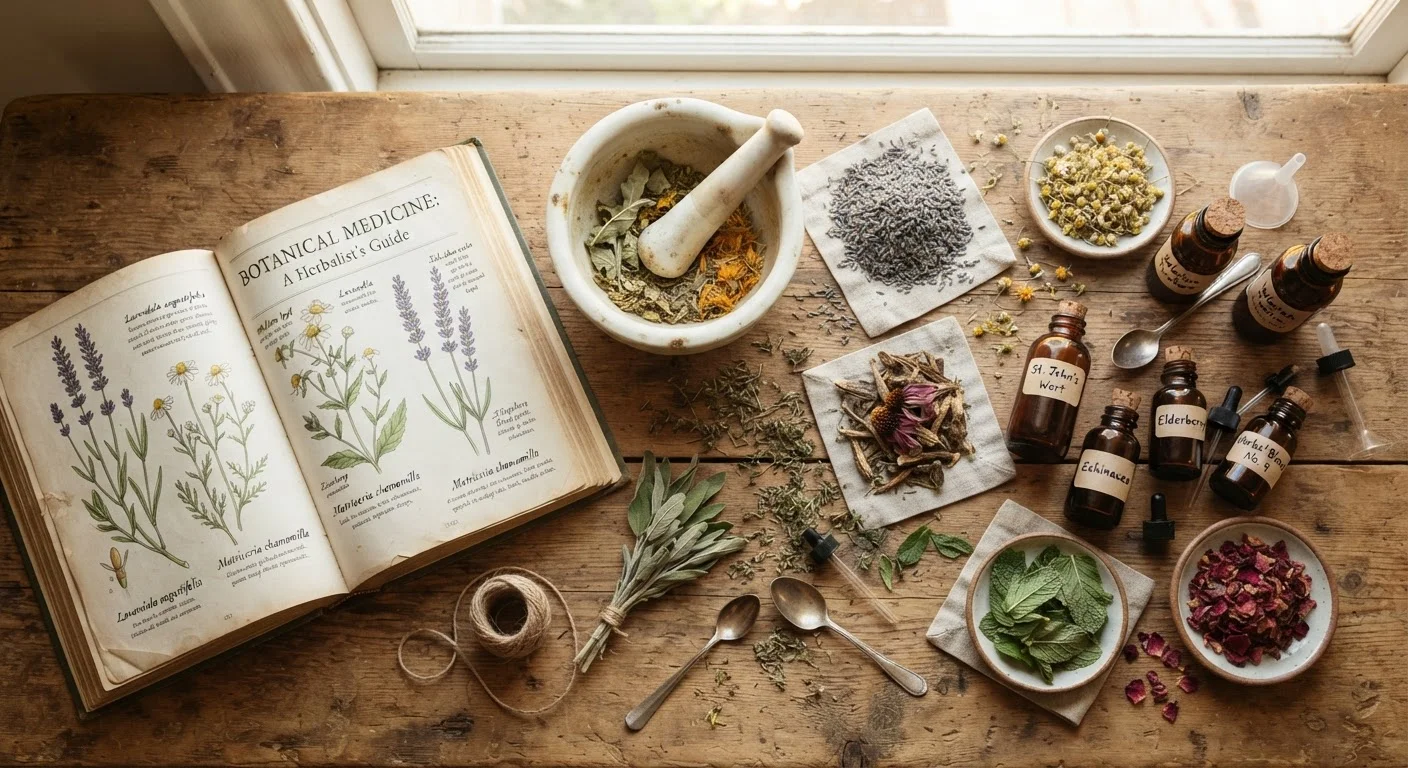
Why Herbal Terminology Matters
Herbal medicine literature is dense with specialized vocabulary. Terms like adaptogen, bioavailability, and standardized extract appear routinely in product labels, research summaries, and wellness articles — yet their precise meanings are rarely explained. Misreading these terms can lead to misplaced expectations about how an herb works, what a preparation actually contains, or how strongly the evidence supports a given claim.
This reference glossary defines the core terminology used across herbal medicine so you can read with greater discernment. For a deeper look at how different preparations affect what compounds you actually receive, see our guide on herbal teas vs. standardized extracts. If you're newer to this subject, starting out with herbal wellness is a useful companion resource.
Adaptogen
A class of herbs traditionally used to help the body resist physical, chemical, and biological stress. The concept originates in mid-20th-century Russian pharmacological research. Commonly cited examples include ashwagandha, rhodiola, and eleuthero, though the clinical evidence supporting this category varies considerably by individual herb.
Tincture
A liquid herbal preparation made by soaking plant material in a solvent — typically alcohol, glycerin, or vinegar — to extract active constituents. The solvent type affects which compounds are extracted and at what concentration.
Standardized Extract
An herbal extract processed to contain a consistent, specified percentage of one or more identified marker compounds. Standardization improves batch-to-batch consistency but does not necessarily capture the full range of a plant's active constituents.
Bioavailability
The proportion of a substance that enters the bloodstream and reaches its site of activity after administration. In herbal medicine, bioavailability is influenced by preparation method, the presence of other compounds, individual metabolism, and delivery form (e.g., capsule vs. tea).
Phytochemical
A biologically active compound produced by a plant. Phytochemicals include flavonoids, alkaloids, terpenes, and phenolic acids, among others. Many are believed to contribute to the health-related properties of medicinal herbs, though their mechanisms in humans are still under active investigation.
Decoction
A preparation method in which hard plant material — roots, bark, or seeds — is simmered in water for an extended period to extract active compounds. Decoctions are generally more concentrated than standard teas (infusions).
Infusion
The most common form of herbal tea: plant material (typically leaves or flowers) steeped in hot water. Infusions are gentler extractions than decoctions and may yield lower concentrations of certain constituents.
Contraindication
A condition, drug interaction, or circumstance under which a particular herb or remedy should not be used because it may cause harm. Contraindications are established through clinical evidence, pharmacological reasoning, or documented adverse event reports.
Traditional Use
The historical application of a plant in folk or indigenous medicine, based on generations of cultural practice rather than controlled clinical research. Traditional use is considered preliminary evidence in many regulatory frameworks, not clinical proof of efficacy.
Crude Herb
Minimally processed plant material — dried, cut, or powdered — that has not been subjected to extraction or concentration procedures. Crude herbs contain the plant's full complement of compounds at naturally occurring ratios.
Synergy (Herbal)
The hypothesis that the combined effect of multiple compounds in a whole plant or herbal formula is greater than any single isolated constituent acting alone. Synergy is widely referenced in herbal medicine but remains difficult to demonstrate rigorously in clinical research.
Pharmacognosy
The scientific study of medicines derived from natural sources, including plants, fungi, and animals. Pharmacognosy examines the chemical composition, biological activity, and clinical applications of natural compounds.
Key Concepts: Preparations, Quality, and Evidence
Beyond individual definitions, it helps to understand how these terms connect to one another. Bioavailability, for instance, is directly affected by the preparation method used — a crude tea and a standardized extract of the same plant may deliver meaningfully different concentrations of active constituents. Similarly, standardization attempts to address the quality variability that is inherent in botanical products; however, standardizing to one marker compound does not guarantee full-spectrum consistency.
| Preparation forms | Tincture, infusion, decoction, capsule, standardized extract |
| Evidence tiers in herbal medicine | Traditional use → in vitro studies → animal studies → human clinical trials |
| Standardization marker | One or more identified compounds at a fixed percentage |
| Key bioavailability influencers | Preparation method, delivery form, individual metabolism, food interactions |
| Recognized adaptogen examples | Ashwagandha, rhodiola, eleuthero, holy basil (Traditional and emerging research classifications) |
| Regulatory classification (US) | Most herbal products regulated as dietary supplements under DSHEA, not as drugs (U.S. Food and Drug Administration) |
When evaluating evidence for any herb, pay attention to whether a study used a standardized extract with a defined concentration, a crude preparation, or an isolated constituent — results may not be directly transferable across preparation types. For a practical framework on interpreting herbal research, see our article on what "evidence-informed" actually means in herbal medicine.
Understanding label language also matters. Terminology like "proprietary blend" or "full-spectrum" carries specific industry meanings that are worth scrutinizing. Our resource on reading herbal labels thoughtfully walks through what these phrases actually signal.
Many of these concepts — particularly bioavailability and phytonutrient activity — overlap with broader nutritional science. The Natural Diet Plans reference glossary covers related terms from a dietary perspective.
This article is for general informational and educational purposes only and does not constitute medical advice. Always consult a qualified healthcare professional before using herbal products, particularly if you are pregnant, nursing, taking medications, or managing a health condition.
The content on this site is for informational purposes only and is not a substitute for professional advice. Always consult a qualified professional for guidance specific to your situation.