

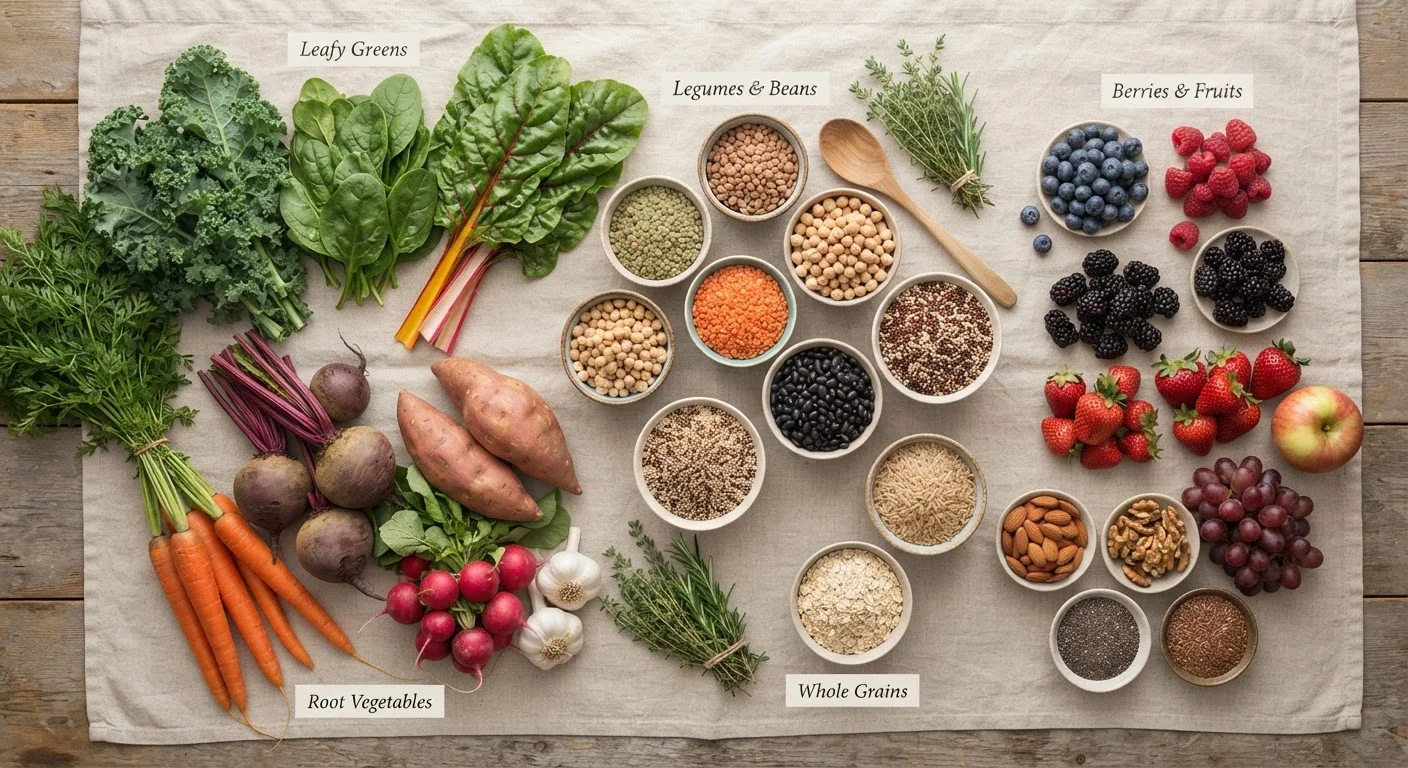
How to Use This Glossary
Nutrition literature can be dense with terminology that shapes how dietary recommendations are understood — and misunderstood. This reference glossary defines the core terms used across whole-food and nature-based dietary approaches, from foundational concepts like dietary fibre and bioavailability to more nuanced ideas like resistant starch and nutrient density.
Terms are defined independently so each can stand alone as a lookup entry. For readers building a broader understanding of evidence-informed eating, this glossary serves as a companion to our complete guide to whole-food eating and the focused overview of what whole-food plant-based eating actually means.
This Glossary Is for General Education
The definitions here are intended to support dietary literacy, not to guide personal medical or nutritional decisions. Individual nutritional needs vary depending on health status, age, and other factors. Always consult a registered dietitian or qualified healthcare professional before making significant dietary changes.
Core Terms Defined
The definitions below represent the vocabulary most commonly encountered when reading research or practical guidance on natural, whole-food dietary patterns. Understanding these terms enables more critical, informed engagement with nutrition information.
Whole Food
A food that is consumed in its minimally processed, naturally occurring form — retaining its original fiber, micronutrients, and phytochemicals. Whole foods contrast with ultra-processed products in which these components are removed or significantly altered.
Phytonutrients
Bioactive compounds produced naturally by plants, including flavonoids, carotenoids, and polyphenols. While not classified as essential nutrients, phytonutrients are associated with antioxidant, anti-inflammatory, and other health-supporting properties in research literature.
Bioavailability
The proportion of a nutrient or compound that is absorbed and available for use by the body after consumption. Bioavailability varies by food form, preparation method, and individual digestive factors.
Dietary Fibre
The indigestible portion of plant foods, including soluble fibre (which forms a gel in the gut) and insoluble fibre (which adds bulk to stool). Adequate fibre intake is consistently linked to improved gut health and reduced chronic disease risk.
Plant-Based Diet
A broad dietary pattern emphasizing foods derived primarily from plants — vegetables, fruits, legumes, whole grains, nuts, and seeds. The term does not necessarily mean vegan; it describes a continuum of eating patterns weighted toward plant foods.
Microbiome
The collective community of microorganisms — bacteria, fungi, viruses — residing primarily in the gastrointestinal tract. Diet is one of the most significant modifiable factors influencing microbiome composition and function.
Antioxidants
Molecules that neutralize free radicals — unstable compounds that can damage cells through oxidative stress. Vitamins C and E, selenium, and many phytonutrients function as antioxidants in the body.
Glycaemic Index (GI)
A ranking system measuring how quickly a carbohydrate-containing food raises blood glucose relative to pure glucose. Lower-GI foods produce a more gradual glucose response and are typically higher in fibre and less processed.
Legumes
The seed family encompassing beans, lentils, chickpeas, and peas. Legumes are rich in plant protein, soluble fibre, and resistant starch, making them a dietary cornerstone in many traditional whole-food eating patterns.
Resistant Starch
A type of starch that resists digestion in the small intestine and ferments in the large intestine, functioning similarly to dietary fibre. It is found in legumes, unripe bananas, cooked-and-cooled potatoes, and whole grains.
Nutrient Density
A measure of beneficial nutrients — vitamins, minerals, fibre, phytonutrients — relative to a food's energy content. Nutrient-dense foods provide substantial nutritional value per calorie consumed.
Ultra-Processed Food (UPF)
Products formulated from industrial ingredients and additives with minimal whole-food content, often characterized by high sodium, added sugars, and refined fats. The NOVA classification system is the most widely cited framework for categorizing UPFs.
For a deeper look at one specific compound family, our field guide to phytonutrients covers flavonoids, carotenoids, and other plant compounds in detail. Readers interested in how these dietary principles translate into gut health outcomes will find practical context in our guide to building a gut-friendly eating pattern.
Key Data Points at a Glance
The following figures provide quantitative context for several glossary terms, grounding abstract definitions in established reference values. These figures are general population benchmarks and not individual prescriptions.
| Fibre recommendation (adults, US) | 25–38 g per day (Dietary Guidelines for Americans, 2020–2025) |
| Phytonutrient classes identified | Over 25,000 (Linus Pauling Institute, Oregon State University) |
| NOVA food classification groups | 4 groups (1 = unprocessed to 4 = ultra-processed) (Monteiro et al., 2019, Public Health Nutrition) |
| Protein content in cooked lentils | ~18 g per cooked cup (USDA FoodData Central) |
| GI of white bread (reference) | ~70–75 (high GI) (University of Sydney Glycaemic Index Database) |
| Coverage of plant-based dietary patterns | Mediterranean, DASH, WFPB, Traditional Asian, and others (Reviewed in Dietary Guidelines Advisory Committee, 2020) |
For a broader cultural and historical perspective on how these principles manifest across different cuisines, our survey of nature-based diets around the world illustrates how whole-food eating has been practiced across diverse traditions. For practical next steps, see our introduction to building healthier eating habits from the ground up.
This article is for informational purposes only and does not constitute medical or nutritional advice. Consult a qualified healthcare professional or registered dietitian before making significant changes to your diet, especially if you have an existing health condition.
The content on this site is for informational purposes only and is not a substitute for professional advice. Always consult a qualified professional for guidance specific to your situation.