

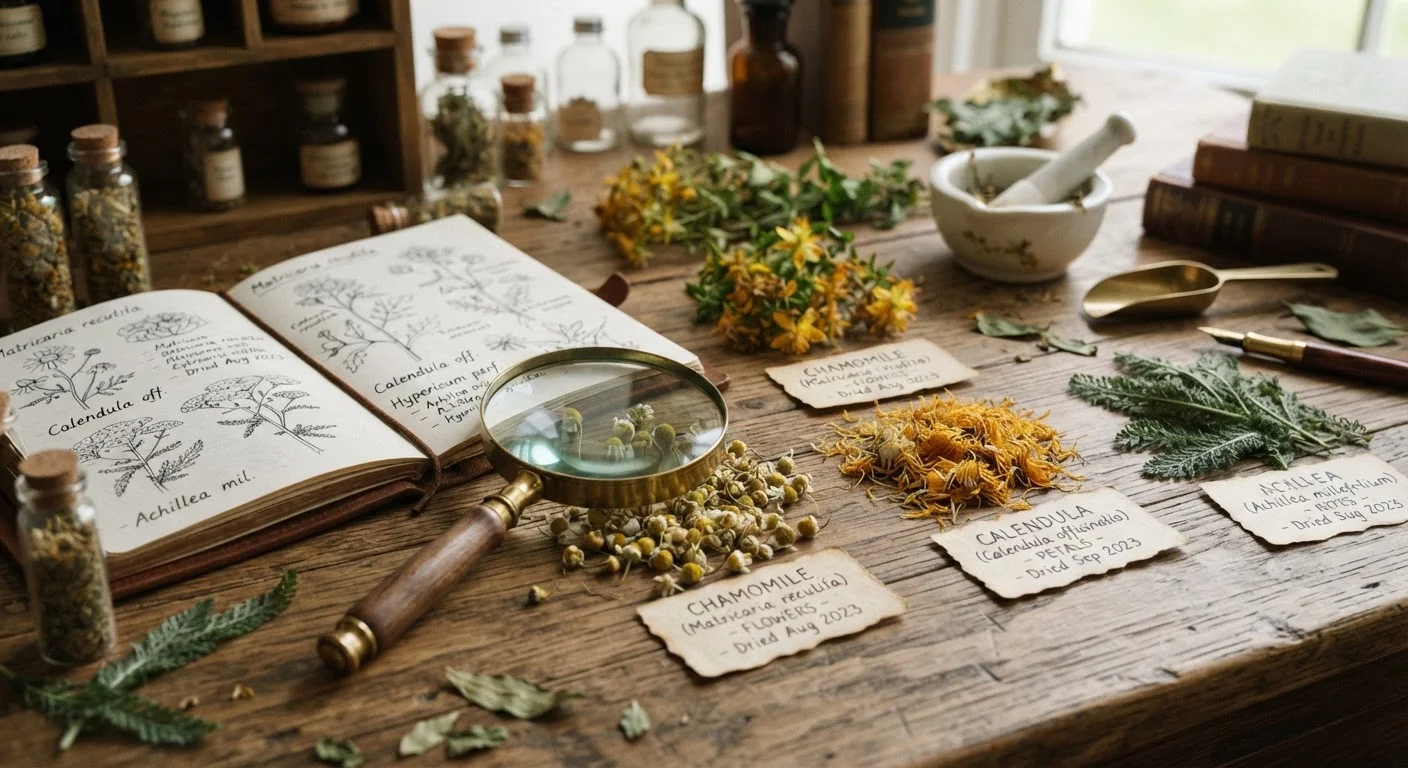
Why the Same Herb Can Vary So Widely
Pick up two bottles of ashwagandha from different shelves and you may be holding products with vastly different potency — even if the label looks nearly identical. Herb quality is not fixed at the species level; it is shaped by a chain of decisions made long before any capsule is filled.
Soil composition, altitude, rainfall, and harvest timing all influence the concentration of a plant's active constituents. A root harvested at peak maturity in well-mineralized soil can contain several times more withanolides than one pulled early from depleted ground. Post-harvest handling matters equally: improper drying, exposure to heat or moisture, and extended storage before processing can degrade volatile compounds significantly.
Processing method adds another layer of complexity. Whole-herb powders, dried-herb extracts, tinctures, and standardised extracts each preserve different fractions of a plant's chemistry. For a plain-language guide to these preparation terms, see the Herbal Remedy Glossary — it defines key concepts like standardisation and bioavailability clearly.
Decoding What a Herbal Label Actually Tells You
Herbal supplement labels in the United States are regulated as dietary supplements under the Dietary Supplement Health and Education Act (DSHEA), which means manufacturers are not required to prove efficacy or obtain pre-market approval. What the label says — and what it omits — therefore requires careful interpretation.
Look for a standardised extract with a declared active-constituent percentage.
Standardisation means the manufacturer has measured and guaranteed a minimum level of the key compound thought to drive the herb's benefit. This provides far more consistency between batches than whole-herb powders, where potency can swing dramatically. It is not a guarantee of efficacy, but it does allow meaningful comparison.
Seek products that carry third-party testing certification.
Independent organisations such as USP, NSF International, and ConsumerLab test supplements for label accuracy, potency, and the presence of contaminants like heavy metals, pesticide residues, and microbial loads. Manufacturers who submit to this scrutiny signal a meaningful commitment to quality that self-reported claims cannot replicate.
Treat 'proprietary blend' listings with appropriate caution.
When a label groups multiple herbs under a proprietary blend with only a total weight listed, individual ingredient amounts are hidden. A herb listed first may appear in a meaningful quantity, or it may be present only in token amounts — a practice sometimes called 'label dressing.' Without per-ingredient amounts, evaluating a product's likely potency is essentially impossible.
Check the listed plant part and confirm it matches the research-supported form.
Different parts of the same plant contain different chemistry. The root, leaf, seed, and berry of a single species may have entirely distinct traditional uses and studied properties. Using a part that has not been the subject of relevant research means the product may not reflect the evidence base it implies.
Verify that the Latin binomial (genus and species) is clearly stated.
Common herb names are not standardised. 'Elderberry' can refer to Sambucus nigra or other Sambucus species with different phytochemical profiles. Without the full botanical name, it is impossible to know whether a product contains the plant studied in available research.
Reading herbal labels shares some structural logic with reading food labels. If you want a broader foundation in label literacy, the guide to reading nutrition labels offers useful context on how regulatory labelling frameworks work in practice.
Quick Actions You Can Take Right Now
Label literacy improves with practice. The following immediate steps help you evaluate a product more critically before purchase or continued use.
~50%
Herbal supplements tested that failed label accuracy
A ConsumerLab analysis found that roughly half of herbal products tested had potency, identity, or contamination issues inconsistent with their labels.
10x+
Potency variation in some wildcrafted herbs
Peer-reviewed botanical research has documented active-constituent variability exceeding tenfold between poorly and optimally sourced batches of the same herb species.
This article is for informational purposes only and does not constitute medical advice. Always consult a qualified healthcare professional before starting, stopping, or changing any supplement or treatment regimen.
The content on this site is for informational purposes only and is not a substitute for professional advice. Always consult a qualified professional for guidance specific to your situation.