

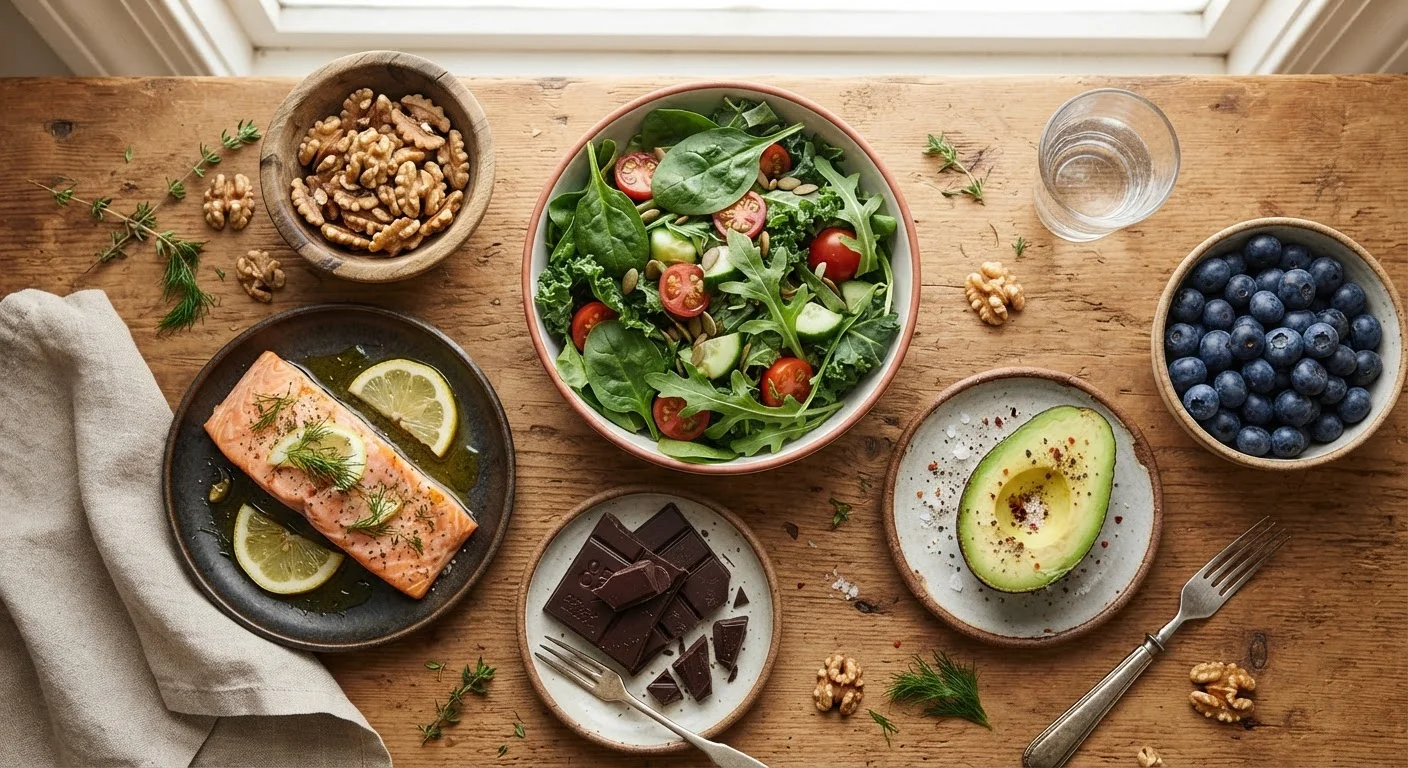
How Nutrition Intersects with the Stress Response
When stress hits, the body doesn't just respond emotionally — it triggers a cascade of physiological changes. Cortisol rises, inflammatory markers increase, and certain nutrients are rapidly consumed or excreted. Understanding what happens in your body under stress makes clear why dietary support isn't a fringe concept — it's grounded in biology.
Research suggests that chronic stress can deplete magnesium, B vitamins, and vitamin C, while simultaneously increasing oxidative burden on cells. Conversely, nutritional deficiencies may lower the threshold at which the stress response activates, creating a feedback loop that's worth addressing at the plate. This doesn't mean food is a substitute for professional support — rather, it's one evidence-informed layer of a broader resilience strategy.
The foods below are selected based on their appearance across multiple credible nutritional science reviews, not on individual studies or anecdotal claims. Nutrient-dense whole foods tend to outperform isolated supplements in population studies, underscoring the value of dietary patterns over quick fixes.
Magnesium-Rich Foods
Magnesium is involved in over 300 enzymatic reactions, including those regulating the hypothalamic-pituitary-adrenal (HPA) axis — the central stress-response system. Research has linked lower magnesium intake with heightened reactivity to stress, and stress itself accelerates urinary excretion of magnesium, creating a depletion cycle.
Foods consistently high in magnesium include dark leafy greens (particularly spinach and Swiss chard), pumpkin seeds, legumes, whole grains, and dark chocolate (70%+ cacao). These are practical, widely available sources that fit into most dietary patterns without significant effort.
Stress accelerates magnesium loss, making dietary replenishment especially relevant under pressure.
Fatty Fish and Omega-3 Sources
Omega-3 fatty acids — specifically EPA (eicosapentaenoic acid) and DHA (docosahexaenoic acid) — have been studied for their role in modulating neuroinflammation and supporting the brain's stress-regulating circuitry. Several randomised trials have found that omega-3 supplementation was associated with reductions in self-reported anxiety and in markers of systemic inflammation under stress conditions.
Fatty fish such as salmon, sardines, mackerel, and trout are among the richest dietary sources. Plant-based sources like flaxseeds, chia seeds, and walnuts provide ALA (alpha-linolenic acid), a precursor that the body can partially convert, though EPA and DHA from marine sources tend to be more readily utilised.
Omega-3 fatty acids may help moderate neuroinflammation, one of the biological pathways activated by chronic stress.
Fermented Foods for Gut-Brain Support
The gut microbiome communicates with the brain via the vagus nerve, immune signalling, and neurotransmitter production — including roughly 90% of the body's serotonin, which is synthesised in the gut. Disruptions to microbiota diversity are associated with heightened stress reactivity, making fermented foods a target of growing research interest.
Yogurt (with live cultures), kefir, kimchi, sauerkraut, miso, and tempeh all introduce beneficial bacterial strains that may support microbiome diversity. While the field of psychobiotics is still developing, early clinical evidence is promising, and these foods carry a strong general nutritional profile regardless of their stress-specific effects.
Approximately 90% of the body's serotonin is produced in the gut, highlighting the brain-gut connection.
B-Vitamin Rich Foods
B vitamins — particularly B6, B9 (folate), and B12 — are critical cofactors in the synthesis of neurotransmitters including serotonin, dopamine, and GABA. Deficiencies in these nutrients have been associated with increased vulnerability to stress and mood dysregulation in epidemiological literature.
Excellent dietary sources include eggs, legumes, leafy greens, nutritional yeast, and animal proteins like chicken and lean beef. Folate is especially concentrated in lentils and dark leafy vegetables. Those following plant-based diets should pay particular attention to B12, which is found almost exclusively in animal products and fortified foods.
B vitamins are essential cofactors for neurotransmitter synthesis — a direct link to mood and stress regulation.
Polyphenol-Rich Berries and Plant Foods
Polyphenols are plant compounds with antioxidant and anti-inflammatory properties that appear to modulate stress-related oxidative damage. Chronic stress increases the production of reactive oxygen species (free radicals), and antioxidant-rich diets have been associated with lower inflammatory biomarkers in several large cohort studies.
Blueberries, blackberries, dark cherries, green tea, and deeply coloured vegetables are particularly high in polyphenol content. Regular consumption of these foods forms a cornerstone of dietary patterns — such as the Mediterranean diet — consistently linked in research to better emotional resilience and lower rates of stress-related outcomes.
Polyphenol-rich foods help counter the oxidative stress that chronic psychological pressure accelerates.
Complex Carbohydrates and Blood Sugar Stability
Blood glucose fluctuations can mimic or amplify the physiological symptoms of stress — including irritability, poor concentration, and fatigue. Complex carbohydrates digest slowly, providing a steadier glucose supply and avoiding the cortisol spikes that can accompany sharp blood sugar crashes.
Whole grains like oats, quinoa, and brown rice, alongside legumes and root vegetables, are strong sources of complex carbohydrates with additional fibre benefits for gut health. Emerging research also suggests that adequate carbohydrate intake supports tryptophan uptake in the brain — a precursor to serotonin — giving this macronutrient an underappreciated role in mood stabilisation.
Blood sugar stability isn't just metabolic — erratic glucose levels can directly intensify the body's stress response.
Building a Stress-Resilient Plate Over Time
Nutrition's influence on stress is cumulative, not immediate. Studies examining anti-inflammatory dietary patterns consistently show that long-term adherence — not short-term loading of specific foods — is what correlates with measurable resilience benefits. A Mediterranean-style eating pattern, rich in many of the foods listed here, has been associated with lower levels of stress-related biomarkers in several epidemiological studies.
Focus on Patterns, Not Individual Foods
Rather than adding one stress-supporting food in isolation, consider how your overall dietary pattern holds up. Research consistently shows that varied, whole-food diets — not single-ingredient interventions — produce the most meaningful physiological benefits. Small, sustainable shifts across multiple food groups tend to compound meaningfully over weeks and months.
It's also worth noting that the gut plays a central role. The gut-brain axis is bidirectional: stress alters gut microbiota, and microbial imbalance in turn can affect mood and stress sensitivity. Foods that support gut health — fermented foods, prebiotic fibre, polyphenol-rich plants — therefore carry dual relevance here.
Pairing nutritional strategies with mind-body practices like yoga and meditation and broader stress management tools gives the most consistent results in the literature. Nutrition is one piece of a larger, well-supported system. As always, if stress is significantly affecting your daily functioning, consulting a qualified healthcare professional is the most important step.
This article is for general informational and educational purposes only and does not constitute medical advice. Always consult a qualified healthcare professional before making changes to your diet, particularly if you have a medical condition or are taking medication.
The content on this site is for informational purposes only and is not a substitute for professional advice. Always consult a qualified professional for guidance specific to your situation.