

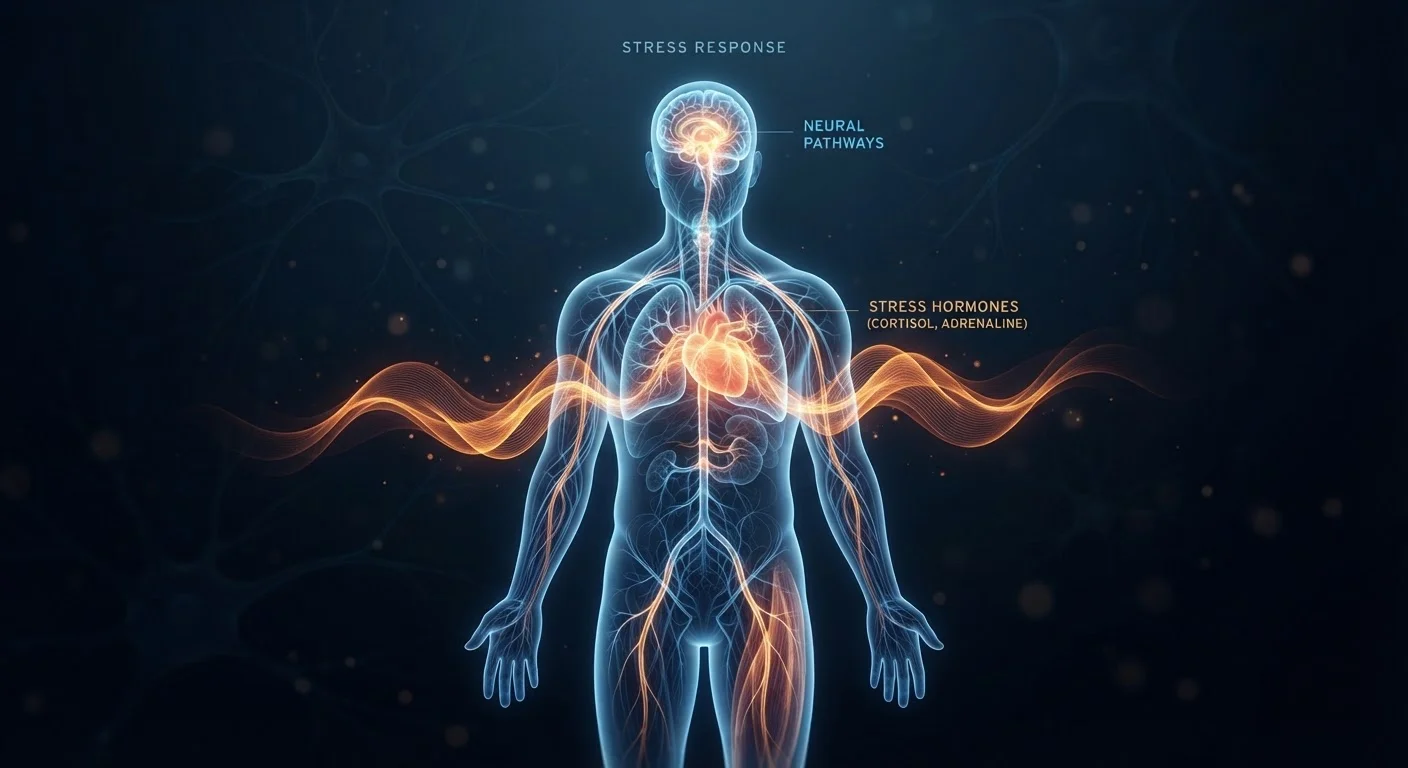
Fight, Flight, or Freeze: The Instant Biology of Stress
The moment your brain perceives a threat — whether a looming deadline or an unexpected noise — a rapid biological sequence begins. The amygdala, your brain's threat-detection center, fires a signal to the hypothalamus, which acts like a command hub. Within seconds, your adrenal glands release adrenaline (epinephrine), triggering the classic fight-or-flight response.
Heart rate accelerates to pump more oxygenated blood to muscles. Breathing quickens. Pupils dilate. Digestion slows as blood is redirected to your limbs. This is an ancient, finely tuned survival system — and in genuine emergencies, it works remarkably well.
For a deeper look at how this translates into physical sensations, see why stress feels so physical.
“Stress is not what happens to us. It's our response to what happens. And response is something we can choose.”
— Maureen Killoran, Unitarian Universalist minister and wellness educator
Cortisol's Role: The Sustained Stress Hormone
If adrenaline is the body's emergency flare, cortisol is the sustained follow-up. Released from the adrenal cortex via the HPA axis (hypothalamic-pituitary-adrenal axis), cortisol keeps your body mobilized during prolonged stress by elevating blood sugar, suppressing non-essential functions like digestion and reproduction, and sharpening focus.
In healthy, time-limited doses, cortisol is adaptive. It helps you push through a difficult challenge, then naturally tapers as the situation resolves. Problems arise when the signal never turns off. Chronically elevated cortisol has been associated with disrupted sleep, increased abdominal fat storage, impaired memory consolidation, and reduced immune efficiency.
~77%
Adults reporting physical stress symptoms
The American Psychological Association has consistently found the large majority of U.S. adults experience physical symptoms linked to stress, including fatigue and headaches.
50%
Increased illness risk under chronic stress
Research published in health psychology literature indicates chronically stressed individuals show meaningfully higher susceptibility to common infectious illness.
20 min
Time for cortisol to peak after a stressor
Studies on HPA axis dynamics show cortisol typically peaks approximately 20 minutes after a stressor onset, then gradually declines if the threat resolves.
How Stress Affects Your Gut and Immune System
Many people notice digestive upset during stressful periods — and the biology explains why. The gut and brain communicate through the gut-brain axis, a bidirectional network involving the vagus nerve and gut microbiome. When the stress response activates, digestive motility is altered, gut barrier integrity can be compromised, and the balance of beneficial gut bacteria may shift.
This gut disruption feeds back into immune function. Roughly 70% of immune activity is associated with gut-associated lymphoid tissue, meaning a stressed gut can translate into a less effective immune defense. Explore more about this connection in our Immune & Gut Health hub.
The Parasympathetic Pathway: Your Body's Natural Reset
The autonomic nervous system has two primary branches: the sympathetic (stress-activating) and the parasympathetic (rest-and-digest). When you're overwhelmed, it's the parasympathetic branch that needs activation to restore physiological balance.
Slow, diaphragmatic breathing is one of the most evidence-supported ways to engage this system. By extending the exhale, you stimulate the vagus nerve, which signals the brain to downregulate the stress response. Other research-backed approaches include mindfulness meditation, gentle yoga, and adequate sleep — all of which help recalibrate HPA axis activity over time.
For a broader toolkit of natural approaches, visit our Stress & Anxiety hub.
Try the Physiological Sigh for Fast Relief
Research from Stanford University suggests a double inhale through the nose followed by a long exhale through the mouth — called the physiological sigh — is one of the fastest ways to activate the parasympathetic nervous system. You can do this anywhere, in under 30 seconds, without any equipment. It won't replace longer-term stress management practices, but it offers a practical, evidence-grounded moment of reset.
This article is for general informational purposes only and does not constitute medical advice. If you are experiencing significant or persistent stress symptoms, please consult a qualified healthcare professional.
Frequently Asked Questions
Cortisol, produced by the adrenal glands, is the primary stress hormone involved in sustaining the body's alert state. Adrenaline (epinephrine) is released first for the immediate fight-or-flight reaction, while cortisol follows to maintain energy and focus over a longer period. Both are essential in short bursts but problematic when chronically elevated.
Yes, chronic stress is linked to measurable changes in immune function, cardiovascular health, and digestive wellbeing. Prolonged cortisol elevation can suppress the immune system, increase inflammation, and disrupt gut microbiome balance. These effects accumulate over time, raising susceptibility to illness and slowing recovery.
Acute stress is short-term and resolves quickly — such as nerves before a presentation. Chronic stress persists over weeks or months, keeping the body in a prolonged state of physiological alert. While acute stress can sharpen performance, chronic stress is consistently associated with negative health outcomes.
Slow, diaphragmatic breathing activates the parasympathetic nervous system, counteracting the fight-or-flight response. This lowers heart rate, reduces cortisol levels, and signals safety to the brain. Research supports it as one of the most accessible and effective tools for real-time stress regulation.
Regular physical activity supports stress resilience by reducing baseline cortisol levels and improving HPA axis regulation over time. Exercise also stimulates endorphin release, which supports mood. Even moderate movement — such as a brisk walk — can produce measurable reductions in acute stress.
The content on this site is for informational purposes only and is not a substitute for professional advice. Always consult a qualified professional for guidance specific to your situation.