

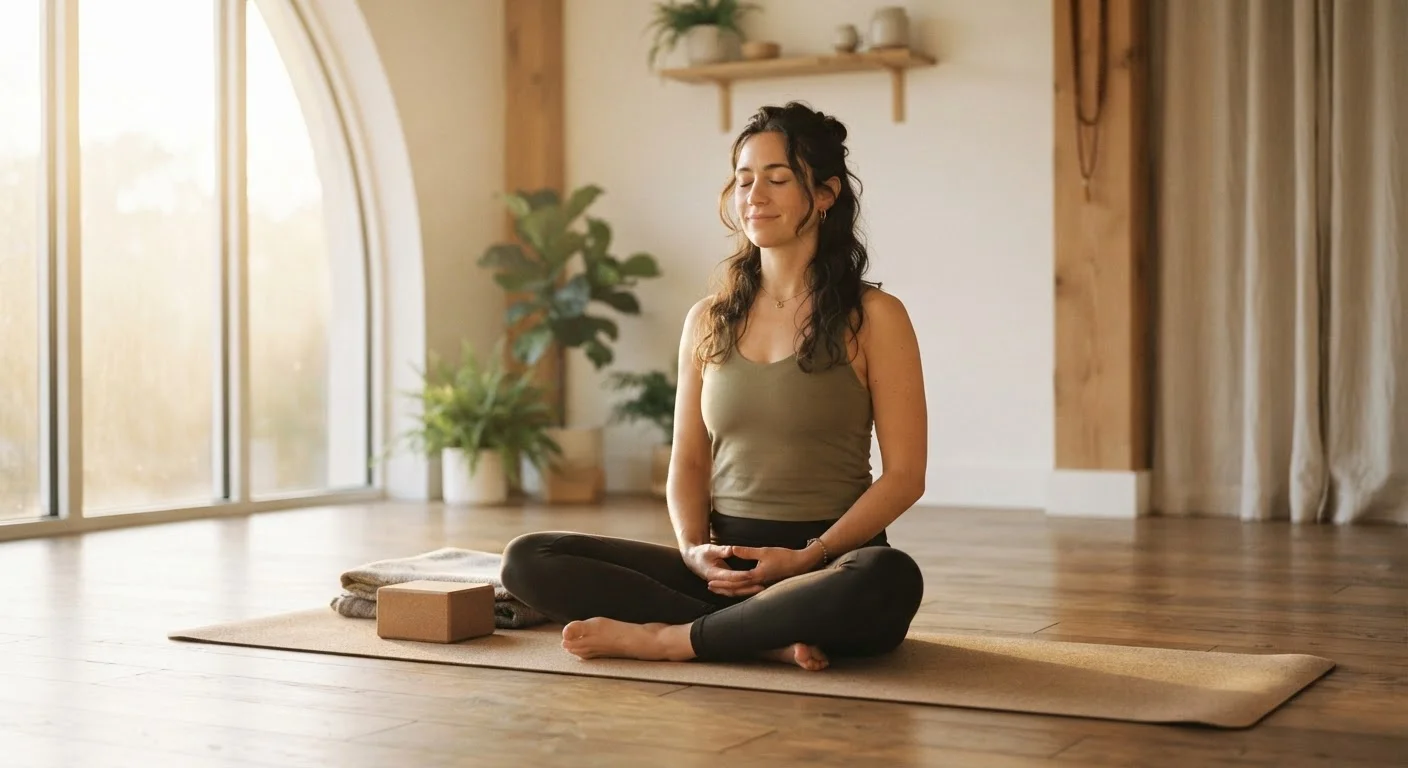
Two Practices, One Nervous System
Stress is not purely a mental event. When the brain perceives a threat — whether a looming deadline or a difficult conversation — the body responds: heart rate climbs, muscles tighten, and stress hormones flood the bloodstream. This is the sympathetic nervous system activating what is commonly called the fight-or-flight response. Over time, if this system stays chronically elevated, health can suffer.
Yoga and meditation each act on this same nervous system, but through different pathways. Yoga's physical postures (asanas) and deliberate breathing techniques (pranayama) send signals directly through the body to downregulate arousal. Meditation — particularly mindfulness-based approaches — targets the cognitive and emotional patterns that keep the stress response activated even after the immediate trigger has passed.
Practised together, they close a loop. The body learns to release tension, and the mind learns not to recreate it unnecessarily. This dual engagement is why researchers and practitioners increasingly view combined yoga-meditation as a more complete intervention for stress than either discipline in isolation.
A Note on Individual Variation
Not every person responds to yoga or meditation in the same way, and some individuals — particularly those with trauma histories — may find certain practices activating rather than calming. This is a recognised phenomenon in trauma-sensitive yoga research. If you have a history of trauma, anxiety disorder, or another relevant health condition, seeking guidance from a trauma-informed instructor or mental health professional before starting is strongly recommended.
What Yoga Contributes: The Body's Stress Thermostat
Yoga's physical practice works partly through the vagus nerve — the primary channel of the parasympathetic nervous system, responsible for the body's rest-and-digest response. Slow, controlled breathing characteristic of yoga practice stimulates vagal tone, measurably shifting the nervous system away from a stress-activated state.
Studies examining yoga's effects on physiological stress markers have found associations with reduced salivary cortisol (the primary stress hormone), improved heart rate variability (a marker of autonomic flexibility), and lower perceived stress scores. These effects appear across a range of yoga styles, though gentler, breath-centred approaches such as hatha and yin yoga are most consistently studied in this context.
Yoga also builds interoceptive awareness — the ability to notice what is happening inside the body. This skill is foundational to resilience: recognising the early physical signs of stress allows for earlier, less effortful regulation. Just as certain dietary patterns support the body's stress-response systems, so too does consistent physical practice that honours the body's internal signals.
~30%
Reduction in perceived stress scores
A meta-analysis published in the journal Psychosomatic Medicine found yoga interventions associated with approximately 30% reductions in self-reported stress across multiple studies.
8 weeks
Time to measurable brain changes
Research from Harvard-affiliated Massachusetts General Hospital found measurable increases in grey matter density in stress-regulating brain regions after eight weeks of mindfulness meditation practice.
↑ HRV
Improved heart rate variability with yoga
Multiple controlled studies have documented improved heart rate variability — a key marker of autonomic nervous system flexibility — following regular yoga practice.
What Meditation Contributes: Rewiring Reactivity
Meditation does not eliminate stressful thoughts — it changes your relationship to them. Through consistent practice, meditators develop what researchers call metacognitive awareness: the ability to observe thoughts rather than automatically identify with them. Rumination — the repetitive, often catastrophic mental replay of stressors — is one of the strongest drivers of chronic stress, and mindfulness meditation is among the most studied interventions for reducing it.
Neuroimaging research has shown that regular meditators demonstrate structural and functional changes in areas of the brain involved in emotional regulation, including the prefrontal cortex and amygdala. The amygdala — sometimes described as the brain's threat-detection centre — shows reduced reactivity in experienced meditators even under standardised stress conditions.
Importantly, these cognitive gains translate into everyday life. Meditators tend to recover faster from stressful events, report fewer intrusive thoughts, and show greater emotional stability. These are the hallmarks of resilience — not the absence of stress, but the capacity to move through it without prolonged disruption.
“The relaxation response is a physical state of deep rest that changes the physical and emotional responses to stress — and it can be elicited through practices like meditation and yoga.”
— Herbert Benson, Founding Director, Benson-Henry Institute for Mind Body Medicine, Harvard Medical School
The Synergy: Why Together Is Greater Than the Sum
When yoga and meditation are practised together — whether in a single session that moves from asana into seated practice, or as complementary daily habits — each reinforces the other's effects. The bodily calm cultivated in yoga makes it easier to settle into meditation; the attentional skills developed in meditation deepen the quality of physical practice. This creates a positive feedback loop that accelerates the development of resilience.
Combined yoga-meditation programmes — including the widely studied Mindfulness-Based Stress Reduction (MBSR) protocol — have demonstrated consistent reductions in perceived stress, anxiety, and depression across diverse populations. While effect sizes vary and not all participants respond equally, the body of evidence is strong enough that major health institutions now acknowledge mind-body practices as meaningful complements to conventional care.
Social support is another well-documented resilience factor; research on social connection as a stress buffer underscores how protective relationships compound the benefits of individual practices like yoga and meditation. Building resilience is rarely a single-practice endeavour.
This article is for general informational and educational purposes only and does not constitute medical advice. If you are experiencing significant stress, anxiety, or related health concerns, please consult a qualified healthcare professional before beginning a new practice.
Frequently Asked Questions
Each practice targets stress through a different entry point. Yoga directly regulates the body's physiological stress response through breathwork and movement, while meditation reshapes attentional patterns and emotional reactivity. Together, they address both the body and mind simultaneously, reinforcing each other's effects.
Research suggests measurable changes in stress markers can appear within eight weeks of regular combined practice, though individual results vary considerably. Consistency matters more than session length — shorter daily practice generally outperforms infrequent longer sessions.
No prior experience is required. Beginners can access gentle yoga styles and simple breath-focused meditation techniques with clear benefits. Starting gradually and working with a qualified instructor reduces injury risk and helps establish sustainable habits.
No. Yoga and meditation are complementary practices that may support general well-being, but they are not substitutes for professional medical or psychological care. Anyone experiencing significant anxiety, depression, or trauma-related symptoms should consult a qualified healthcare professional.
Mindfulness-based meditation — focusing on breath, body sensation, or present-moment awareness — is the most studied alongside yoga for stress outcomes. Loving-kindness (metta) meditation may also complement yoga well, particularly for emotional regulation.
There is no single optimal time; the best time is one that fits your schedule and allows consistency. Morning practice may help regulate the cortisol awakening response, while evening practice may support wind-down and sleep quality — both relevant to resilience.
The content on this site is for informational purposes only and is not a substitute for professional advice. Always consult a qualified professional for guidance specific to your situation.