

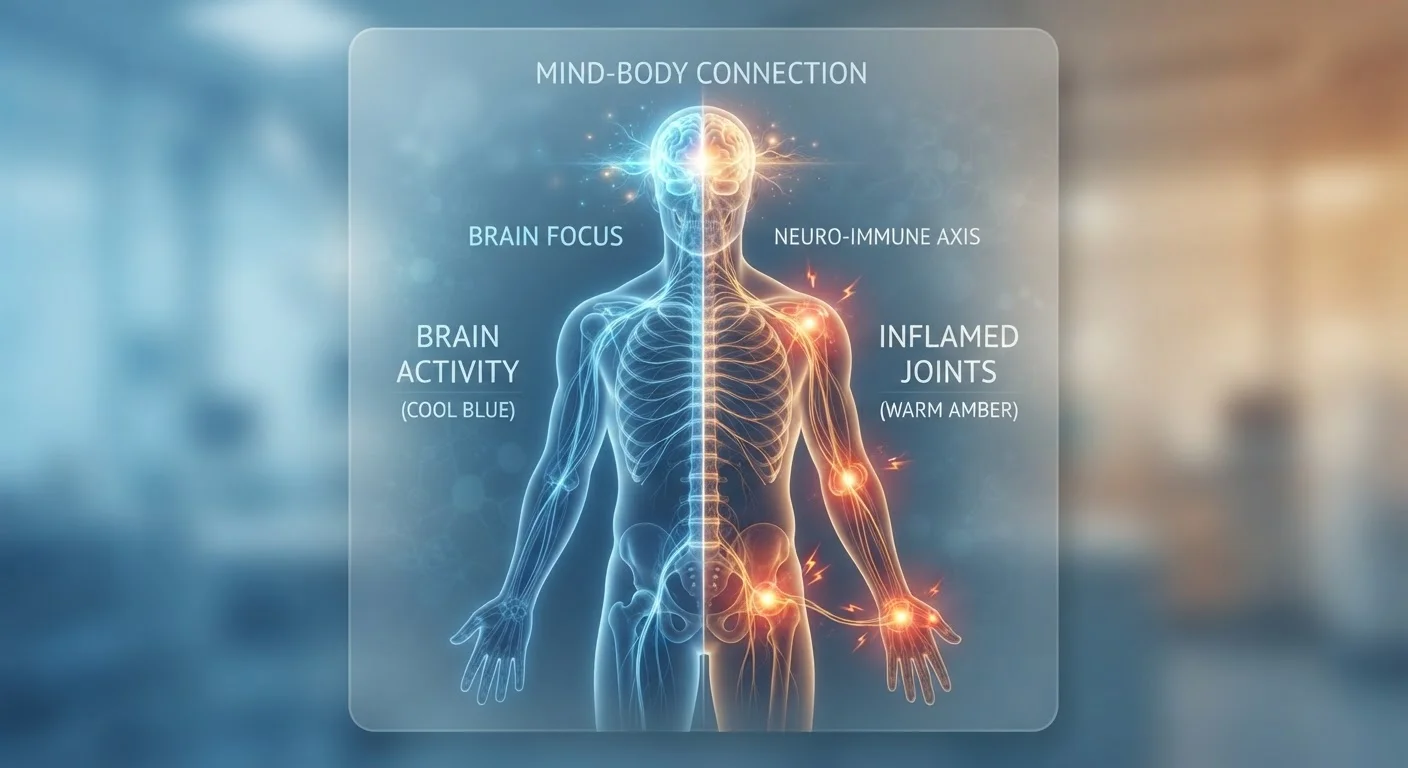
How the Stress Response Sets the Stage for Inflammation
When the brain perceives a threat — whether a looming deadline or an argument at home — it triggers the hypothalamic-pituitary-adrenal (HPA) axis and the sympathetic nervous system. Adrenaline and cortisol flood the bloodstream, mobilizing energy and temporarily suppressing non-essential functions. For a brief, acute stressor, this is adaptive and resolves quickly.
Chronic stress changes that picture entirely. Sustained cortisol elevation progressively disrupts immune regulation. Rather than calming inflammation, a persistently overactivated HPA axis begins to promote it — partly because immune cells develop resistance to cortisol's anti-inflammatory signals. The result is elevated levels of pro-inflammatory cytokines, including IL-6 and TNF-alpha, circulating throughout the body. To understand the full physiological cascade that precedes this state, see our in-depth look at what happens in the body under stress.
~30%
Adults with chronic pain who also report significant psychological distress
Research published in pain medicine literature consistently finds high co-occurrence rates of chronic pain and psychological stress or anxiety disorders.
2–3×
Elevated inflammatory marker levels in chronically stressed individuals
Studies examining IL-6 and C-reactive protein levels have found substantially higher concentrations in individuals reporting high chronic stress compared to low-stress controls.
60–80%
Fibromyalgia patients reporting stress as a key pain trigger
Patient surveys in fibromyalgia research consistently identify psychological stress as among the most frequently cited factors that worsen symptom flares.
Central Sensitization: When the Nervous System Turns Up the Volume
Inflammation is only part of the story. Chronic psychological stress also reshapes how the nervous system processes pain signals — a phenomenon researchers call central sensitization. In this state, spinal cord and brain neurons that handle pain signals become hypersensitive, firing more readily and more intensely than they normally would.
Think of it as the nervous system's gain being stuck on high. Stimuli that would ordinarily feel mildly uncomfortable — a firm handshake, a change in temperature — can register as genuinely painful. Stress hormones and inflammatory molecules both contribute to this rewiring, which helps explain why people dealing with chronic stress so frequently report widespread, hard-to-localize pain.
This neurological dimension is explored in greater depth in our article on how the body signals injury and distress, which unpacks how pain pathways function under both normal and sensitized conditions.
“Pain is not simply the result of damaged tissue — it is an output of the brain, shaped by everything from immune signals to emotional state. Psychological stress is one of the most potent modulators of that output.”
— Lorimer Moseley, Professor of Clinical Neurosciences, University of South Australia; internationally recognized pain researcher and author
The Gut Connection and Systemic Ripple Effects
The stress-inflammation link does not stay contained to the nervous system. Chronic stress disrupts the intestinal barrier and alters the gut microbiome, allowing bacterial byproducts to enter systemic circulation and further fuel immune activation. This gut-brain axis creates a feedback loop: stress inflames the gut, a disrupted gut amplifies stress signaling, and systemic inflammation rises as a result.
Our companion piece on chronic stress and gut health explores this two-way conversation in detail, and for readers curious about how microbiome balance relates specifically to pain, our article on gut health and systemic inflammation addresses the emerging research in that space.
Together, these pathways illustrate why chronic pain and chronic stress so frequently co-occur, and why effective management often needs to address both simultaneously.
Mind-Body Approaches to Breaking the Cycle
Understanding the biological connection between stress and pain points directly toward interventions that target both. Research into mindfulness-based stress reduction (MBSR), yoga, cognitive behavioral therapy (CBT), and other mind-body practices shows measurable reductions in inflammatory markers and self-reported pain intensity in certain populations — though effect sizes vary and these are not universal solutions.
These approaches appear to work partly by calming HPA-axis reactivity, partly by improving emotional regulation, and partly by increasing a person's sense of agency over their symptoms. The mind-body wellness hub offers guidance on practices that support this integration. It is important to note that mind-body practices are best used as complements to professional medical treatment, not as substitutes — particularly for people managing diagnosed chronic pain conditions.
Start Small With Stress-Reduction Practices
Even brief daily practices — ten minutes of diaphragmatic breathing, a short body-scan meditation, or a gentle yoga sequence — have been associated in research with measurable reductions in cortisol and self-reported pain. Consistency matters more than duration. If you are managing a chronic pain condition, speak with a healthcare provider about incorporating structured mind-body practices alongside your existing treatment plan.
This article is for general informational and educational purposes only and does not constitute medical advice. Always consult a qualified healthcare professional before making changes to your pain management or stress treatment plan.
Frequently Asked Questions
Stress doesn't usually manufacture pain from nothing, but it can significantly amplify existing pain signals and lower the threshold at which the nervous system registers discomfort. Chronic stress also promotes inflammation, which can contribute to muscle tension, headaches, and joint pain. For some individuals, sustained psychological pressure may be a meaningful contributor to conditions like fibromyalgia or tension headaches.
Central sensitization is a state in which the central nervous system becomes hypersensitive, amplifying pain signals even in response to non-painful stimuli. Chronic stress elevates stress hormones and inflammatory molecules that can alter how pain-processing neurons behave, effectively turning up the volume on pain. It is recognized as a key mechanism in conditions such as fibromyalgia, chronic low back pain, and irritable bowel syndrome.
Evidence from multiple research areas suggests that stress-reduction practices — including mindfulness-based stress reduction (MBSR), yoga, and cognitive behavioral therapy — are associated with lower levels of inflammatory markers such as C-reactive protein and IL-6 in some studies. However, the magnitude of effect varies between individuals and conditions, and these approaches are best used as complements to, not replacements for, professional medical care.
The brain regions that process emotional distress — including the anterior cingulate cortex and the insula — overlap substantially with those involved in processing physical pain. This shared neural real estate means psychological suffering activates some of the same alarm circuits as tissue injury, producing genuine physical sensations. It is a core reason why grief, anxiety, and chronic stress are so often felt in the body.
Yes. If you notice that stress consistently worsens your pain, or if chronic pain is significantly affecting your quality of life, consulting a qualified healthcare professional is strongly recommended. A clinician can help determine whether underlying conditions are contributing, and can guide you toward evidence-based treatments that address both psychological and physical dimensions.
The content on this site is for informational purposes only and is not a substitute for professional advice. Always consult a qualified professional for guidance specific to your situation.