

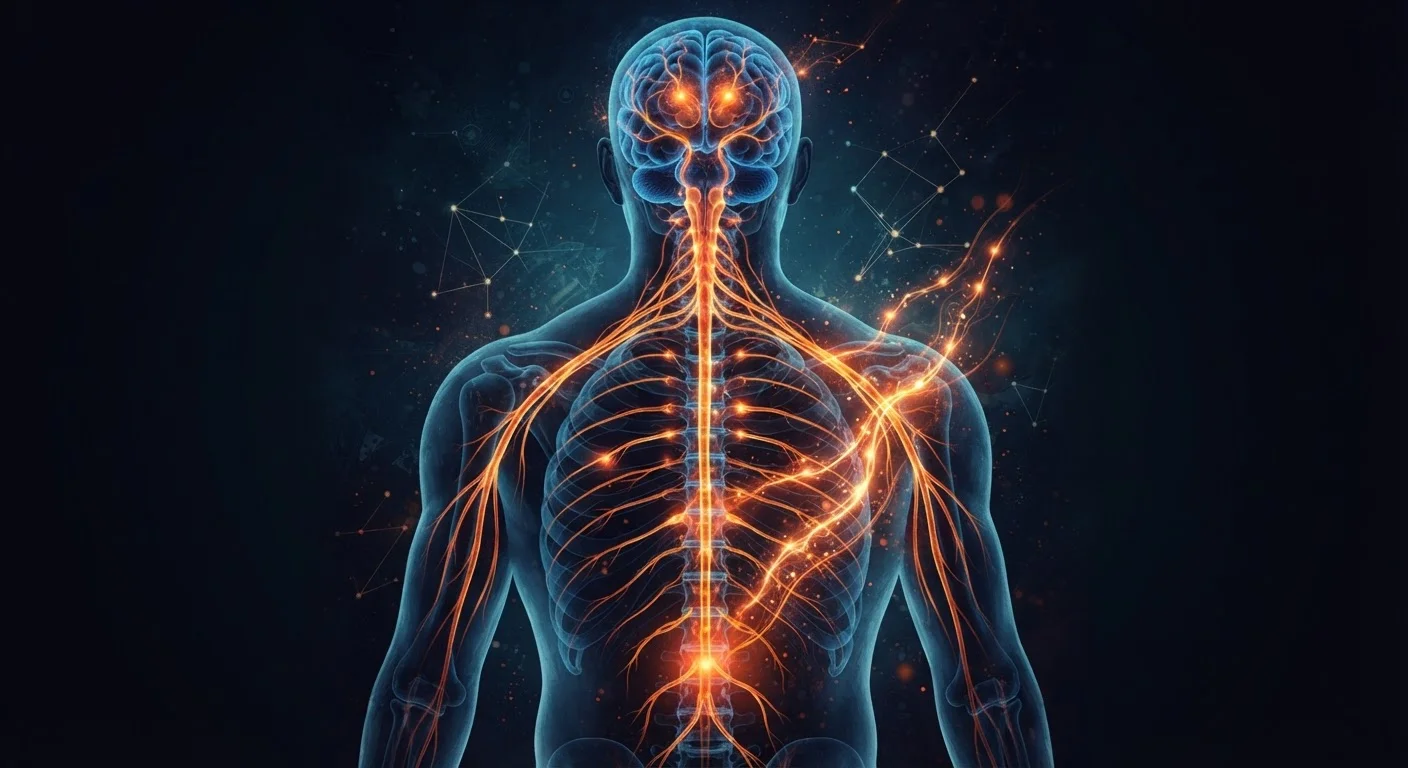
From Tissue to Brain: The Pain Pathway Explained
When you stub your toe or strain a muscle, pain doesn't appear instantly in the brain — it travels there through a carefully orchestrated biological relay. The process begins with nociceptors, sensory nerve endings distributed throughout the body's tissues. These receptors respond to mechanical pressure, extreme temperatures, and chemical signals released when cells are damaged.
Once activated, nociceptors convert the harmful stimulus into an electrical impulse. This signal travels along peripheral nerve fibers — primarily fast-conducting A-delta fibers, responsible for the sharp initial sensation, and slower C fibers, which carry the dull, throbbing pain that follows. Both fiber types converge at the spinal cord's dorsal horn, where the signal is processed and passed upward through the spinothalamic tract to the brain.
The brain doesn't simply receive the signal passively. The thalamus acts as a relay station, distributing pain information to regions including the somatosensory cortex (which maps where pain is located) and the limbic system (which attaches emotional meaning to it). This explains why pain has both a physical location and an emotional quality — they are neurologically inseparable.
20%
US adults living with chronic pain
The CDC estimates approximately 1 in 5 American adults experiences chronic pain, defined as pain occurring most days or every day for at least three months.
~100 ms
Time for sharp pain signal to reach the brain
Fast-conducting A-delta nerve fibers transmit acute pain signals at speeds that allow the initial sharp sensation to register in the brain within roughly 100 milliseconds of tissue contact.
40–60%
Chronic pain cases involving central sensitization
Research published in pain neuroscience literature suggests central sensitization may be a contributing factor in a substantial proportion of common chronic pain conditions, including low back pain and headache disorders.
The Role of Inflammation in Amplifying Pain
Inflammation is a cornerstone of the body's healing response, but it also dramatically changes how pain signals are generated and perceived. When tissue is injured, immune cells release a cascade of inflammatory mediators — including prostaglandins, bradykinin, and substance P. These chemicals lower the activation threshold of nearby nociceptors, a phenomenon known as peripheral sensitization.
The result is hyperalgesia (increased sensitivity to painful stimuli) and allodynia (pain from stimuli that are not normally painful, such as light touch on sunburned skin). This heightened sensitivity is functional in the short term — it encourages protection of the injured area — but can become problematic when inflammation persists beyond the acute healing phase.
Chronic low-grade inflammation, increasingly linked to diet, sedentary behavior, and psychological stress, may sustain this sensitized state. Lifestyle strategies that address inflammatory pathways — such as balanced nutrition, regular movement, and stress management — are therefore directly relevant to how pain is experienced. For a deeper look at how exercise modulates these pathways, see how physical activity influences inflammatory markers.
Support Your Nervous System Daily
Small, consistent habits can meaningfully influence how sensitized your nervous system becomes over time. Prioritizing sleep, managing psychological stress, and incorporating gentle movement are evidence-supported strategies that act directly on the neural pathways involved in pain modulation. These aren't cures, but they are foundational — and often underestimated.
Central Sensitization and Chronic Pain
Acute pain generally resolves as healing occurs. But in a significant proportion of people, pain persists long after tissue damage has resolved — a phenomenon rooted in central sensitization. This occurs when the spinal cord and brain themselves become hypersensitive, amplifying pain signals regardless of ongoing peripheral input.
Central sensitization involves structural and functional changes in the nervous system, including increased receptor density, altered neurotransmitter levels, and reduced effectiveness of the body's natural pain-inhibition systems. Conditions such as fibromyalgia, chronic low back pain, and certain headache disorders are strongly associated with central sensitization.
Importantly, central sensitization means that chronic pain is a neurological condition as much as it is a musculoskeletal or inflammatory one. Approaches that support nervous system regulation — including mindfulness, cognitive strategies, sleep optimization, and appropriately guided movement — are gaining strong research support as complementary tools. Psychological stress is a particularly potent driver of central sensitization; explore the biological links in our article on why stress makes pain worse.
Applying Pain Biology to Natural Management Strategies
Understanding the biology of pain reframes how we think about relief. Because pain involves the peripheral nervous system, the spinal cord, the brain, and the immune system simultaneously, no single approach addresses every dimension. Effective natural management strategies typically work across multiple levels of this system.
At the peripheral level, reducing localized inflammation through dietary patterns rich in omega-3 fatty acids, polyphenols, and antioxidants may dampen nociceptor sensitization. At the central level, practices that promote nervous system regulation — such as diaphragmatic breathing, meditation, and consistent sleep — can help reduce the amplification of incoming signals.
Movement deserves particular attention. Research consistently shows that appropriate physical activity, even at low intensity, can modulate inflammatory markers and support the brain's own pain-inhibition pathways through endogenous opioid and endocannabinoid mechanisms. This doesn't mean pushing through severe pain; it means understanding that guided, progressive movement is generally therapeutic rather than harmful.
If you're ready to explore these strategies further, our beginner's overview of holistic pain management covers foundational approaches, and our pain tracking guide can help you identify personal patterns to discuss with your healthcare provider.
This article is for general informational and educational purposes only. It is not a substitute for professional medical advice, diagnosis, or treatment. Always consult a qualified healthcare provider with questions about any medical condition or before making changes to your health routine.
Frequently Asked Questions
Pain serves as a protective warning system, alerting you that tissues may be damaged or at risk. Without it, injuries could go unnoticed and worsen. In most acute cases, pain motivates protective behaviors like resting an injured area and seeking care.
Nociceptors are specialized sensory nerve endings that detect potentially harmful stimuli, including heat, pressure, and chemical changes from tissue damage. They are found throughout the skin, muscles, joints, and internal organs, making them the body's first line of pain detection.
Chronic pain can persist due to a process called central sensitization, where the nervous system remains in a heightened state of reactivity even after the original tissue damage has resolved. This means the brain and spinal cord continue amplifying pain signals inappropriately. Managing this often requires strategies that address the nervous system directly, not just the original injury site.
When tissue is injured, the immune system releases inflammatory chemicals such as prostaglandins and bradykinin. These chemicals sensitize nearby nociceptors, lowering their threshold for firing — which is why inflamed areas often feel more painful than usual. This is known as peripheral sensitization.
Yes. The stress response activates pathways that can increase inflammation and amplify the nervous system's sensitivity to pain signals. Psychological and emotional stress are recognized contributors to heightened pain perception, particularly in chronic conditions.
Not necessarily. Pain intensity does not always correspond directly to the degree of tissue damage. Factors like nervous system sensitization, emotional state, sleep quality, and past pain experiences all influence how pain is perceived. Always consult a healthcare professional to evaluate persistent or severe pain.
The content on this site is for informational purposes only and is not a substitute for professional advice. Always consult a qualified professional for guidance specific to your situation.