
Start here
Why Strength and Mobility Belong Together
Learn the basics
The Six Foundational Movement Patterns
Apply it
How to Structure Your First Weeks
Avoid pitfalls
Common Beginner Mistakes to Avoid
Make it last
Building a Habit That Actually Sticks
Why Strength and Mobility Belong Together
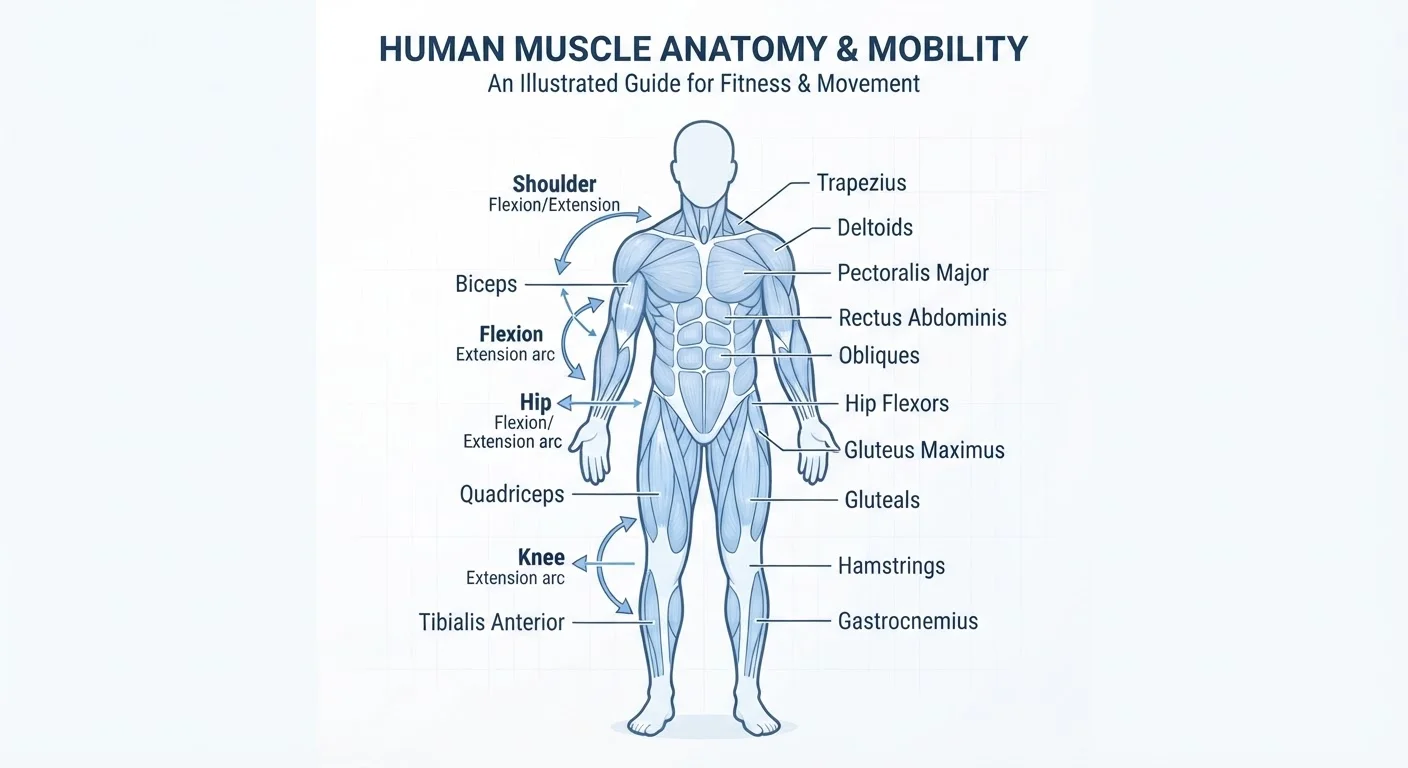
Most people enter fitness through one door: they want to get stronger, or they want to move better. What research on functional movement consistently shows is that these goals reinforce each other. Strength without adequate range of motion limits how well you can express that strength safely. Mobility without the muscular control to stabilize a joint can leave it vulnerable.
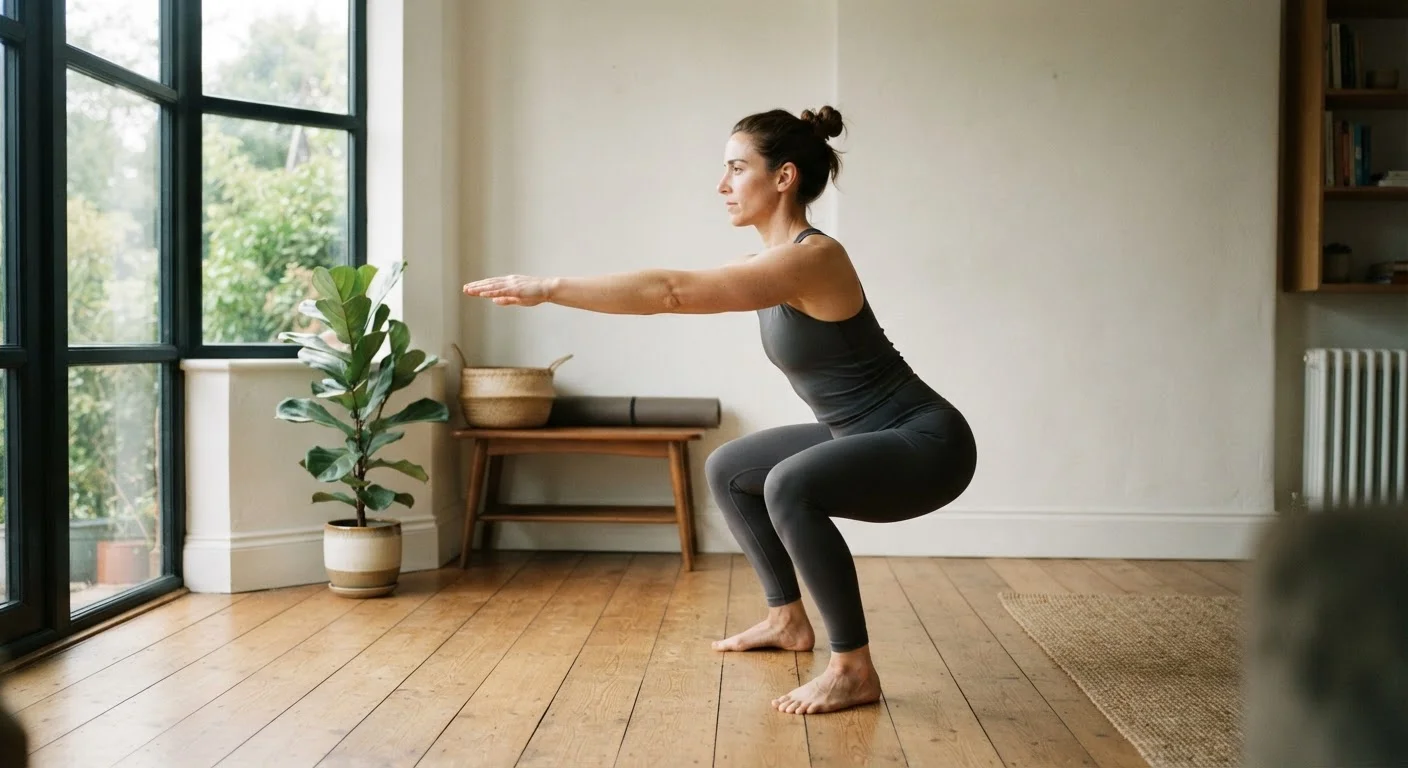
Think of it this way: a deep squat requires both the hip mobility to descend and the leg and core strength to control the descent. Training one without the other creates gaps. Balanced physical development — the kind that translates to feeling capable in daily life — comes from addressing both simultaneously.
For a broader look at how these principles apply across a complete fitness practice, see the comprehensive resource on strength and flexibility training.
Mobility
The ability to actively move a joint through its full range of motion with control. It combines flexibility with the muscular strength to direct that movement.
Flexibility
The passive capacity of a muscle or group of muscles to lengthen. It is one component of mobility but does not on its own ensure functional movement.
Movement pattern
A category of human movement — such as squatting or hinging — that describes how the body organizes itself to accomplish a task. Training by pattern ensures balanced development.
DOMS
Delayed onset muscle soreness — the mild aching that follows unfamiliar exercise, typically appearing 24–48 hours later. It is a normal adaptation response, not an indicator of injury.
Progressive overload
The gradual increase of training demand over time — through more repetitions, greater resistance, or reduced rest — to continue prompting physical adaptation.
Functional strength
Strength that transfers to real-life movement tasks, such as lifting, carrying, or climbing stairs, rather than isolated muscle performance in artificial conditions.
The Six Foundational Movement Patterns
Rather than thinking in terms of muscle groups, functional training organizes exercise around movement patterns. Six patterns cover the vast majority of what the human body needs to do well:
- Squat — lowering and rising through hip and knee flexion (e.g., bodyweight squat, goblet squat)
- Hinge — bending at the hips with a neutral spine (e.g., Romanian deadlift, good morning)
- Push — pressing away from the body horizontally or vertically (e.g., push-up, overhead press)
- Pull — drawing weight toward the body (e.g., row, pull-up)
- Carry — stabilizing the body while walking under load (e.g., farmer's carry, suitcase carry)
- Rotate — controlled twisting through the torso (e.g., pallof press, wood chop)
Beginners can build a complete program using bodyweight variations of each pattern. Bodyweight training covers all six without any equipment. Mobility work — such as hip flexor stretches, thoracic rotations, and ankle circles — supports each pattern by maintaining the range of motion needed to perform them well.
How to Structure Your First Weeks
Effective beginner programming follows a simple principle: do less than you think you need, consistently. Two to three full-body sessions per week, each lasting 30–45 minutes, is a manageable and effective starting structure. Each session should include:
- Warm-up (5–10 minutes): Light movement to raise heart rate and lubricate joints — leg swings, arm circles, hip circles, gentle walking.
- Strength work (20–25 minutes): One or two exercises from each foundational pattern at low to moderate intensity. Prioritize form over load or repetitions.
- Mobility cool-down (5–10 minutes): Held stretches and controlled joint rotations targeting areas worked during the session.
Before each session, it helps to run through a quick readiness check. The pre-session movement readiness checklist is a practical tool for this. For a full home-based program framework, this home fitness guide provides an end-to-end structure.
Start With Movement Quality, Not Load
In your first four to six weeks, treat every session as a technique practice. Move through each pattern slowly and deliberately before adding any resistance or increasing repetitions. A movement performed well at low intensity builds the neuromuscular patterns that make heavier training safer later. This patient approach pays dividends for months.
Common Beginner Mistakes to Avoid
Several patterns reliably stall early progress. Being aware of them from the start saves weeks of frustration:
- Skipping the warm-up: Cold muscles and unprepared joints increase injury risk and reduce the quality of movement during your session.
- Progressing too fast: Adding weight or intensity before movement quality is solid is one of the most common causes of early injury in new trainees.
- Ignoring recovery: Muscle and connective tissue adapt during rest, not during the workout itself. Insufficient sleep and back-to-back intense sessions undermine adaptation.
- Treating mobility as optional: Flexibility and joint health don't improve without deliberate practice. Integrating mobility work from day one prevents compensation patterns from taking hold.
For a deeper look at how these habits quietly undermine results, see common training mistakes and how to avoid them.
Pain Is Not the Same as Discomfort
Mild muscle fatigue and general exertion are expected during training. Sharp, stabbing, or joint-specific pain is not. If you experience pain that feels localized to a joint, is sudden in onset, or persists after a session ends, stop the activity and consult a qualified healthcare or physiotherapy professional before continuing.
Building a Habit That Actually Sticks
The most effective training program is the one you actually follow. Behavioral research on habit formation consistently points to a few reliable levers: lowering the barrier to starting, anchoring the new behavior to an existing routine, and keeping early sessions short enough that they feel manageable rather than daunting.
Schedule sessions like appointments. Lay out your mat the night before. Start with ten minutes if that's what feels sustainable — a short session is infinitely more useful than a perfect one that never happens. Progress compounds over months, not days.
If you're just beginning to weave movement into daily life more broadly, active living for complete beginners offers a gentle, jargon-free starting point. Those who prefer a structured home routine can also explore building a home workout routine from the ground up.
This article is for general informational purposes only and does not constitute medical or professional fitness advice. Consult a qualified healthcare provider before starting any new exercise program, particularly if you have existing health conditions or injuries.
Frequently Asked Questions
Two to three sessions per week is a well-supported starting point for beginners. This frequency allows adequate recovery while building consistency. As your body adapts over several weeks, you can gradually add sessions or volume.
No equipment is required to begin. Bodyweight exercises cover all six foundational movement patterns effectively. If you want to progress further, simple tools like resistance bands or a yoga mat can expand your options without a large investment.
Flexibility refers to passive range of motion — how far a muscle can stretch. Mobility includes active control through that range. A mobile joint is one you can move with strength and coordination, not just length.
Mild delayed onset muscle soreness (DOMS) is common when you introduce new movement patterns. It typically peaks 24–48 hours after a session and fades with rest. Sharp or persistent pain is different and warrants stopping and consulting a professional.
This depends entirely on the nature and severity of the injury. Always consult a qualified healthcare professional or physiotherapist before beginning any training program if you have an existing injury or medical condition.
Noticeable improvements in how movement feels — less stiffness, better coordination — can appear within a few weeks of consistent practice. Visible physical changes typically take longer and vary considerably between individuals.
The content on this site is for informational purposes only and is not a substitute for professional advice. Always consult a qualified professional for guidance specific to your situation.