

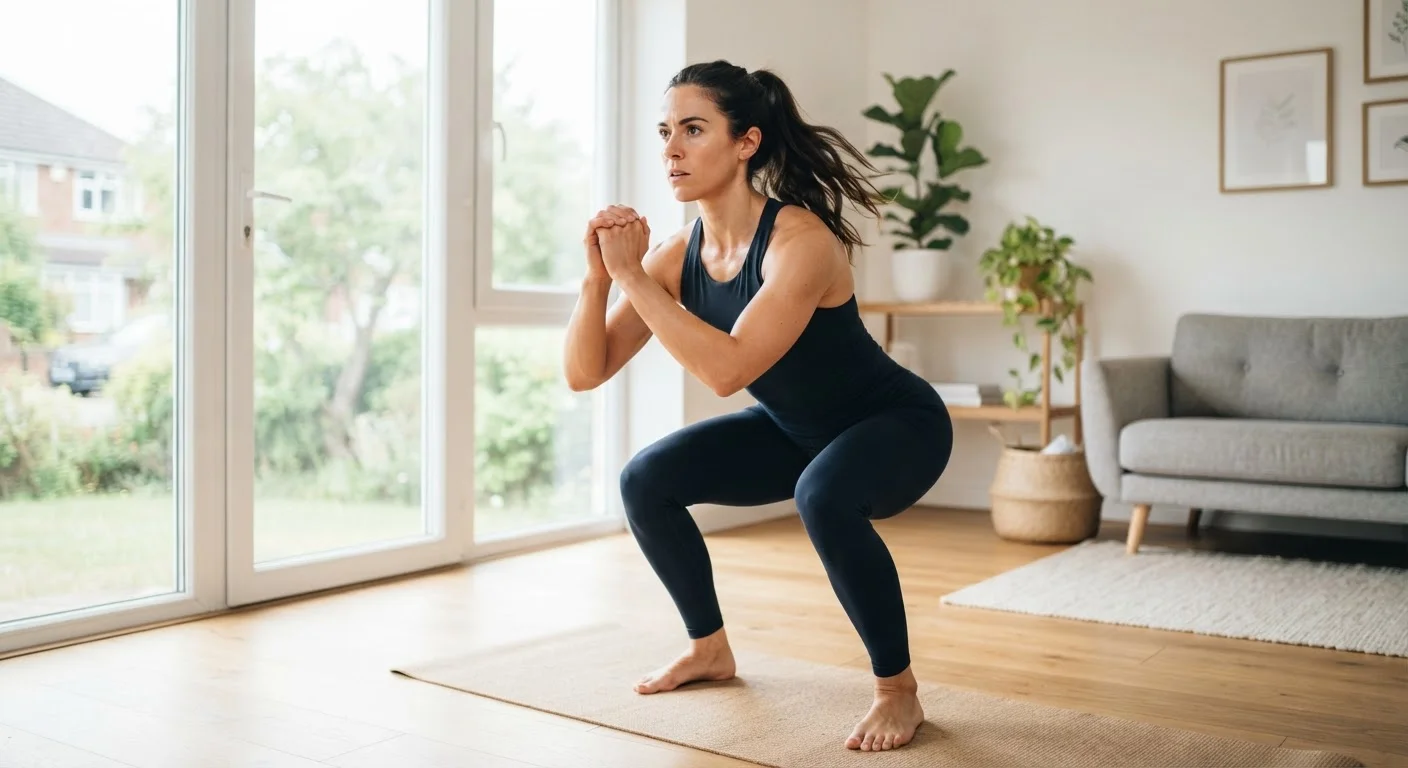
What Makes Bodyweight Training Effective
The central principle behind any strength training — bodyweight or otherwise — is progressive overload: the practice of gradually increasing the challenge placed on your muscles so they adapt and grow stronger. With free weights, you add plates. With bodyweight training, you advance through movement progressions, adjust leverage, or manipulate tempo and volume.
A push-up, for instance, exists on a spectrum. An incline push-up reduces load; a standard push-up is the midpoint; a archer push-up or single-arm variation dramatically increases demand. This built-in scalability means the same training principle that governs elite athletes applies equally to someone just starting out.
Bodyweight training also develops functional strength — the kind that translates to real-world movement. Squats mirror the mechanics of sitting and standing. Planks build the core stability used in almost every daily activity. Because these movements require coordination across multiple muscle groups simultaneously, they also train balance and proprioception (the body's sense of its own position in space) alongside raw strength.
Start With Form, Then Add Difficulty
Before advancing to harder variations, prioritize clean mechanics in the foundational version of each movement. A well-executed standard push-up builds more usable strength — and reduces injury risk — than a sloppy one-arm attempt. Film yourself occasionally or use a mirror to check alignment.
Core Movement Patterns to Understand
Rather than thinking in terms of individual exercises, bodyweight training is best understood through fundamental movement patterns. These are the building blocks from which all exercises are derived:
- Push: Pressing your body away from a surface — push-ups, pike push-ups, dips
- Pull: Drawing your body toward a surface or hanging from one — rows using a table edge, or bar pull-ups if available
- Squat: Bending at the hips and knees under load — bodyweight squats, jump squats, split squats
- Hinge: Loading the posterior chain by folding at the hips — single-leg deadlift variations, good mornings
- Core stability: Resisting unwanted movement in the trunk — planks, hollow holds, dead bugs
A well-rounded bodyweight routine addresses each pattern. For a deeper look at specific variations within these categories, see exercise variations every home trainer should know.
Why It's a Sustainable Long-Term Approach
One of the most underappreciated advantages of bodyweight training is its low barrier to entry and maintenance. There's no commute, no membership fee, no setup time, and no dependency on equipment availability. This removes the friction that causes many exercise habits to stall.
Research in behavior science consistently shows that habit formation is strongly influenced by convenience. A workout you can do in your living room within minutes of waking up is more likely to happen consistently than one requiring a 30-minute round trip to a gym. Consistency, over time, is what produces lasting physical change — regardless of the tools involved.
Bodyweight training also scales gracefully across life circumstances. Travel, schedule changes, or a tight budget rarely disrupts it. For a broader understanding of how to structure these habits into a lasting routine, building a home workout routine from the ground up offers a practical framework for beginners.
If you're weighing bodyweight methods against resistance equipment, this balanced comparison outlines the genuine trade-offs of each approach. And for those beginning their strength and flexibility journey more broadly, starting from scratch covers the foundational concepts worth understanding first.
2–3x
Weekly sessions recommended for strength development
General physical activity guidelines from organizations like the American College of Sports Medicine suggest at least two to three days of muscle-strengthening activity per week for adults.
66 days
Average time to form a new exercise habit
A study published in the European Journal of Social Psychology found habit formation took an average of 66 days, underscoring the value of a low-friction routine like bodyweight training.
This article is for informational purposes only and is not a substitute for professional medical or fitness advice. Consult a qualified healthcare or fitness professional before beginning any new exercise program, particularly if you have existing health conditions or injuries.
Frequently Asked Questions
Yes. When performed with adequate intensity and progressive difficulty, bodyweight exercises create the mechanical tension needed to stimulate muscle growth. Movements like push-up progressions, single-leg squats, and dips can be demanding enough to drive meaningful hypertrophy over time.
Absolutely. Most bodyweight movements can be scaled down to beginner-friendly variations — for example, incline push-ups instead of standard ones. Starting at an accessible level and gradually increasing difficulty is a safe, effective way to build a fitness base.
Progress in bodyweight training comes from advancing to harder movement variations, increasing reps or sets, reducing rest periods, slowing tempo, or shifting leverage to increase difficulty. Each adjustment adds challenge without requiring additional equipment.
Most general fitness guidelines suggest aiming for at least two to three strength-focused sessions per week, with rest or active recovery days in between. Individual needs vary, so listen to your body and consider consulting a fitness professional for personalized guidance.
Many bodyweight movements — particularly squats, lunges, and hip hinges — take joints through a full range of motion, which supports functional flexibility over time. Incorporating dynamic warm-ups and cool-down stretches enhances this benefit further.
The content on this site is for informational purposes only and is not a substitute for professional advice. Always consult a qualified professional for guidance specific to your situation.