
Mobility vs. Flexibility: Why the Distinction Matters
Most people use mobility and flexibility interchangeably. They aren't the same thing — and confusing them can lead to training approaches that feel productive without actually building the movement quality you're after.
Flexibility describes the extensibility of a muscle or connective tissue: how far it can be lengthened when a force is applied to it. A seated forward fold where you use a strap to pull your foot closer is a flexibility test. Mobility adds a critical layer: the ability to actively control movement through that range using your own muscular effort.
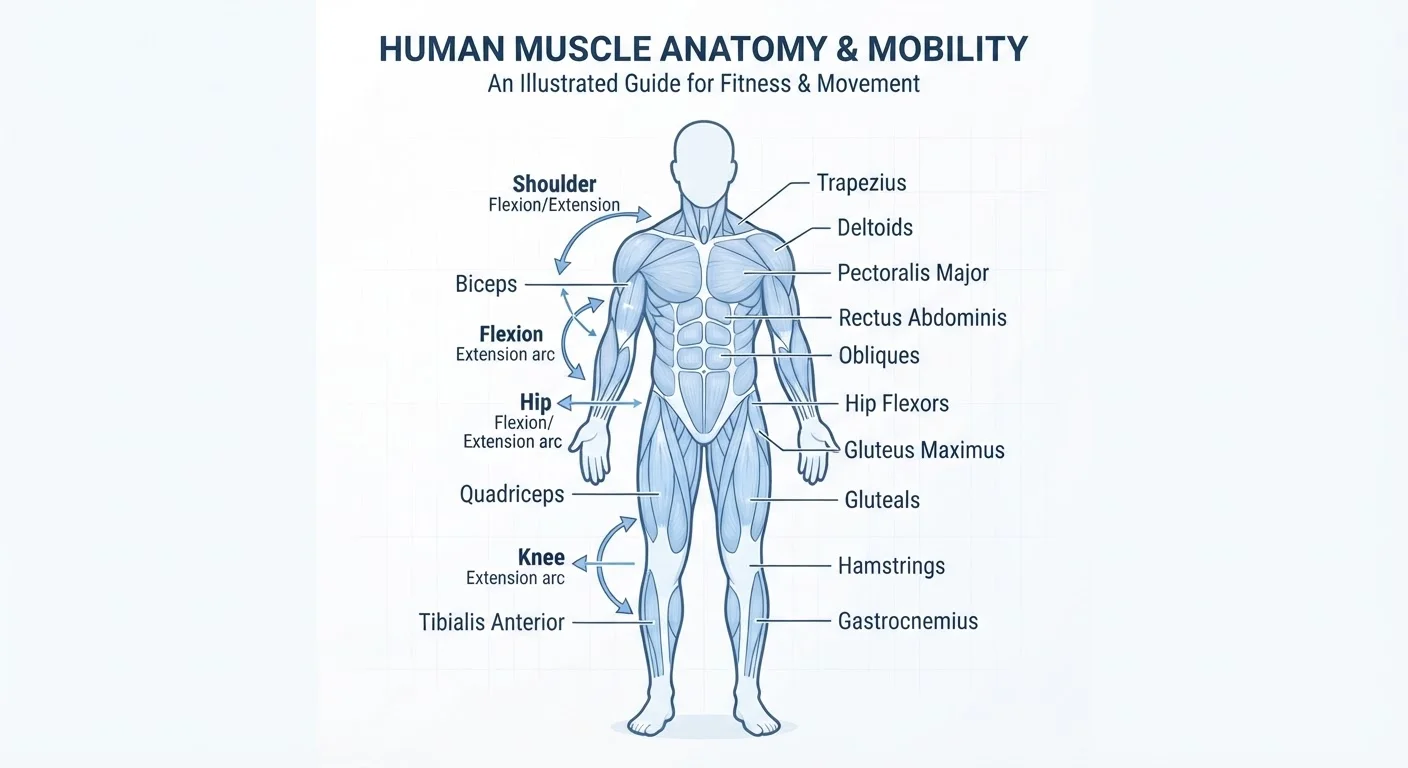
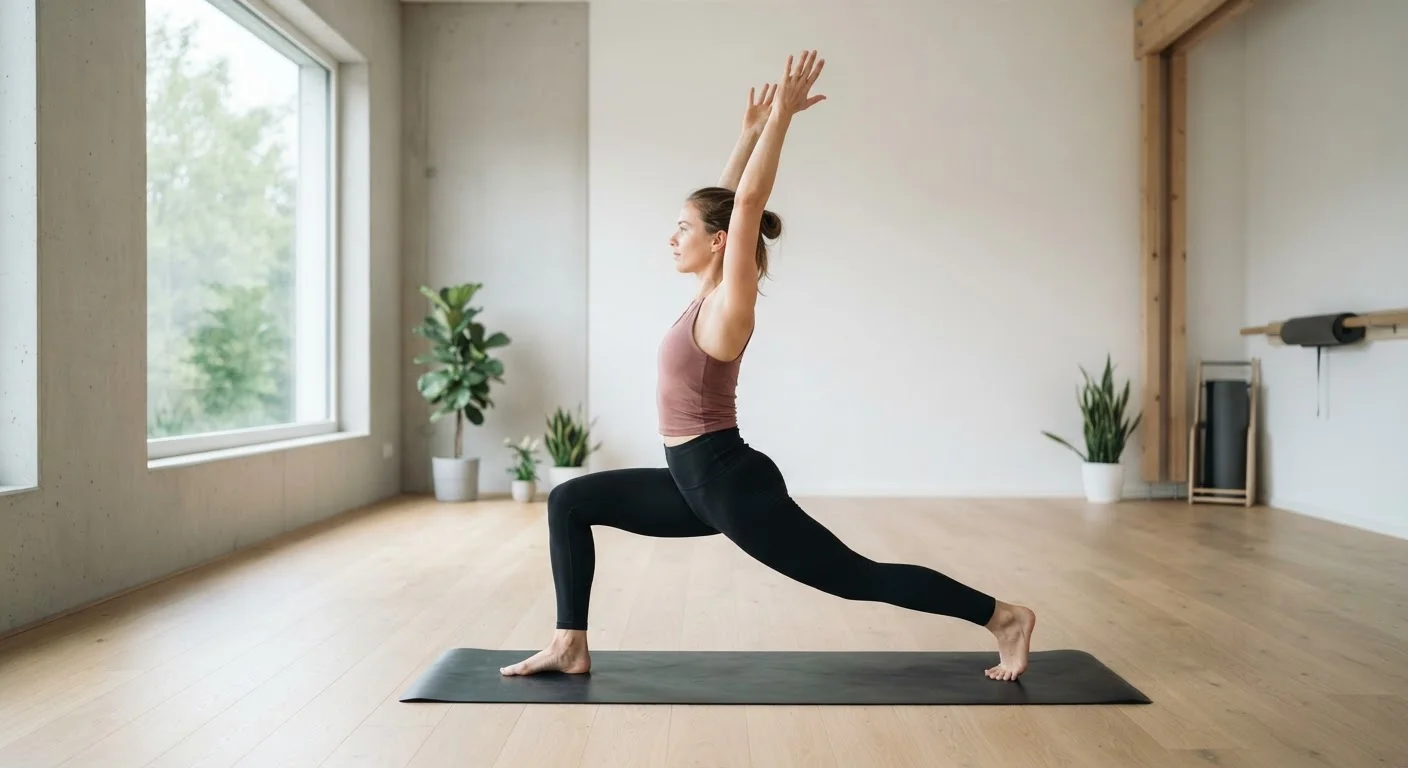
Here's a concrete illustration. A person with very tight hip flexors from sitting all day might be unable to extend their hip behind them during a lunge. Stretching those hip flexors — improving passive flexibility — helps. But mobility training takes it further: it also strengthens the glutes and trains the nervous system to accept and control that extended position under load. That's the functional difference.
For a broader reference on movement terminology, see our glossary of strength and flexibility terms.
High Flexibility Without Control Can Increase Risk
Some hypermobile individuals — those with naturally greater passive range of motion — are actually at higher risk of joint instability because their tissues stretch easily but their neuromuscular control hasn't kept pace. Mobility training, with its emphasis on active control, is particularly relevant for this group. If you suspect hypermobility, a physiotherapist can provide personalized guidance.
What Mobility Training Actually Involves
Mobility training works on three interconnected systems simultaneously: the joints themselves, the surrounding soft tissues (muscles, fascia, tendons), and the neuromuscular system — the communication network between your brain and body.
Common mobility training methods include:
- Dynamic joint circles and CARs (Controlled Articular Rotations): Slow, deliberate rotations that map the full available range of a joint while under muscular tension. These build joint awareness and lubrication.
- Active stretching: Reaching into a stretched position using your own muscles rather than relying on gravity or a strap.
- End-range isometrics: Contracting a muscle at the limit of its range to build strength where you're weakest — a key concept in translating flexibility gains into real movement capacity.
- Flow-based movement sequences: Linked movement patterns that challenge transitions between positions, training coordination alongside range.
These methods make mobility training distinct from a typical stretching routine. The goal isn't just to reach further — it's to own the range you have and progressively expand it under control. For readers ready to apply a systematic approach, progressive overload principles can be applied directly to mobility work.
Start With Joint Circles Before Any Workout
Spending just 5 minutes performing slow, controlled circles at your ankles, hips, and shoulders before exercise primes the joints and nervous system for movement. This is one of the simplest ways to begin integrating mobility work without overhauling your existing routine.
Why Mobility Is Central to Functional Movement Health
Mobility isn't just an athletic concern. It underpins the quality of ordinary daily movements — getting up from the floor, reaching overhead, walking with an efficient gait, carrying objects without compensating through the lower back.
When mobility is limited, the body compensates. A restricted ankle, for example, can shift load up the kinetic chain, altering knee and hip mechanics during squatting or stair climbing. Over time, these compensations often contribute to chronic discomfort and overuse patterns — though it's important to note that movement is complex and individual, and no single factor causes injury in isolation.
~80%
Adults reporting musculoskeletal pain linked to poor movement patterns
Research consistently shows that a large majority of musculoskeletal complaints in working-age adults are associated with movement dysfunction and sedentary habits rather than acute injury.
10–15 min
Daily mobility practice recommended for consistent gains
Movement specialists and physical therapists broadly agree that short, daily mobility sessions are more effective for neurological adaptation than infrequent longer efforts.
From a long-term health perspective, maintaining joint range of motion and neuromuscular control is associated with better balance, fall resistance, and functional independence in older adults — outcomes that go well beyond athletic performance.
If you're new to structured movement training, our introduction to strength and mobility training offers a practical starting framework. Readers interested in where yoga and mobility intersect may also find value in mindful movement principles from yoga practice to be a useful complement.
This article is for general informational purposes only and does not constitute medical advice. If you have existing joint conditions, chronic pain, or other health concerns, consult a qualified healthcare professional before beginning any new movement program.
Frequently Asked Questions
Flexibility refers to how far a muscle or tissue can be lengthened passively. Mobility describes your ability to actively move through a range of motion with control. You can be flexible — able to be moved into a deep range — without being mobile enough to get there on your own.
Research and clinical practice both support the idea that joint range of motion and motor control can be improved at virtually any age with consistent, targeted training. Progress may be slower for older adults, and starting points vary widely, but meaningful improvements are achievable. Always consult a healthcare provider if you have joint conditions or chronic pain before beginning.
Most movement specialists suggest that short, consistent daily sessions — even 10 to 15 minutes — tend to produce better results than infrequent longer sessions. Daily exposure helps the nervous system adapt and reinforces new movement patterns more effectively.
Not exactly. Static stretching improves passive flexibility but doesn't necessarily build the muscular control required for functional mobility. Mobility training typically includes dynamic movements, joint circles, and end-range strengthening exercises that go beyond what a simple stretch provides.
No equipment is required for most foundational mobility work. Bodyweight exercises, floor-based movements, and joint rotations are the core tools. Resistance bands or yoga blocks can be useful progressions but are not necessary to start.
There is meaningful overlap — yoga builds both flexibility and body awareness, which supports mobility. However, dedicated mobility training places a specific emphasis on active joint control and end-range strength that some yoga practices may not fully address. The two approaches complement each other well.
The content on this site is for informational purposes only and is not a substitute for professional advice. Always consult a qualified professional for guidance specific to your situation.