
Our Verdict
Both bodyweight training and resistance equipment are legitimate, effective paths to improved strength and fitness. Bodyweight methods excel for accessibility, mobility integration, and sustainable habit-building, while resistance tools offer greater precision for progressive overload and targeted muscle development. Neither has an absolute edge — effectiveness depends on how consistently and intelligently each approach is applied.
Bodyweight training suits those prioritizing accessibility, travel-friendly workouts, or foundational movement quality; resistance equipment is better suited to those with specific hypertrophy or strength-performance goals who have access to the tools.
What Each Approach Actually Involves
Bodyweight training uses the mass and leverage of your own body to generate resistance. Movements like push-ups, squats, lunges, pull-ups, and planks challenge multiple muscle groups simultaneously and closely mirror how the body moves in everyday life. Difficulty is scaled by adjusting leverage, tempo, range of motion, or exercise complexity — not by adding external load.
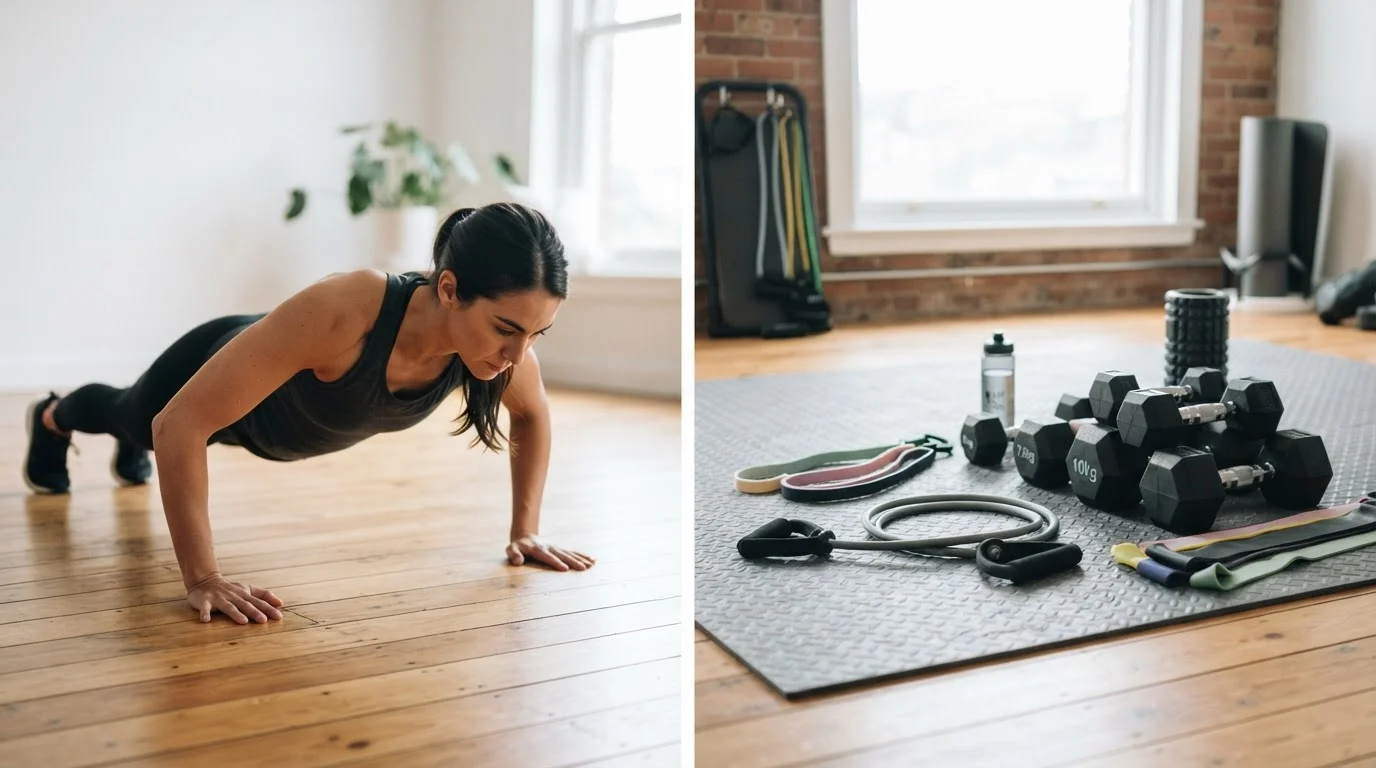
Resistance equipment encompasses free weights, cable machines, resistance bands, kettlebells, and weight machines. These tools introduce external load that can be precisely measured and incrementally increased. This gives trainers explicit control over the resistance applied to specific muscles and movement patterns. For a deeper exploration of the bodyweight side, see how bodyweight training builds real strength.
Advantages and Disadvantages at a Glance
Assessing each method honestly requires looking at what each does well — and where each runs into limitations. The considerations below apply specifically to bodyweight training as a primary method.
Zero cost and no equipment required
Bodyweight training eliminates the financial barrier entirely — no gym membership, no gear purchases. This makes it one of the most accessible training methods for any budget.
Trains functional, multi-joint movement patterns
Exercises like squats, lunges, and push-ups engage multiple muscle groups and stabilizers simultaneously, closely mimicking real-world movement demands.
Improves mobility and body control alongside strength
Many bodyweight movements require active flexibility and joint stability, integrating mobility work into strength training rather than treating it as separate.
Requires minimal space and is travel-friendly
A cleared floor area is sufficient for a full-body session. This makes consistency far easier when traveling, working from home, or living in a small space.
Lower barrier to entry for beginners
Bodyweight movements are intuitive, scalable with regressions, and carry less risk of load-related injury during the learning phase.
Progressive overload is harder to implement precisely
Advancing resistance requires learning more complex exercise variations rather than simply adding weight, which demands more programming knowledge and can plateau faster for experienced athletes.
Limited upper-body pulling options without equipment
Horizontal and vertical pulling movements — essential for back development — require at minimum a pull-up bar or sturdy anchor point, which not all spaces provide.
Less effective for maximal hypertrophy at advanced levels
Research consistently shows that heavier, external loads are more efficient for driving maximum muscle mass in intermediate and advanced trainees who have exhausted beginner adaptations.
Difficult to isolate specific muscle groups
Compound bodyweight movements make targeted isolation — such as bicep curls or lateral raises — impractical, limiting certain aesthetic or rehabilitation-focused goals.
Progressive Overload: The Critical Difference
Progressive overload — the gradual increase of training stress over time — is the central mechanism behind strength and muscle development. This is where the two approaches diverge most meaningfully.
With resistance equipment, progression is straightforward: add weight to the bar or move the pin on a machine. With bodyweight training, progression requires advancing to more mechanically demanding variations — moving from standard push-ups to archer push-ups, or from assisted pull-ups to weighted ones. This path is entirely valid, but it demands more programming creativity and can become limiting for advanced trainees chasing maximal hypertrophy.
~2–3%
Weekly strength gain in beginners (either method)
Exercise science research consistently shows beginners gain strength rapidly regardless of training modality, with early gains driven largely by neural adaptation.
60–70%
1RM load range associated with hypertrophy
According to published resistance training guidelines, training sets taken close to failure across a range of loads — not just heavy loads — can stimulate meaningful muscle growth.
For readers weighing the broader context of training without a gym, the real pros and cons of ditching the gym covers this terrain in detail.
Functional Strength, Mobility, and Injury Risk
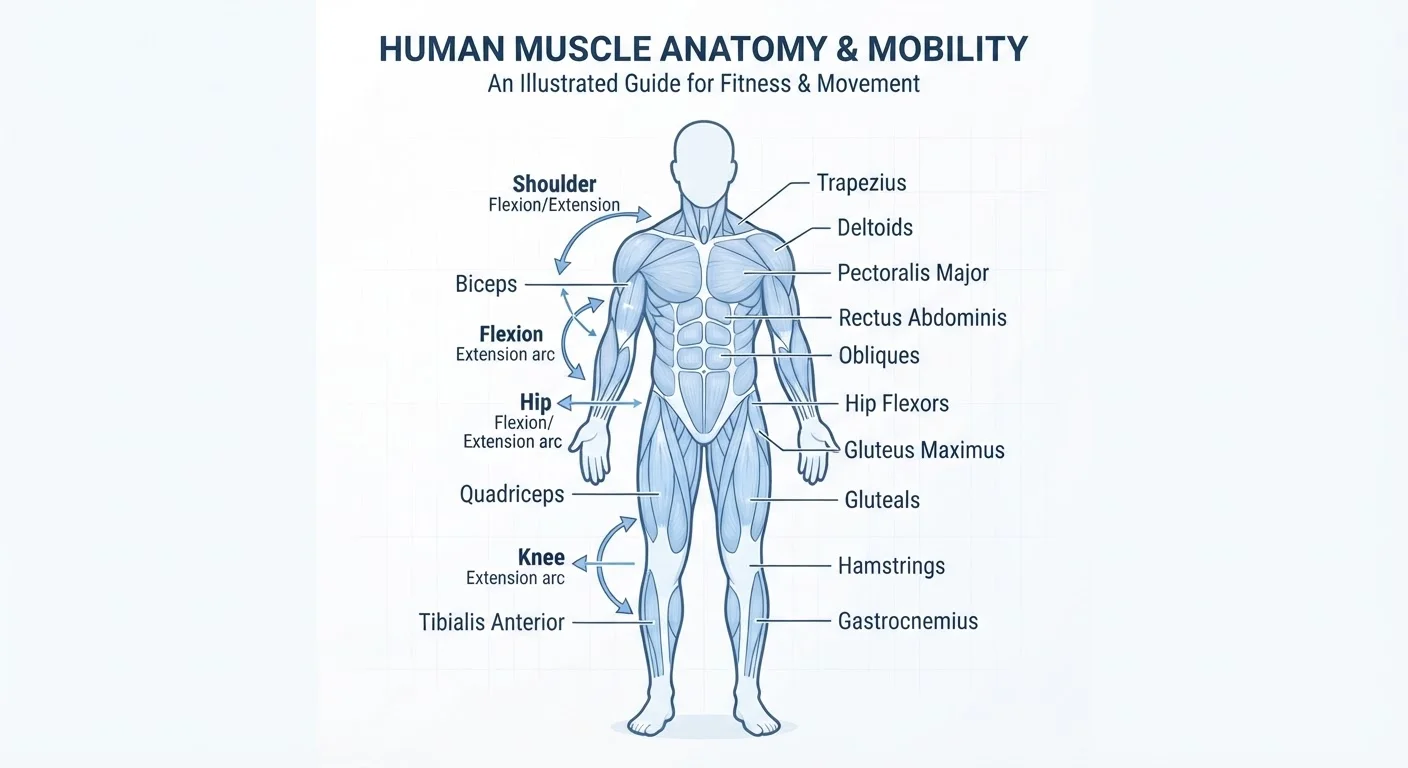
Bodyweight movements tend to train stability, coordination, and joint mobility alongside raw strength. Because the body must control its own mass through space, these exercises often reinforce movement patterns that transfer directly to daily activities and athletic performance.
Resistance equipment, when used with good form and appropriate load, is also safe and effective — but poorly selected load, machine-restricted ranges of motion, or muscular imbalances can contribute to overuse issues over time. Neither approach is inherently risky; risk is largely determined by technique, load management, and individual anatomy. If your primary goal is building strength from home, understanding the difference between strength and endurance training can sharpen your approach.
A Note on Special Populations
Older adults, pregnant individuals, those with cardiovascular conditions, and anyone recovering from injury face unique considerations when choosing a training modality. Both bodyweight and resistance-based training can be adapted for these groups, but the specifics require personalized guidance. Always work with a qualified healthcare provider or certified exercise professional when training circumstances are complex.
People managing existing injuries, chronic conditions, or returning from surgery should consult a qualified healthcare or physical therapy professional before beginning or modifying any training program.
How to Choose — or Combine — Both Methods
The most practical decision framework comes down to four factors: your specific goal (general fitness vs. maximum hypertrophy), available space and budget, training history, and lifestyle consistency. Beginners often make rapid progress with bodyweight alone because foundational strength responds well to bodyweight resistance. Intermediate and advanced trainees pursuing serious muscle gain typically benefit from external load for finer progression control.
A hybrid approach — using bodyweight movements for warm-up, mobility, and movement quality while using resistance tools for primary loading — is well-supported by exercise science and suits many fitness goals. For a complete framework on building a home-based routine that integrates these principles, the complete guide to home-based fitness for long-term health is a useful next step.
This article is for general informational and educational purposes only and does not constitute medical or fitness advice. Consult a qualified healthcare or exercise professional before starting any new training program, particularly if you have an existing health condition or injury.
The content on this site is for informational purposes only and is not a substitute for professional advice. Always consult a qualified professional for guidance specific to your situation.