

What Are Phytonutrients?
Phytonutrients — also called phytochemicals — are biologically active compounds produced naturally by plants. Unlike vitamins and minerals, they are not classified as essential nutrients, meaning deficiency does not produce a recognized clinical syndrome. However, a substantial and growing body of research associates regular dietary intake of diverse phytonutrients with markers of reduced oxidative stress, inflammation, and chronic disease risk.
Plants synthesize these compounds primarily as a form of self-defense: to deter insects, resist UV radiation, fight microbial threats, and attract pollinators. When humans consume these plants, many of these compounds interact with our own cellular systems in ways that appear to be beneficial. The mechanisms vary widely — some act as antioxidants, others modulate enzyme activity, influence gene expression, or shape the gut microbiome. See our guide to plant diversity and microbiome richness for more on that last point.
There are thousands of identified phytonutrients. Rather than memorizing individual compounds, it is more practical to understand the main families and the foods that deliver them.
Phytonutrient
A biologically active compound produced by a plant, distinct from vitamins and minerals. Not classified as essential, but associated with health-supporting effects in human dietary research.
Flavonoid
The largest family of plant polyphenols, including anthocyanins, catechins, and isoflavones. Found widely across fruits, vegetables, legumes, and beverages such as tea.
Carotenoid
A fat-soluble plant pigment that produces red, orange, and yellow colors. Some carotenoids, like beta-carotene, can be converted to vitamin A in the body.
Bioavailability
The proportion of a nutrient or compound that the body actually absorbs and can use after consumption. For many phytonutrients, bioavailability depends on food preparation, food matrix, and individual gut factors.
Glucosinolate
A sulfur-containing compound found in cruciferous vegetables. When plant cells are disrupted by chopping or chewing, glucosinolates convert into bioactive forms such as sulforaphane.
Polyphenol
A broad category of plant compounds characterized by multiple phenol units. Flavonoids, phenolic acids, and stilbenes are all sub-groups within polyphenols.
Antioxidant
A compound that can neutralize free radicals — unstable molecules that damage cells. Many phytonutrients exhibit antioxidant activity in laboratory settings, though this does not directly translate to a simple clinical claim.
Allicin
An organosulfur compound formed when garlic is crushed or chopped. It is the primary bioactive constituent responsible for garlic's studied antimicrobial and cardiovascular-related properties.
The Major Phytonutrient Families
Phytonutrients are grouped into broad chemical families based on their molecular structure. Here is a field-guide overview of the most studied categories.
| Total identified phytonutrients | Over 25,000 (Estimated across plant kingdom; Linus Pauling Institute) |
| Largest phytonutrient family | Flavonoids |
| Primary dietary sources | Vegetables, fruits, whole grains, legumes, herbs, spices, tea |
| Carotenoid absorption booster | Dietary fat (Fat-soluble; absorption significantly increased with co-ingestion of fat) |
| Allicin preservation tip | Crush raw garlic 10 minutes before cooking (Enzyme activation requires cell disruption; heat degrades allicin rapidly) |
| Cooking method for flavonoids | Light steaming preferred over boiling (Boiling leaches water-soluble compounds into cooking water) |
Flavonoids
The largest and most extensively researched phytonutrient family, flavonoids include several sub-classes: flavonols (quercetin in onions and kale), flavanones (hesperidin in citrus peel), anthocyanins (the pigments in blueberries and red cabbage), flavan-3-ols (catechins in green tea and dark chocolate), isoflavones (in soy foods), and flavones (in parsley and celery). Research suggests flavonoids support cardiovascular health and modulate inflammatory pathways, though evidence strength varies by compound and population.
Carotenoids
Fat-soluble pigments responsible for red, orange, and yellow hues in plant foods. Beta-carotene (a provitamin A carotenoid found in carrots and sweet potato), lycopene (in cooked tomatoes), lutein and zeaxanthin (in leafy greens), and astaxanthin (in algae) are well-studied examples. Carotenoids are better absorbed when consumed with a small amount of dietary fat.
Glucosinolates
Sulfur-containing compounds concentrated in cruciferous vegetables — broccoli, Brussels sprouts, kale, and cauliflower. When these foods are chopped or chewed, glucosinolates are converted to bioactive forms such as sulforaphane and indole-3-carbinol. These compounds are actively studied for their role in supporting the body's detoxification enzyme systems.
Polyphenolic Acids and Stilbenes
Phenolic acids (including chlorogenic acid in coffee and ferulic acid in whole grains) and stilbenes (notably resveratrol in grape skins and berries) round out the broader polyphenol family. Both groups exhibit antioxidant properties in laboratory settings, though translating this to clinical outcomes in humans remains an area of active research.
Organosulfur Compounds
Beyond glucosinolates, alliums — garlic, onions, leeks, and chives — contain allicin and related organosulfur compounds. Allicin forms when raw garlic is crushed or chopped, and it is associated in research with antimicrobial properties and modest effects on blood pressure markers. Cooking significantly reduces allicin content.
How to Get More Phytonutrients Through Food
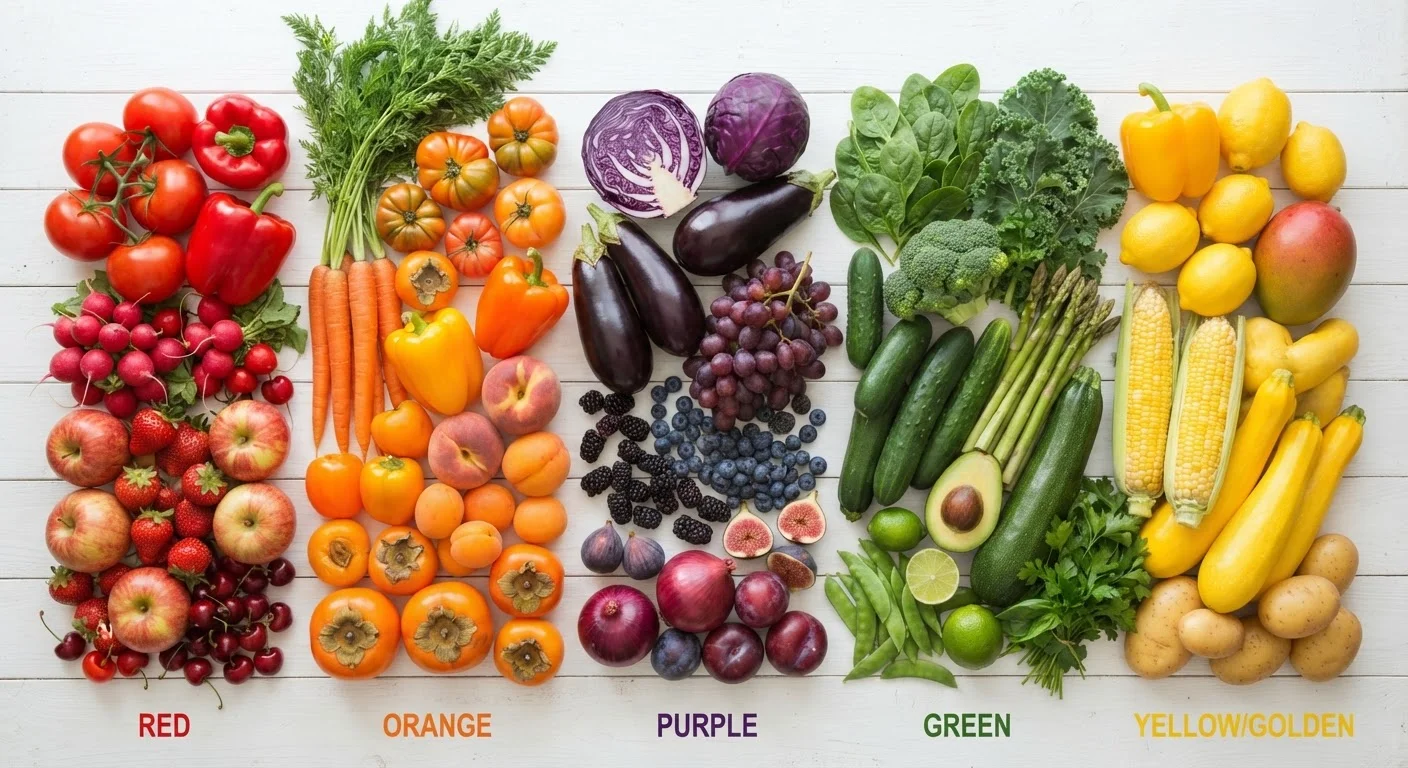
Phytonutrient diversity, not quantity of a single compound, is the principle most consistently supported by population research. Eating across the color spectrum — a concept sometimes described as "eating the rainbow" — is a practical heuristic because different pigments correspond to different phytonutrient families.
A few evidence-based principles help maximize intake and bioavailability:
- Color variety: Aim for at least four to five distinct plant colors across a day's meals. Each color group corresponds to distinct compound classes.
- Minimize over-processing: Refined and ultra-processed foods lose much of their phytonutrient content. See our guide to whole foods versus processed foods for context on the spectrum.
- Cooking methods matter: Light steaming tends to preserve water-soluble flavonoids better than boiling; carotenoid bioavailability actually increases with moderate heat and the addition of dietary fat.
- Pair with healthy fats: A small amount of olive oil or avocado added to salads substantially improves absorption of fat-soluble carotenoids.
- Eat the whole plant: Peels, seeds, and outer leaves are often richer in phytonutrients than the interior. This supports the broader argument for whole-food plant-based eating.
Phytonutrients are not isolated supplements — research on purified phytonutrient extracts frequently fails to replicate the benefits observed in diets rich in whole plant foods, suggesting synergistic effects between compounds matter. A structured, nutrient-focused grocery list is a practical first step toward broader phytonutrient coverage.
This article is for general informational and educational purposes only and is not a substitute for professional medical or dietary advice. Consult a qualified healthcare provider for guidance tailored to your individual health needs.
The content on this site is for informational purposes only and is not a substitute for professional advice. Always consult a qualified professional for guidance specific to your situation.