

Summary
22 items · 20–40 minutes
Why Nutrient Density Should Drive Your List
Most people build grocery lists around meals they plan to cook, not around the nutrients their bodies need. That's a reasonable starting point, but it leaves systematic gaps. Research consistently shows that US adults fall short on fiber, magnesium, potassium, vitamin D, and choline — not because nutritious food is unavailable, but because shopping tends to default to familiar, convenient options.
Reorienting your list around nutrient density — the concentration of vitamins, minerals, fiber, and beneficial compounds per calorie — shifts the emphasis from what's quick to what's functional. This doesn't mean rigid meal planning or eliminating favorite foods. It means building a structural framework that ensures each weekly shop covers the major nutritional bases before filling in with personal preferences.
For a broader context on how these principles connect to sustainable eating habits, see building healthier eating habits from the ground up and the Healthy Eating Basics hub for foundational guidance.
Vegetables
Fruits
Protein Sources
Whole Grains and Starchy Staples
Healthy Fats and Nuts
Dairy or Fortified Alternatives
Pantry and Functional Additions
How to Apply This Framework to a Real Weekly Shop
The checklist above is designed to be used as a pre-shop audit, not a rigid prescription. Before adding items to your cart or delivery order, scan each category and ask: Is this food group represented this week? That single habit catches the most common gap — reaching for the same ten ingredients week after week.
A grouped grocery list template
Organize your weekly shop by food category rather than by meal, so nutrient gaps are visible before you reach the store.
A nutrition label reference guide
Helps distinguish whole-grain from refined-grain products and identify misleading label language on packaged foods.
Seasonal produce calendar
Identifies which fruits and vegetables are in season locally, supporting both nutrient freshness and cost-efficiency.
A few practical calibrations worth making:
- Protein sources: Rotate between animal and plant proteins across the week. Legumes, fish, eggs, and poultry each bring distinct micronutrient profiles. Fatty fish, for instance, is one of the few whole-food sources of vitamin D and long-chain omega-3 fatty acids.
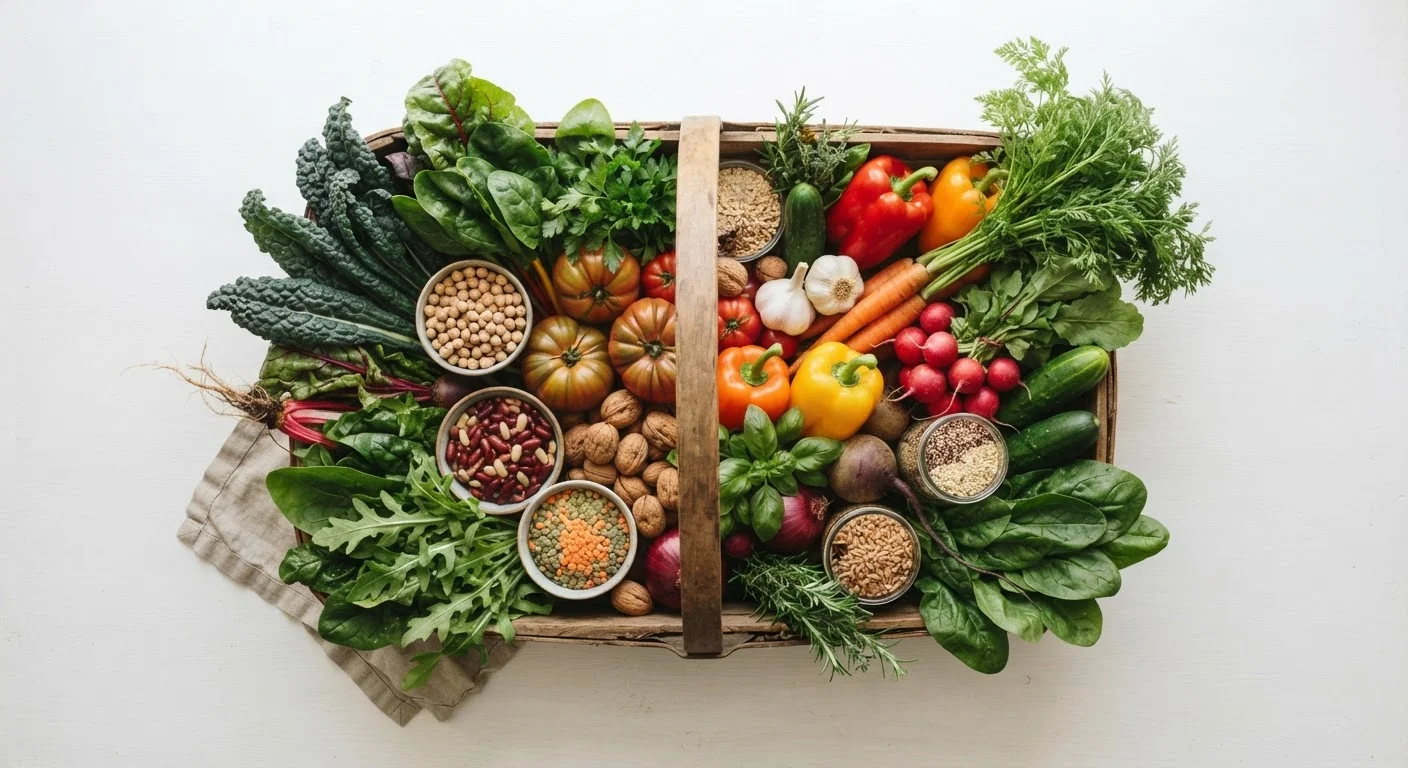
- Produce color variety: Different pigments signal different phytonutrients — carotenoids in orange and red vegetables, glucosinolates in cruciferous greens, anthocyanins in purple and blue fruits. Aim for at least four distinct colors per shop.
- Fermented and fiber-rich foods: These support gut microbiome diversity, which has downstream effects on immunity and metabolic health. Building a gut-friendly eating pattern covers the underlying principles in more depth.
Fortified Foods Are Not a Substitute for Variety
Many packaged foods are fortified with vitamins and minerals, which can create a false sense of nutritional completeness. Fortification adds isolated nutrients back to processed foods, but it does not replicate the synergistic compounds, fiber, and phytonutrients found in whole-food sources. Use this checklist to prioritize whole foods first, and treat fortified products as a secondary supplement to — not a replacement for — dietary variety. For a deeper comparison, see whole foods vs. fortified foods.
If cost is a practical constraint — as it is for many households — whole-food nutrition doesn't require specialty stores or premium products. Frozen vegetables, canned legumes (low-sodium where available), dried grains, and seasonal produce are nutritionally comparable to fresh counterparts and significantly more affordable. The whole-food eating on a budget guide offers detailed strategies for maintaining nutritional quality at lower cost.
For those new to structuring their diet this way, a practical whole-food starting checklist provides a step-by-step onboarding process. And if vegetables are a consistent sticking point, nutrient-dense eating without relying on vegetables you dislike is worth reviewing.
Once you've shopped using this framework for a few weeks, pair it with a weekly eating audit to assess whether the variety is translating into your actual meals.
This article is for general informational and educational purposes only and does not constitute medical or dietary advice. Individual nutritional needs vary. Consult a registered dietitian or qualified healthcare professional before making significant changes to your diet, particularly if you have a health condition or are in a special population such as pregnancy, older adulthood, or childhood.
The content on this site is for informational purposes only and is not a substitute for professional advice. Always consult a qualified professional for guidance specific to your situation.