

Why Plant Variety Matters More Than Volume
Most people understand that eating plants is broadly beneficial. What receives less attention is that the variety of plants you eat may matter as much as — or more than — the sheer volume. Your gut microbiome is home to trillions of microbial organisms, and each species tends to thrive on specific dietary compounds. When you eat a narrow range of plants, you selectively feed a narrow range of bacteria.
Large observational research, including data from the American Gut Project, found that individuals who consumed 30 or more distinct plant types per week had measurably more diverse gut microbiomes than those eating 10 or fewer. Microbiome diversity — meaning a greater number and balance of distinct bacterial species — is considered a marker of gut resilience, though researchers note that causality and optimal targets are still under investigation.
This matters because an estimated 70% of immune cells reside in gut-associated tissue. The relationship between microbial diversity and immune regulation is a central theme in current nutrition science. For a deeper look at how fibre specifically fuels this process, see how fibre, gut flora, and immune function connect.
Every Plant Species Counts Separately
In diversity-focused eating, red bell pepper and yellow bell pepper count as two distinct species, as do different varieties of apples or tomatoes. While this level of distinction isn't necessary for day-to-day tracking, it illustrates why even small swaps within a food category genuinely expand the range of compounds your gut microbiome encounters.
Plants feed gut bacteria through multiple pathways: dietary fibre, resistant starch, polyphenols, and other phytonutrients each serve as substrates for different microbial communities. Rotating your plant choices rotates which bacterial populations get nourished.
What Counts as a Plant Food
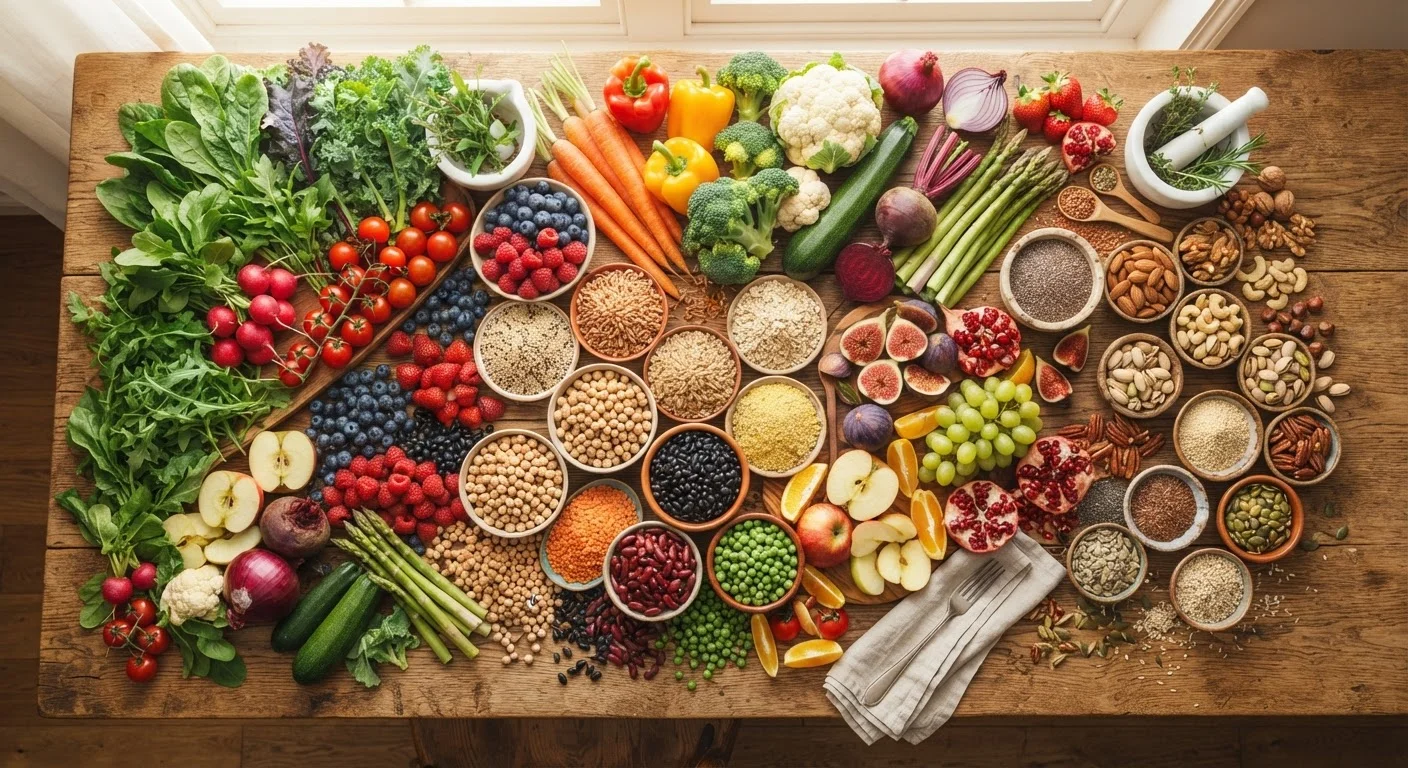
Before moving to practical steps, it helps to clarify scope. For the purposes of microbiome diversity, "plant foods" includes vegetables, fruits, whole grains, legumes (beans, lentils, chickpeas), nuts, seeds, herbs, and spices. Each category, and each species within a category, carries a distinct profile of fibres and plant compounds.
Importantly, herbs and spices count — even in small amounts. A meal seasoned with garlic, turmeric, and black pepper introduces three additional plant species. This is relevant to the 30-plants-per-week framework: the target is achievable without dramatic dietary overhaul. For broader context on how plant-based eating is defined and evidenced, see what whole-food plant-based eating actually means.
This article provides general health information and is not a substitute for advice from a qualified healthcare professional.
How to Expand Plant Diversity Step by Step
The following steps offer a structured, low-friction approach to increasing the variety of plants in your weekly diet. No single step requires a complete dietary overhaul. Sustainable change typically comes from layering small, consistent habits rather than wholesale transformation.
Audit your current plant intake
Before adding more, understand where you currently stand. Over three to five days, write down every distinct plant species you consume — not servings, but unique species. Tomatoes, brown rice, almonds, and basil each count as one. Most people discover they regularly eat between 8 and 15 distinct plants, which clarifies exactly how much room exists to expand.
Apply the 'swap one, add one' rule at meals
At each main meal, try swapping one routine ingredient for a related but different species, and adding one entirely new plant. For example: swap white rice for a brown rice and farro blend, then add a handful of edamame to the bowl. Over a week, this single habit can add 10 to 14 new plant species without restructuring your meals.
Rotate your grains and legumes weekly
Many people cycle through the same two or three grains (white rice, pasta, bread) and rarely include legumes beyond a single variety. Designating a different whole grain and a different legume each week — oats, quinoa, millet, buckwheat, black beans, cannellini beans, red lentils — can add six to eight distinct plant species monthly with minimal planning.
Use herbs and spices intentionally
Culinary herbs and spices are plant species that are often overlooked in diversity counts. Cumin, coriander, oregano, ginger, turmeric, rosemary, and thyme each carry unique polyphenol profiles that serve as substrates for specific gut bacteria. Aim to use at least three to five distinct herbs or spices per day, cycling through different ones across the week.
Build a mixed-plant foundation into one meal daily
Choose one meal — typically lunch or dinner — as your dedicated "diversity anchor." This is where you deliberately include the widest variety of plant species. A large salad with five vegetable types, two seed varieties, a grain, and a legume can account for 10 or more distinct plants in a single sitting. The remaining meals face less pressure, which makes the habit sustainable.
Track weekly and adjust monthly
At the end of each week, tally your unique plant species count. Use this number as a feedback signal rather than a performance metric. If you reach 30, consider whether you can maintain that variety or nudge it higher. If you fall short, identify the meals where single-species foods dominated and apply the swap-and-add rule there first. Monthly reflection helps you adjust without making the process feel burdensome.
For guidance on building these habits within a coherent overall eating pattern, see building a gut-friendly eating pattern. Pairing increased plant variety with fermented foods can further amplify microbiome benefits — explore how in our overview of fermented foods and gut health.
Increase Plant Intake Gradually
Rapidly increasing dietary fibre from a low baseline can cause significant bloating, gas, and digestive discomfort. Gradually increasing plant variety over several weeks gives your gut microbiome time to adapt. Individuals with irritable bowel syndrome, inflammatory bowel disease, or other digestive conditions should consult a gastroenterologist before substantially altering their diet.
The content on this site is for informational purposes only and is not a substitute for professional advice. Always consult a qualified professional for guidance specific to your situation.