

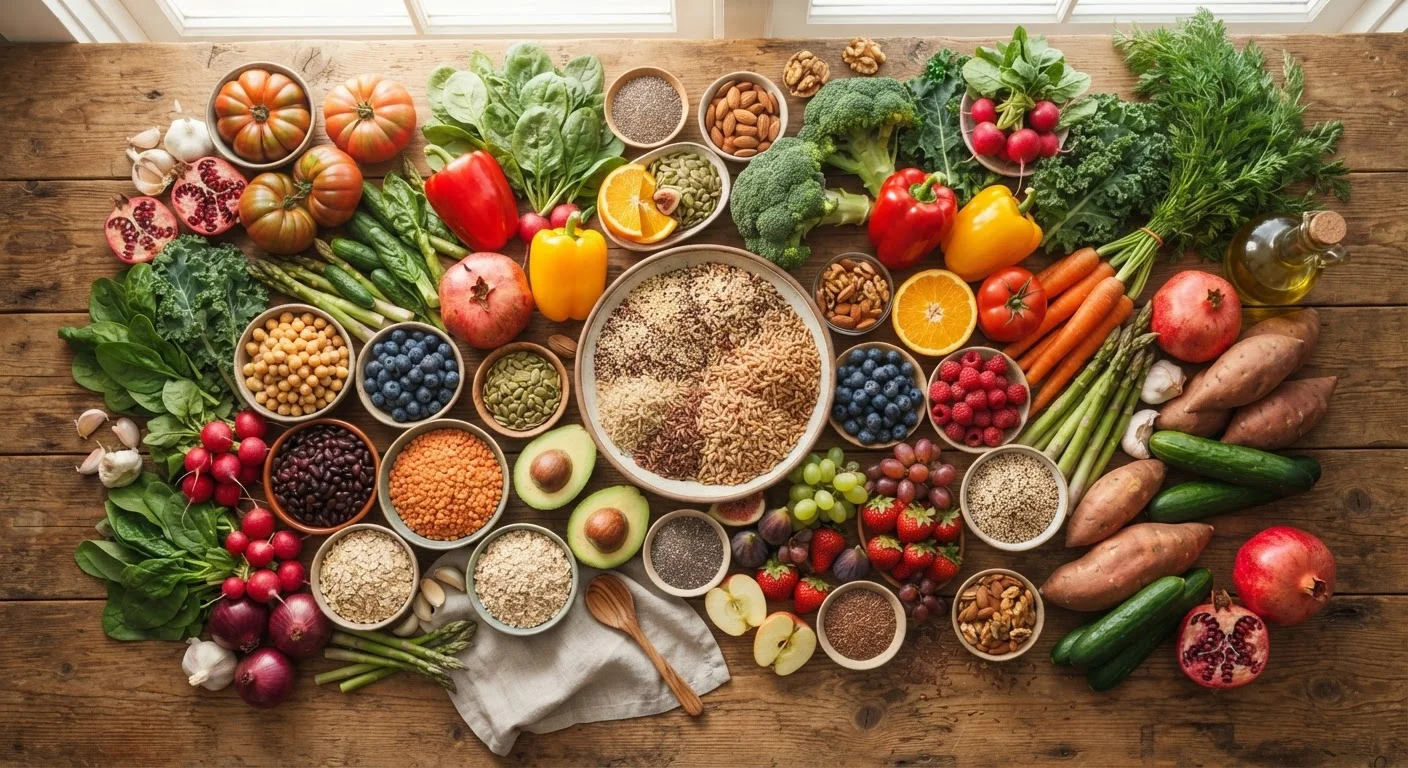
What Makes a Diet 'Natural'? Defining the Framework
The phrase "natural diet" is used loosely in wellness culture, but nutritional science offers a more precise framing: eating patterns built predominantly around minimally processed, whole foods — ingredients that are close to their state as harvested or raised. This means vegetables, fruits, whole grains, legumes, nuts, seeds, and quality animal foods where included, consumed with limited reliance on industrial additives, refined sugars, or heavily processed products.
This framework does not prescribe a single rigid plan. Rather, it describes a philosophy of eating grounded in food quality and dietary diversity. As explored in our survey of traditional eating patterns, cultures across every continent have sustained good health on dramatically different macronutrient ratios — what unites them is the emphasis on whole, recognizable foods over engineered ones.
When evaluating any 'natural' diet plan, look for whether it emphasizes food diversity rather than strict elimination. Diversity — not purity — is the hallmark of nutritionally sound whole-food eating.
Gut microbiome research consistently links plant variety to microbial richness, which in turn supports metabolic and immune resilience.
Treat legumes as the cornerstone of your protein strategy before reaching for supplements or specialty products. Lentils, chickpeas, and black beans deliver fiber, iron, and protein in a single, inexpensive package.
Population studies of long-lived communities — from Sardinia to Okinawa — consistently identify legume consumption as a shared dietary feature.
Major Whole-Food Dietary Patterns and the Evidence Behind Them
Several evidence-informed dietary approaches fall under the whole-food umbrella, each with distinct emphases:
- Mediterranean Diet: Rich in olive oil, vegetables, legumes, whole grains, fish, and moderate amounts of dairy. Among the most studied patterns globally, with robust associations with cardiovascular health and cognitive function in observational and interventional research.
- DASH Diet (Dietary Approaches to Stop Hypertension): Developed with clinical trial support, emphasizing fruits, vegetables, low-fat dairy, and reduced sodium. Demonstrates meaningful effects on blood pressure in research settings.
- Whole-Food Plant-Based (WFPB): Prioritizes unrefined plant foods while minimizing or excluding animal products. Associated with favorable metabolic markers in multiple studies; requires intentional planning for nutrients like B12, iron, and omega-3s.
- Traditional Asian Dietary Patterns: Characterized by rice, vegetables, fermented foods, and moderate fish or soy. Long-term population data from Japan and other regions suggest associations with longevity, though confounding lifestyle factors are acknowledged.
For context on how these patterns vary culturally, see our guide to nature-based diets around the world.
17g
Average daily fiber intake in U.S. adults
The Dietary Guidelines for Americans recommend 25–38g per day; most adults consume fewer than 17g, according to USDA dietary survey data.
57%
Share of U.S. calories from ultra-processed foods
A widely cited analysis published in BMJ Open estimated that ultra-processed foods account for roughly 57% of total energy intake among U.S. adults.
30%
Lower cardiovascular risk in Mediterranean diet adherents
The PREDIMED trial, a large Spanish randomized study, found a roughly 30% relative reduction in major cardiovascular events among high-adherence participants.
Nutritional Foundations Every Whole-Food Diet Shares
Despite their differences, evidence-supported whole-food patterns share core nutritional principles:
- Dietary fiber
- Found in vegetables, legumes, whole grains, and fruit, fiber supports gut microbiome diversity, glycemic regulation, and satiety. Most U.S. adults fall well below recommended intake levels.
- Phytonutrients
- Compounds like polyphenols, carotenoids, and flavonoids from plant foods contribute antioxidant and anti-inflammatory effects. Variety in plant color correlates with broader phytonutrient coverage.
- Quality fats
- Unsaturated fats from olive oil, avocados, nuts, and fatty fish are preferred over refined seed oils and trans fats. Fat quality, not quantity alone, is a key differentiator in research outcomes.
- Adequate protein
- Whole-food protein sources — legumes, eggs, fish, poultry, tofu — provide amino acids alongside fiber and micronutrients absent in many processed protein products.
For deeper coverage of specific micronutrients and nutrient-dense foods, the Nutrients & Superfoods hub provides detailed guidance.
Practical Strategies for Transitioning to Whole-Food Eating
Sustainable dietary change rarely comes from overnight overhaul. Research on habit formation consistently shows that incremental shifts produce more durable outcomes than rigid elimination plans. Practical starting points include:
- Anchor meals around vegetables: Aiming for half your plate to consist of non-starchy vegetables at most meals is a structural shift with significant nutritional impact.
- Swap refined grains progressively: Replacing white bread, white rice, or refined pasta with whole-grain equivalents one meal at a time reduces the adjustment burden.
- Add legumes regularly: Beans, lentils, and chickpeas are among the most nutrient-dense, cost-effective whole foods available. Even two to three servings per week meaningfully increases fiber and plant protein intake.
- Reduce ultra-processed food exposure at home: Availability drives consumption. Restructuring your food environment — pantry, fridge, default snacks — reduces reliance on willpower.
- Plan before you shop: Meal planning is one of the most evidence-consistent behavioral strategies for improving dietary quality.
Our article on building healthier eating habits from the ground up provides a structured framework for implementing these changes step by step.
Navigating Common Challenges and Special Considerations
Whole-food eating is broadly beneficial, but individual circumstances require thoughtful adaptation:
- Food access and cost: Fresh produce and whole grains are not equally accessible across all communities. Frozen vegetables, canned legumes (low-sodium where possible), and dried grains are nutritionally sound, budget-friendly alternatives.
- Plant-based nutrient gaps: Fully plant-based eaters need to plan deliberately for vitamin B12 (supplementation is typically necessary), vitamin D, long-chain omega-3s, iron, zinc, and calcium. These nutrients are not absent from plant diets but may require particular attention to sources and absorption.
- Chronic conditions: Individuals managing kidney disease, diabetes, inflammatory bowel conditions, or food allergies have specific dietary needs that may not align with general whole-food guidance. Personalized guidance from a registered dietitian or physician is essential in these cases.
- Pregnancy, children, and older adults: Nutritional requirements shift significantly across life stages. General whole-food principles apply, but specific needs — such as folate in pregnancy, calcium in aging adults, or caloric density in children — require professional input.
Avoid rigid elimination without professional guidance
Strict elimination diets — even those framed as 'natural' — can inadvertently create nutritional gaps, particularly in micronutrients like B12, calcium, iron, and zinc. If you are considering removing entire food groups, working with a registered dietitian helps ensure your needs are met and that the transition is medically appropriate for your individual situation.
Approaching food and eating from a holistic wellness perspective can also support the mindset and lifestyle context that sustains long-term dietary change.
What Current Research Actually Says
The evidence base for whole-food dietary patterns is substantial but worth interpreting with appropriate nuance. Large observational studies — such as those tracking Mediterranean-style eating in European cohorts — demonstrate consistent associations with reduced risk of cardiovascular disease, type 2 diabetes, and certain cancers. However, dietary research faces inherent methodological challenges: self-reported intake, confounding lifestyle variables, and the difficulty of conducting long-term randomized controlled trials on eating patterns.
What nutrition science does support with reasonable confidence:
- Higher dietary fiber intake is associated with lower all-cause mortality across multiple large-scale analyses.
- Replacing refined carbohydrates and saturated fats with whole-food sources of fiber and unsaturated fats improves metabolic markers in controlled studies.
- Ultra-processed food consumption is independently associated with adverse health outcomes in dose-response analyses, even after adjusting for overall dietary quality scores.
- Dietary diversity — measured by variety across food groups — correlates with gut microbiome richness, which is linked to metabolic and immune health.
No dietary pattern should be presented as a cure or guarantee. Individual response to diet varies based on genetics, microbiome composition, activity level, and health status. Use this guide as an educational foundation, not a personal prescription.
This article is for general informational and educational purposes only and does not constitute medical or nutritional advice. Always consult a qualified healthcare professional or registered dietitian before making significant changes to your diet, particularly if you have an existing health condition, are pregnant, or are managing medications.
The content on this site is for informational purposes only and is not a substitute for professional advice. Always consult a qualified professional for guidance specific to your situation.