

Our Verdict
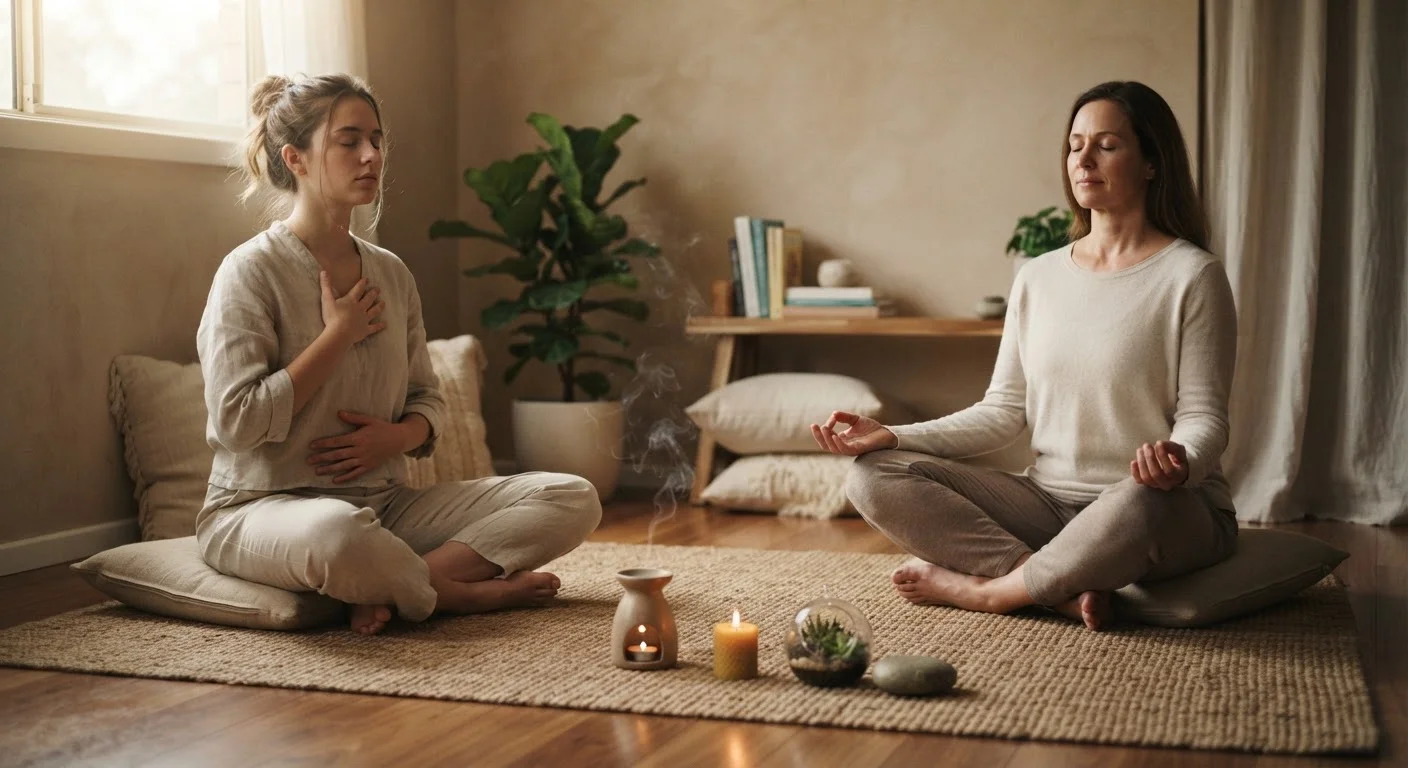
Breathwork, meditation, and mindfulness are genuinely complementary rather than interchangeable. Breathwork excels at rapidly shifting physiological arousal; formal meditation builds sustained attentional capacity; mindfulness extends that awareness into everyday life. Most evidence-informed practitioners suggest using all three as layered tools rather than choosing one exclusively.
| Best for | Recommended |
|---|---|
| Those seeking rapid stress or anxiety relief in the moment | Breathwork |
| Those building long-term attentional focus and emotional regulation | Meditation |
| Those wanting to extend calm awareness into daily routines | Mindfulness |
| Those pursuing a comprehensive mind-body wellness practice | All three, used as complementary layers |
Defining the Three Practices
These three terms are often used interchangeably in wellness culture, but each describes something meaningfully different in both technique and intention.
Breathwork refers to deliberate, structured manipulation of breathing patterns — rate, depth, and rhythm — to produce specific physiological or psychological effects. Techniques range from gentle diaphragmatic breathing to more vigorous practices like holotropic or pranayama-based methods. The breath is not merely observed; it is actively directed. For a deeper look at how pranayama fits into this landscape, see how pranayama bridges yoga and meditation.
Meditation is a formal, typically seated practice in which attention is intentionally anchored — to the breath, a mantra, a visual object, or an open field of awareness — and repeatedly returned when it wanders. The goal is training the mind's capacity for sustained, non-reactive attention. Traditions vary widely; for an overview, the map of major meditation traditions provides useful orientation.
Mindfulness is best understood as a quality of awareness — present-moment, non-judgmental attention — rather than a technique in itself. It can be cultivated during formal sitting meditation, during breathwork, or while washing dishes. Understanding what a daily mindfulness practice actually involves helps clarify what is and isn't genuine mindfulness training.
How Each Practice Works Mechanically
The mechanism behind each practice helps explain when and why each may be useful.
Breathwork directly engages the autonomic nervous system. Slow, extended exhalations activate the parasympathetic branch, reducing heart rate and cortisol output. Some research suggests that controlled breathing patterns can measurably alter heart rate variability and perceived stress within a single session, though study designs vary and effect sizes differ across populations. For those dealing with anxiety specifically, breathwork techniques for anxiety outlines how specific approaches like box breathing and 4-7-8 compare.
Formal meditation works primarily through attention training. Neuroimaging studies suggest that regular practice is associated with structural and functional changes in regions linked to self-regulation and emotional processing — though causality and magnitude remain active areas of research. The practice is less immediately physiological than breathwork and typically requires more time to yield noticeable results.
Mindfulness as a quality can be applied in both contexts. When practiced informally — noticing sensory experience during a walk, for example — it reinforces attentional habits developed in formal sessions. This transfer is considered one of its key practical advantages.
| Breathwork | Meditation | Mindfulness | |
|---|---|---|---|
| Primary mechanism | Active breath control | Sustained attention training | Present-moment awareness quality |
| Technique structure | Directed, patterned breathing | Formal seated or guided practice | Informal or formal; transferable |
| Speed of effect | Often immediate (one session) | Builds over weeks to months | Gradual; context-dependent |
| Physiological engagement | High — directly shifts nervous system | Moderate — indirect over time | Low to moderate |
| Risk considerations | Higher for intensive styles | Generally low | Generally very low |
| Portability | Moderate — needs focus | Low — requires dedicated time | High — applicable anywhere |
| Evidence base | Growing, mixed study quality | Substantial, varies by outcome | Strong for stress, anxiety |
Where the Practices Overlap and Diverge
Breathwork and meditation overlap most clearly when the breath is used as a meditation anchor — a common approach across Buddhist-derived traditions and secular programs like MBSR (Mindfulness-Based Stress Reduction). In these cases, the practitioner observes natural breathing without controlling it, which is distinct from breathwork's directive stance. Mantra meditation versus breathwork meditation explores this boundary in greater structural detail.
Mindfulness overlaps with both: a breathwork session can be practiced mindfully, and most meditation traditions explicitly cultivate mindfulness. However, mindfulness is not synonymous with either. A person can complete a guided breathwork session mechanically, without genuine present-moment awareness, just as a person can sit in meditation posture without actually meditating.
Starting Small Works Well
If you are new to any of these practices, beginning with five minutes of guided mindful breathing can introduce elements of all three at once. Observing the breath without controlling it eases you into meditation; bringing non-judgmental attention is mindfulness; noticing the breath's natural rhythm builds body awareness foundational to breathwork. Gradually extending session length allows the nervous system to adapt without overwhelm.
These practices also differ in accessibility and risk profile. Breathwork — particularly intensive styles — can occasionally trigger lightheadedness, emotional release, or, in rare cases, cardiovascular strain. People with certain health conditions, including cardiovascular disease or a history of trauma, should consult a qualified healthcare professional before beginning structured breathwork programs. Mindfulness and gentle meditation carry a considerably lower physiological risk profile, though any practice that surfaces difficult emotions warrants professional support if those emotions are persistent or overwhelming.
Building a Complementary Practice
Rather than treating these as competing options, most holistic health frameworks position them as layered tools. A practical approach might use brief breathwork to downregulate acute stress, followed by a short meditation session to consolidate that calmer state, with mindful awareness carried into the rest of the day.
For those managing chronic pain or physical health conditions, yoga and breathwork for chronic pain discusses what evidence supports and how to start safely. And for a broader framework on how these practices fit within holistic care, see integrative medicine versus alternative medicine.
The balance between active movement and still awareness is also worth considering — breathwork often bridges the two, making it a natural complement to both yoga and seated meditation within a complete mind-body wellness routine.
This article is for general informational purposes only and does not constitute medical advice. Always consult a qualified healthcare professional before starting any new health practice, particularly if you have an existing medical condition.
The content on this site is for informational purposes only and is not a substitute for professional advice. Always consult a qualified professional for guidance specific to your situation.