

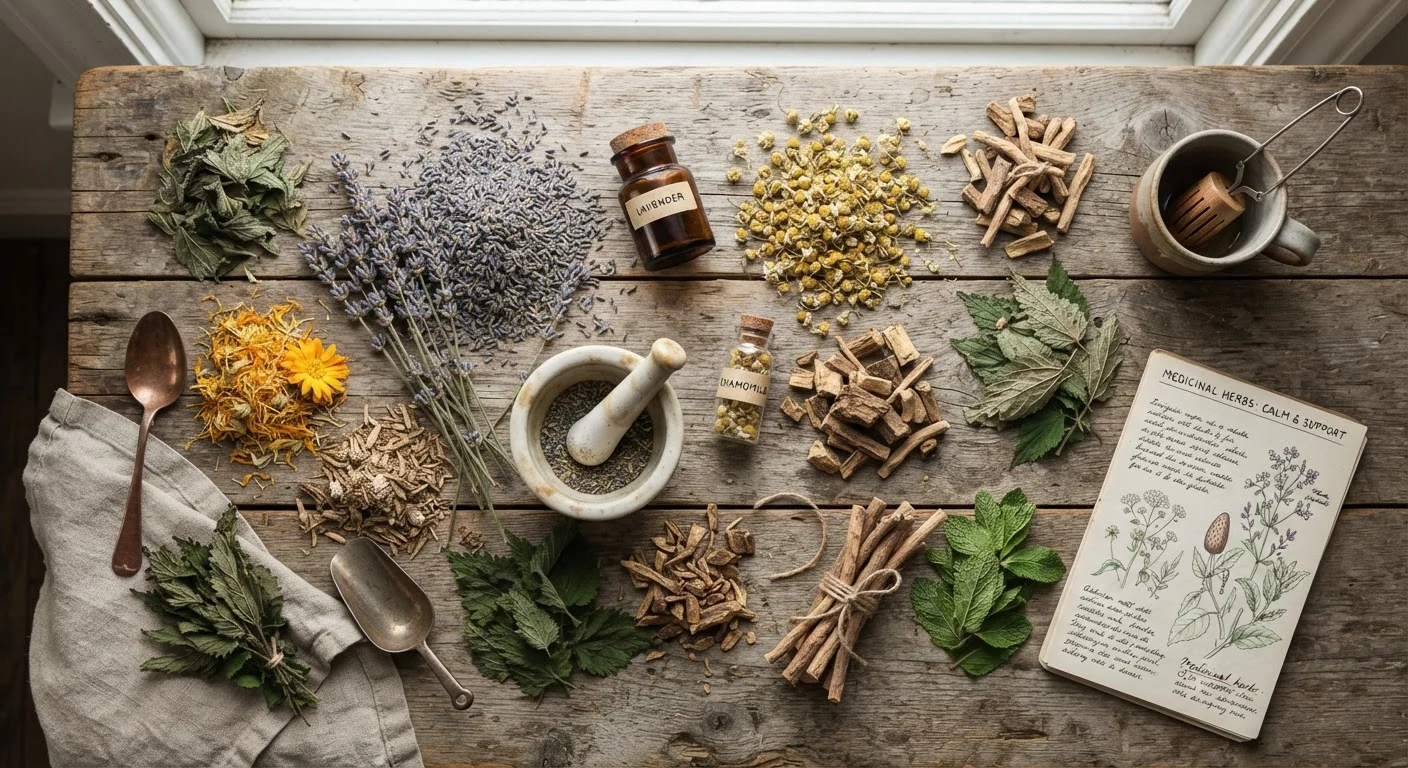
Why Researchers Study Traditional Stress Herbs
Interest in herbal approaches to stress and anxiety isn't new — it predates modern pharmacology by millennia. What is relatively new is the systematic effort to evaluate these traditional remedies through clinical trials. Researchers are motivated by both the widespread use of herbal supplements among the general public and the genuine need for well-tolerated options that complement existing care.
Understanding what the evidence does and does not show is essential. For a broader foundation on non-pharmacological approaches, see our guide to natural stress management for beginners. This article focuses specifically on the herbs most studied — mapping what traditional practice has long claimed against what clinical research currently supports.
~20%
U.S. adults using herbal supplements annually
According to surveys reviewed by the National Institutes of Health, roughly 1 in 5 U.S. adults report using herbal or botanical supplements in a given year.
8–12 weeks
Typical ashwagandha trial duration in stress research
Most published randomized controlled trials on ashwagandha for stress use intervention periods of 8 to 12 weeks, with stress and cortisol as primary outcome measures.
36.9 million
U.S. adults affected by anxiety disorders
The Anxiety and Depression Association of America estimates anxiety disorders affect approximately 40 million adults in the U.S., making context for complementary approaches especially relevant.
Herbs With Notable Preliminary Evidence
Ashwagandha (Withania somnifera) is among the most researched herbs in this category. Used for over 3,000 years in Ayurvedic practice, it is classified as an adaptogen. Multiple randomized controlled trials have examined its effects on perceived stress and cortisol levels, with several showing statistically significant reductions in self-reported stress scores compared to placebo. Study durations typically range from 8 to 12 weeks. For a detailed look at adaptogen evidence, see Adaptogens and Stress: Weighing What They Can and Cannot Do.
Lavender (Lavandula angustifolia) has demonstrated anxiolytic properties in both aromatherapy and oral extract forms. An oral lavender oil preparation has been studied in randomized trials for generalized anxiety, with some showing effects comparable to low-dose anxiolytics. Aromatherapy research is more mixed methodologically but consistently points to short-term calming effects.
Chamomile (Matricaria chamomilla) has a long history as a calming beverage herb. Clinical trials using standardized chamomile extract have reported modest reductions in anxiety symptoms, including one longer-term study suggesting some benefit in preventing relapse of generalized anxiety symptoms, though the effect sizes are generally modest.
Herbs With Promising But Thinner Evidence
Lemon balm (Melissa officinalis) has been used in European herbal medicine since at least the Middle Ages to ease nervousness and promote sleep. Small studies suggest it may reduce anxiety and improve mood, often in combination with other herbs like valerian. Solo evidence remains limited. Our article on herbs studied for sleep support explores how lemon balm and related herbs may support relaxation at bedtime.
Passionflower (Passiflora incarnata) is used in traditional herbalism across the Americas and Europe. A small number of clinical studies suggest it may reduce preoperative anxiety and general anxiety symptoms, but the total evidence base is limited and methodology varies considerably across trials.
Valerian (Valeriana officinalis) is better known for sleep research but has been examined for anxiety as well, typically in combination products. The evidence for anxiety specifically is less consistent than for sleep, and study quality varies. It interacts with sedative medications, which is a meaningful safety consideration.
Herb–Drug Interactions Are a Real Concern
Several herbs discussed here — including valerian, passionflower, and lavender — may interact with sedative medications, anxiolytics, antidepressants, or anticoagulants. Ashwagandha may influence thyroid hormone levels and interact with immunosuppressants. Always disclose any herbal supplement use to your prescribing clinician before starting or stopping use.
Reading the Evidence Critically
A consistent limitation across the herbal anxiety literature is study heterogeneity — different preparations, doses, durations, and outcome measures make direct comparison difficult. Many trials involve fewer than 100 participants and short follow-up periods. This doesn't mean the herbs don't work; it means current evidence supports cautious interest, not strong clinical conclusions.
Traditional use provides valuable historical context, but it is not equivalent to clinical proof. Some herbs used for generations turn out to be effective; others do not perform reliably under controlled conditions. Both realities are informative. For a deeper examination of how adaptogen research is structured and what its limitations are, see Adaptogenic Herbs and Stress: Separating Established Research from Emerging Claims.
“Herbal medicines occupy an interesting space — they carry the weight of traditional use and the scrutiny of modern science. The challenge for clinicians and patients alike is learning to read that evidence honestly, neither dismissing it nor overclaiming it.”
— Tieraona Low Dog, Integrative medicine physician and author specializing in herbal medicine and women's health
This article provides general educational information about herbs that have been studied in relation to stress and anxiety. It is not medical advice and should not be used as a substitute for consultation with a qualified healthcare professional. If you are experiencing significant anxiety symptoms, please seek professional evaluation.
Frequently Asked Questions
Ashwagandha, lavender, and chamomile have the most consistent body of preliminary clinical evidence. However, most studies involve small samples and short durations, so findings should be interpreted cautiously rather than as definitive proof of effectiveness.
Many herbs are well-tolerated in healthy adults at typical doses, but safety is not universal. Herbs can interact with prescription medications, affect hormone levels, or be inappropriate during pregnancy. Always consult a qualified healthcare professional before starting any herbal supplement.
No. Herbs should not replace evidence-based treatments such as cognitive behavioral therapy or prescribed medication for clinically diagnosed anxiety disorders. They may complement a broader wellness approach, but this should always be discussed with a healthcare provider.
Adaptogens are broadly thought to help the body maintain balance under stress, potentially moderating the physiological stress response over time. Anxiolytic herbs are studied for more direct calming effects on the nervous system. Some herbs, like ashwagandha, are discussed in both categories.
This varies significantly by herb and individual. Some herbs like lavender aromatherapy may produce relatively quick relaxation responses, while adaptogens like ashwagandha are typically studied over weeks. There is no guaranteed timeline, and individual responses differ.
A good starting point is exploring foundational lifestyle approaches alongside herbal options. Evidence-informed resources covering diet, movement, sleep, and mindfulness provide important context for how herbs fit into a broader stress management strategy.
The content on this site is for informational purposes only and is not a substitute for professional advice. Always consult a qualified professional for guidance specific to your situation.