

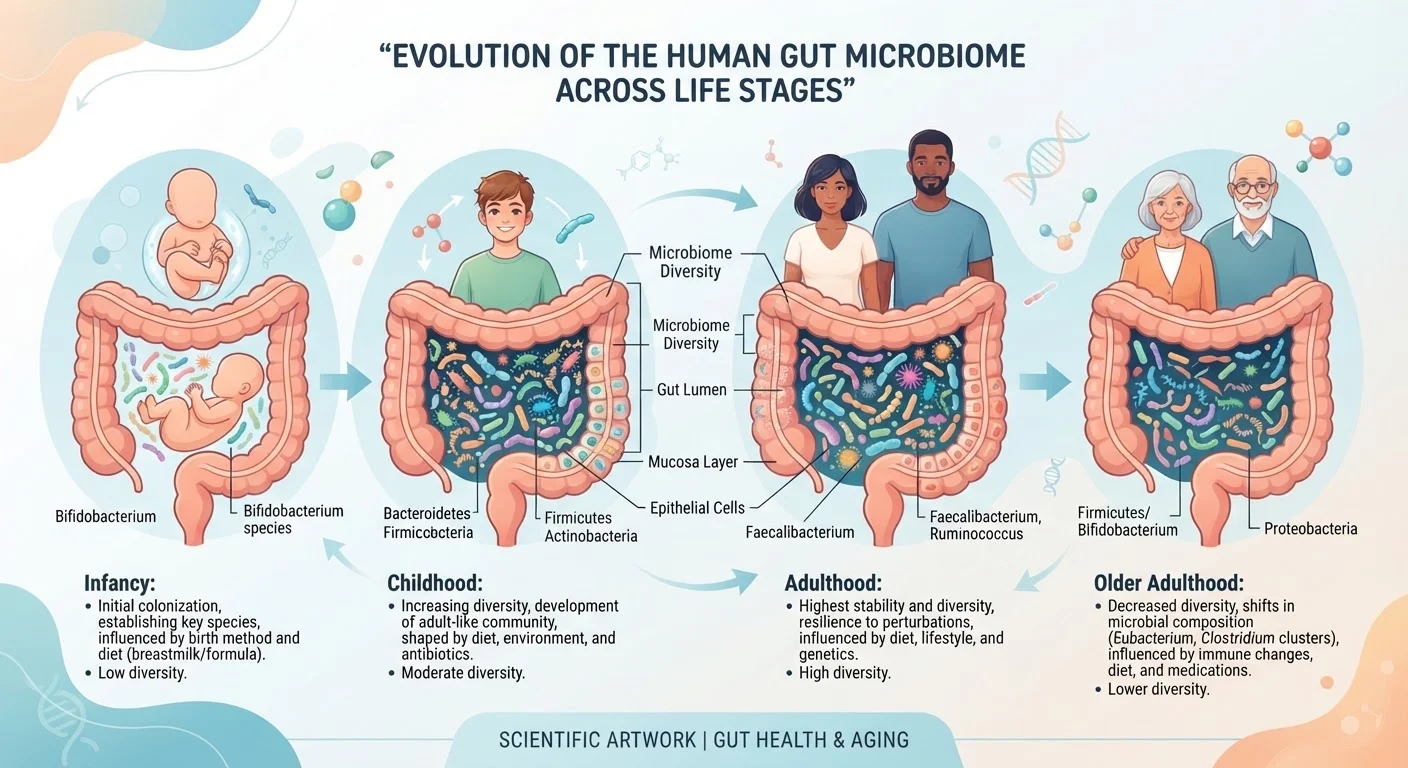
What Is the Microbiome and Why Does It Change?
The human gut microbiome is a vast community of trillions of bacteria, fungi, viruses, and other microorganisms residing primarily in the large intestine. Far from passive passengers, these microbes actively regulate digestion, produce vitamins, train immune cells, and protect against pathogens. Understanding how this ecosystem shifts across a lifetime is central to maintaining long-term health.
If you're new to the gut-immune connection, the Immune & Gut Health beginner's overview provides an accessible foundation before diving deeper.
Microbiome composition is never static. It responds continuously to diet, antibiotic exposure, stress, illness, environment, and the natural biological transitions of aging. Recognizing which shifts are normal — and which represent risk — empowers more informed lifestyle choices.
Infancy: The Microbiome's Critical Window
At birth, infants transition from a largely sterile environment to one teeming with microbial life. Delivery mode plays an early role: vaginally born infants are colonized by maternal vaginal and gut bacteria, while cesarean-born infants tend to acquire more skin-associated and hospital-environment microbes. Research suggests these early differences can influence immune programming, though long-term clinical significance remains an active area of study.
Breastfeeding substantially shapes early colonization. Human breast milk contains HMOs — complex sugars that selectively feed beneficial bacteria such as Bifidobacterium species, which dominate a healthy infant gut and support immune tolerance. Introduction of solid foods around six months marks a dramatic diversification event, as fiber-fermenting microbes begin to establish. By age two to three, most children's microbiomes begin to resemble the adult pattern.
This early window is considered critical because gut microbes educate the developing immune system — influencing responses to allergens, pathogens, and the body's own tissues. Disruptions during infancy have been associated in research with higher risks of conditions such as allergies and asthma, though causality is complex and multifactorial.
Adulthood: Stability, Threats, and Daily Choices
The adult microbiome reaches a period of relative stability, but "stable" does not mean unchangeable. Diet remains the most powerful modifiable influence. Diets rich in diverse plant fibers consistently support greater microbial diversity — an indicator researchers associate with resilience and immune competence. Conversely, diets heavy in ultra-processed foods and low in fiber tend to narrow microbial diversity over time.
Microbiome
The collective community of microorganisms — including bacteria, viruses, and fungi — that inhabit the human body, particularly the gut. These organisms play essential roles in digestion, immunity, and metabolism.
Microbial diversity
The variety of different microbial species within the gut. Higher diversity is generally associated with a more resilient and functional microbiome, though context matters.
HMOs (Human Milk Oligosaccharides)
Complex carbohydrates found in breast milk that are indigestible by the infant but serve as selective food for beneficial gut bacteria, particularly Bifidobacterium species.
Inflammaging
A term describing the chronic, low-grade systemic inflammation that tends to develop with aging. It is linked to microbiome changes and is associated with increased vulnerability to various age-related diseases.
Colonization
The process by which microbial communities establish themselves in the gut. Initial colonization begins at or before birth and is shaped by delivery mode, feeding, and early environment.
Dysbiosis
An imbalance in the composition or function of the gut microbiome, often characterized by reduced diversity or overgrowth of potentially harmful microbes. It has been linked to various health conditions, though research is ongoing.
Antibiotic use is among the most acute disruptors of adult gut flora. Even a single short course can significantly reduce diversity, with some strains taking months to recover — and some never fully returning. The article Why Antibiotic Courses Affect Your Gut details what happens during and after treatment.
Fermented foods and fiber-rich eating patterns are among the most studied natural strategies for maintaining microbiome health in adulthood. To understand how specific food choices translate to practice, see Building a Gut-Friendly Eating Pattern. For deeper context on the biological relationship between gut flora and immune defenses, The Gut-Immune Axis covers the underlying science.
Aging: Diversity Decline and Immune Consequences
From approximately the sixth decade onward, microbiome diversity tends to decline — a shift associated with reduced fiber intake, decreased physical activity, medication use (particularly antibiotics and proton-pump inhibitors), and physiological changes in gut motility and immune function. Older adults often show reduced populations of health-associated genera such as Bifidobacterium and Lactobacillus, and increased representation of pro-inflammatory species.
This microbial shift coincides with a phenomenon researchers call inflammaging — a chronic low-grade inflammatory state characteristic of aging that contributes to vulnerability to infection, slower recovery, and increased risk of metabolic conditions. Maintaining microbiome diversity in older age through diet, movement, and thoughtful lifestyle habits is an active research priority.
Strategies that have shown promise in research include increasing dietary fiber from whole plant foods, incorporating traditionally fermented foods, and sustaining physical activity. Probiotics and prebiotics are also commonly discussed — the article Probiotics vs. Prebiotics explains how each contributes to microbiome balance. Older adults with chronic conditions or complex medication regimens should always consult a qualified healthcare professional before adding supplements or making significant dietary changes.
This article is for general informational and educational purposes only and does not constitute medical advice. Always consult a qualified healthcare professional for guidance specific to your health situation.
The content on this site is for informational purposes only and is not a substitute for professional advice. Always consult a qualified professional for guidance specific to your situation.