

Start here
Why the Gut-Immune Connection Matters
Build vocabulary
Key Terms Every Beginner Should Know
Take action
Foundational Habits That Support Both Systems
Explore further
Natural Approaches Worth Exploring
Know your limits
When to Seek Professional Guidance
Why the Gut-Immune Connection Matters
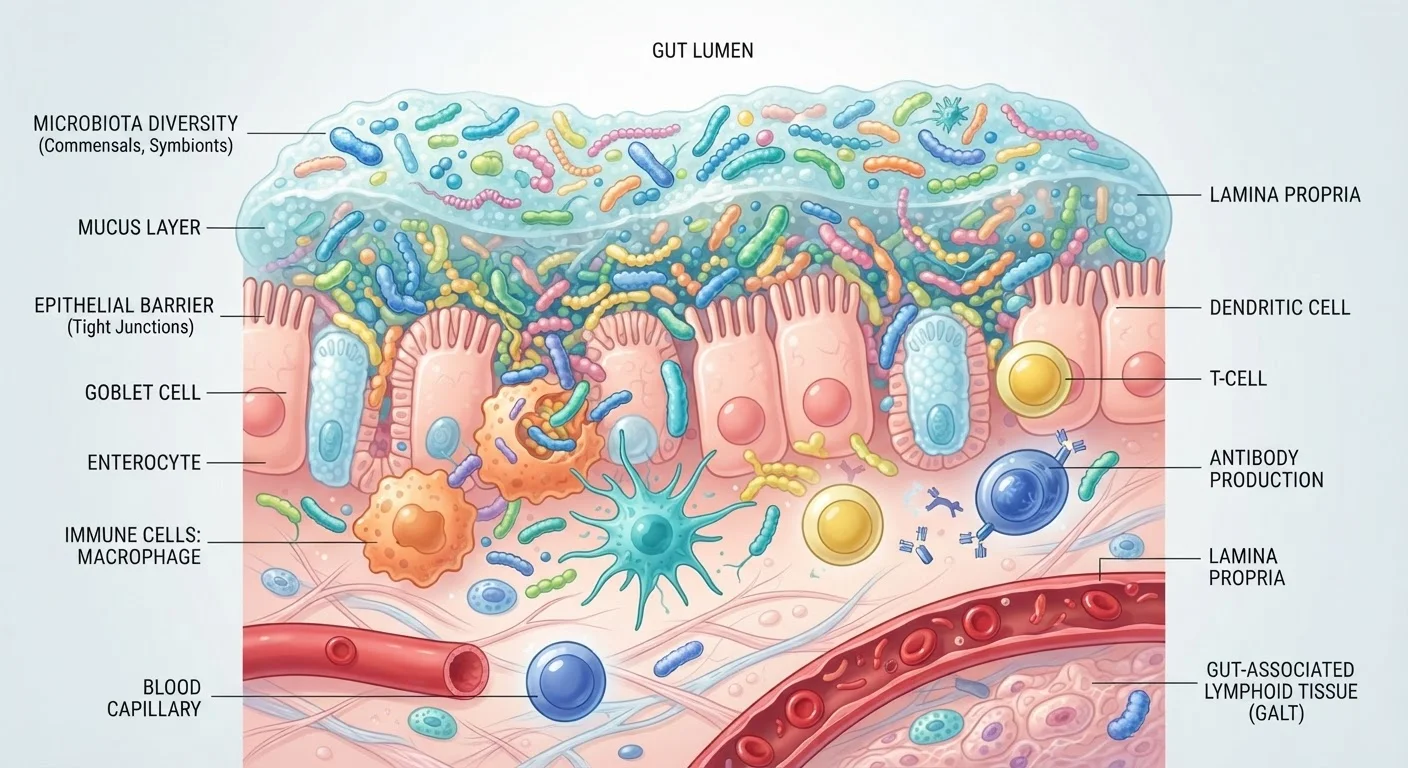
Most people think of the immune system as something that lives in the bloodstream or lymph nodes. In reality, an estimated 70–80% of immune cells reside in or directly adjacent to the gastrointestinal (GI) tract. This means your gut is not just a digestion machine — it is a central hub for immune activity.
The gut lining acts as a physical barrier separating the body's interior from the outside world. Trillions of microorganisms — collectively called the gut microbiome — live on that barrier and communicate continuously with immune cells embedded in the surrounding tissue. When the microbiome is diverse and balanced, the immune system tends to respond proportionately to genuine threats. When it is disrupted, immune signaling can become dysregulated.
Understanding this connection is the foundation for everything else in gut and immune health. For a broader context on how interconnected body systems affect wellness, see our guide to thyroid health, another system whose signals are easy to overlook.
Key Terms Every Beginner Should Know
Before diving into habits and strategies, it helps to have a working vocabulary. The field uses terms that can feel technical at first but are straightforward once defined.
Gut microbiome
The community of trillions of bacteria, fungi, and other microorganisms that live in your digestive tract. A diverse, balanced microbiome is associated with better immune regulation and overall health.
Probiotics
Live beneficial microorganisms found in fermented foods and some supplements. They may help maintain or restore a healthy balance of gut bacteria.
Prebiotics
Types of dietary fiber that feed beneficial gut bacteria. They are not bacteria themselves — they are food for bacteria, found naturally in many plant foods.
Gut-brain axis
A two-way communication network between the gut and the brain, involving nerves, hormones, and immune signals. It explains why stress can cause digestive symptoms and vice versa.
Intestinal permeability
A measure of how tightly the gut lining controls what passes into the bloodstream. Increased permeability — sometimes called a 'leaky gut' — is an active area of research linked to immune dysregulation.
Dysbiosis
An imbalance in the gut microbiome where harmful microorganisms outnumber or crowd out beneficial ones. It is associated with digestive issues and changes in immune function.
Inflammation
The immune system's response to perceived threats. Short-term inflammation is protective; chronic low-grade inflammation is linked to many health conditions and can be influenced by gut health.
These concepts come up repeatedly in gut and immune health research. Keeping them in mind will help you evaluate information more critically as you learn more.
Foundational Habits That Support Both Systems
No supplement or superfood can compensate for consistently poor daily habits. Research consistently identifies four lifestyle pillars as the most meaningful levers for gut and immune health:
- Diet diversity: A wide variety of plant foods feeds a broader range of beneficial microbes. Aim to include vegetables, legumes, whole grains, and fermented foods regularly. Explore key nutrients and superfoods that support immune and gut function.
- Sleep: During sleep, the body performs immune maintenance and the gut undergoes repair cycles. Chronic poor sleep is associated with reduced microbial diversity and dampened immune function.
- Stress management: The gut-brain axis means psychological stress directly influences gut motility, intestinal permeability, and microbial composition. Even brief daily practices — breathing exercises, walking, journaling — have documented physiological effects.
- Physical movement: Regular moderate exercise is linked to greater microbial diversity and a more regulated inflammatory response. Intensity and duration matter less than consistency.
For a practical self-audit of how well your current routine supports these pillars, see Gut Health Habits Worth Auditing in Your Daily Routine.
Start with one pillar at a time
If overhauling all four lifestyle areas at once feels daunting, choose the single area where you have the most room for improvement and focus there for two to four weeks. Building one consistent habit before adding another tends to produce more durable results than attempting a complete lifestyle overhaul simultaneously.
Natural Approaches Worth Exploring
Beyond the four foundational pillars, several natural strategies have meaningful research support — though evidence quality varies, and none should be treated as a guaranteed fix.
- Fermented foods: Yogurt, kefir, kimchi, sauerkraut, and miso contain live cultures that may contribute to microbial diversity. A 2021 study in Cell found that a high-fermented-food diet increased microbiome diversity and reduced certain inflammatory markers in healthy adults.
- Prebiotic fiber: Foods like garlic, onions, leeks, asparagus, and oats contain fiber types that selectively feed beneficial gut bacteria. This is distinct from general dietary fiber, though both matter.
- Herbal wellness practices: Some herbs — including ginger, turmeric, and elderberry — are used traditionally and studied for immune-modulating properties. Evidence is promising but often preliminary. See Starting Out with Herbal Wellness for a grounded introduction to evaluating herb research.
- Reducing ultra-processed foods: High consumption of ultra-processed foods is consistently associated with reduced microbial diversity and increased low-grade inflammation in observational research.
If you are new to building a broader wellness routine, Starting a Holistic Wellness Routine Without Feeling Overwhelmed offers practical first steps without the overwhelm.
Research quality varies widely
Much of the gut health research you will encounter — especially around supplements and specific foods — comes from small studies, animal models, or observational data. This does not mean the findings are wrong, but it does mean certainty is often lower than headlines suggest. Look for claims backed by multiple human trials or systematic reviews before treating them as established fact.
When to Seek Professional Guidance
This overview is general health education, not personal medical advice. Many gut and immune concerns — including persistent digestive symptoms, frequent infections, unexplained fatigue, or signs of autoimmune activity — warrant evaluation by a qualified healthcare provider rather than self-management alone.
A gastroenterologist, registered dietitian, or integrative medicine physician can help you interpret symptoms in context, identify any underlying conditions, and create a plan suited to your individual history. Natural approaches work best as complements to — not substitutes for — appropriate clinical care.
Special populations including pregnant individuals, young children, older adults, and those with chronic conditions or immunocompromising diagnoses should consult a healthcare professional before making significant changes to diet, supplementation, or lifestyle.
This article is for informational and educational purposes only and does not constitute medical advice. Always consult a qualified healthcare professional before making changes to your health regimen.
Frequently Asked Questions
Research estimates that approximately 70–80% of the body's immune cells reside in or near the gastrointestinal tract. This makes the gut the largest immune organ in the human body. The tissue lining the gut interacts constantly with the microbiome to regulate immune responses.
Fiber-rich vegetables, legumes, whole grains, and fermented foods like yogurt, kefir, sauerkraut, and kimchi are widely studied for their positive effects on the microbiome. A varied, plant-forward diet is generally associated with greater microbial diversity. No single food is a cure-all — variety is the key principle.
Yes. The gut and brain are connected via the gut-brain axis, a bidirectional communication network. Chronic stress can alter gut motility, intestinal permeability, and microbial balance. Managing stress through practices like mindfulness or regular movement is considered a meaningful part of gut health.
No — they work differently but complement each other. Probiotics are live beneficial bacteria found in fermented foods or supplements. Prebiotics are types of dietary fiber that feed those bacteria. Both play a role in supporting a healthy microbiome.
The microbiome can respond to dietary changes relatively quickly — sometimes within days — though meaningful, lasting improvements generally require consistent habits over weeks or months. Individual responses vary, and there is no universal timeline.
Probiotic supplements may be helpful in certain contexts, but the evidence varies by strain and condition. It is best to consult a qualified healthcare provider before starting any supplement, especially if you have a chronic condition or take medication.
The content on this site is for informational purposes only and is not a substitute for professional advice. Always consult a qualified professional for guidance specific to your situation.