

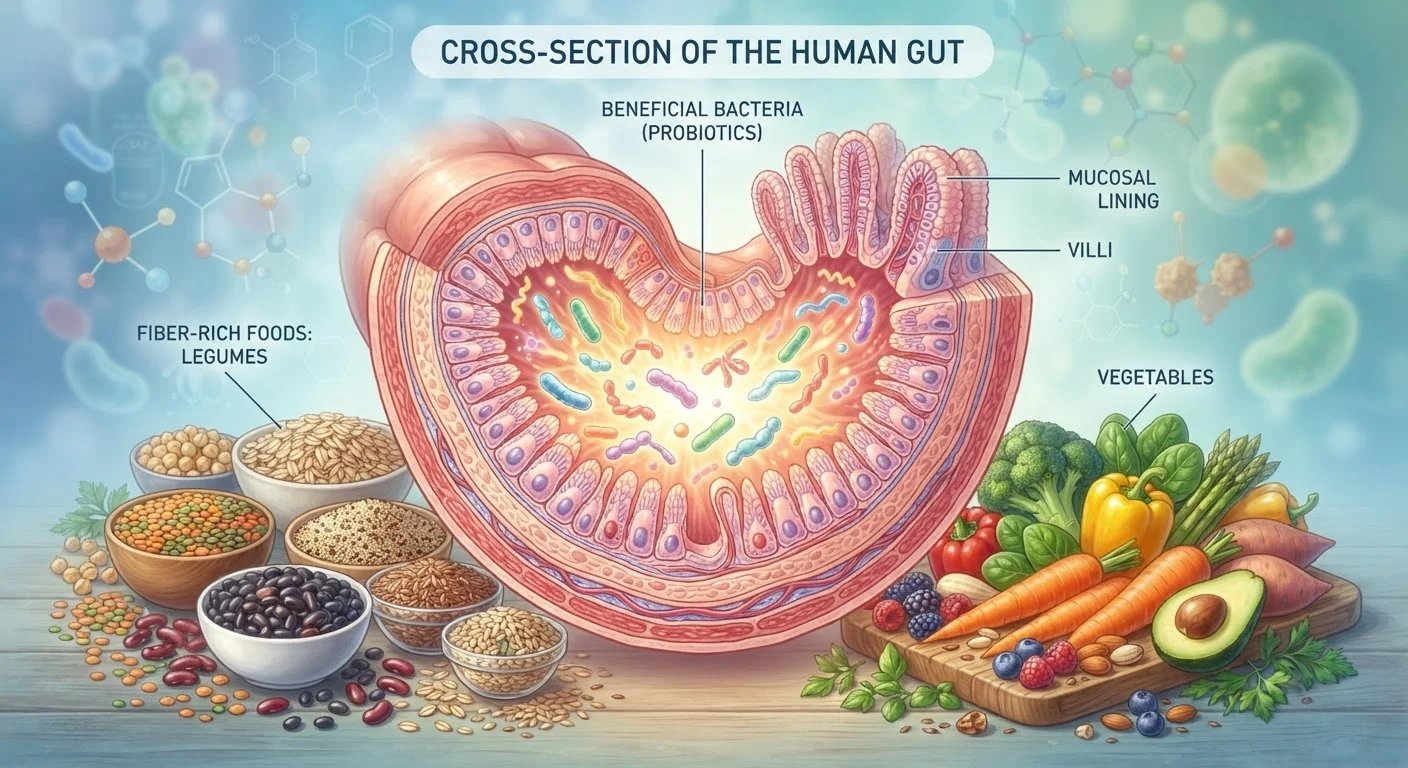
The Gut as an Immune Organ
The gastrointestinal tract is far more than a digestive channel. It houses an estimated 70% of the body's immune cells and serves as the frontline interface between the external environment and the bloodstream. Everything consumed — food, microbes, environmental contaminants — passes through this system, requiring constant immune surveillance and decision-making.
Central to this process is the gut microbiome: the vast community of bacteria, fungi, viruses, and other microorganisms residing primarily in the large intestine. These microorganisms are not passive passengers. They actively communicate with immune cells lining the gut wall, influencing whether the immune system mounts a response, tolerates a substance, or modulates inflammation. For a broader overview of this relationship, see The Gut-Immune Axis article.
~70%
Of immune cells located in the gut
Immunology research estimates the gastrointestinal tract houses the majority of the body's immune tissue, underlining its central role in defence.
15g
Average daily fibre intake for US adults
US nutrition surveys indicate most adults consume approximately 15 grams of fibre daily — well below the 25–38g recommended by dietary guidelines.
30+
Plant types per week linked to microbiome diversity
The American Gut Project found participants eating more than 30 different plant foods per week had notably more diverse gut microbiomes than those eating 10 or fewer.
What Fibre Actually Does Inside the Gut
Unlike proteins, fats, and simple carbohydrates, dietary fibre is not absorbed in the small intestine. It arrives largely intact in the colon, where resident bacteria ferment it — a process that generates short-chain fatty acids (SCFAs) including butyrate, propionate, and acetate. These SCFAs are not metabolic byproducts to be discarded; they are bioactive molecules with measurable effects on gut barrier integrity and immune signalling.
Butyrate, in particular, serves as the primary energy source for colonocytes — the cells lining the colon. Research published in journals including Cell Host & Microbe and Nature Reviews Immunology has explored how butyrate influences regulatory T-cell development, which plays a role in preventing the immune system from overreacting to benign stimuli. This is one plausible mechanism by which fibre intake may influence inflammatory conditions, though human clinical evidence remains an active area of investigation.
Not all fibre is equal in its effects. Soluble, fermentable fibres — classified as prebiotics — tend to selectively feed beneficial bacterial species. Foods rich in these fibres include oats, barley, legumes, bananas, garlic, and chicory root. To understand the distinction between prebiotics and probiotic supplements, see Probiotics vs. Prebiotics.
Building Fibre Variety Into Everyday Meals
Rather than focusing on a single high-fibre food, research suggests variety across plant food types offers the broadest benefit for the microbiome. Aim to rotate legumes, whole grains, vegetables, and fruits across the week rather than relying on any single source. Gradual increases are generally better tolerated — consider adding one new plant food per week rather than overhauling your diet all at once.
Microbiome Diversity and Immune Resilience
Population studies, including the large-scale American Gut Project, have found that individuals who eat a wider variety of plant foods tend to harbour more diverse gut microbiomes. Microbiome diversity — the range of different species present — is broadly associated in the research literature with more stable and regulated immune responses, though the direction of causality is not always straightforward.
A less diverse microbiome, sometimes called dysbiosis, has been observed in association with a range of conditions involving immune dysregulation, including inflammatory bowel conditions and autoimmune disorders. Researchers are careful to note that association does not confirm causation, and individual microbiome profiles vary considerably based on genetics, environment, medications, and life history.
Plant diversity on your plate is one of the most practical ways the science suggests people can support microbiome richness — not through any single superfood, but through consistent variety across vegetables, fruits, legumes, whole grains, nuts, and seeds. Fermented foods may also complement this approach; see fermented foods and gut health for more context.
Practical Context: Fibre Gaps and What They Mean
Despite the evidence linking fibre to microbiome health, most US adults fall well short of recommended intake levels. Nutrition surveys consistently show average daily consumption hovering around 15 grams — roughly half of general guidelines. Heavily processed diets, reliant on refined grains and low-plant-food variety, are a primary driver of this gap. For a deeper look at why this shortfall is so widespread and what it means beyond gut health, see Why Fibre Is the Nutrient Most People Consistently Undereat.
Rebuilding fibre intake after years of low consumption is generally best approached gradually. Adding too much fibre too quickly can cause bloating and digestive discomfort as the microbiome adjusts. Starting with consistent small additions — an extra serving of legumes, swapping refined grains for whole grain versions — tends to be better tolerated. People with digestive conditions such as irritable bowel syndrome or inflammatory bowel disease should consult a gastroenterologist or registered dietitian before significantly changing fibre intake, as responses vary considerably.
It is also worth noting that antibiotic use can significantly alter the microbiome landscape, potentially reducing the bacterial populations that ferment fibre most effectively. Understanding how antibiotic courses affect the gut is useful context for anyone looking to rebuild gut health after treatment.
This article is for general informational and educational purposes only and is not a substitute for professional medical advice, diagnosis, or treatment. Always consult a qualified healthcare provider regarding any health concerns or before making changes to your diet or health routine.
Frequently Asked Questions
Fibre is fermented by gut bacteria into short-chain fatty acids, which signal to immune cells and help regulate inflammation. This process supports the gut's ability to distinguish between harmful pathogens and harmless substances. A fibre-rich diet is associated in research with more balanced immune responses.
Prebiotic fibres — found in foods like garlic, onions, leeks, asparagus, oats, and legumes — are particularly well-studied for feeding beneficial bacteria. Research suggests variety matters as much as quantity, since different bacterial strains thrive on different fibre types.
Research suggests that a more diverse, balanced microbiome is linked to more regulated immune function. However, the relationship is complex and bidirectional. Fibre-rich diets, adequate sleep, and reduced stress all contribute to a healthier microbiome — but no single change guarantees immune improvements.
US dietary guidelines generally recommend 25–38 grams of fibre per day for adults, depending on age and sex. Most Americans consume closer to 15 grams daily. Gradually increasing fibre intake from whole food sources is generally better tolerated than sudden large increases.
Whole food sources of fibre provide additional nutrients, phytonutrients, and structural diversity that supplements do not replicate. Some isolated fibre supplements have demonstrated specific benefits in clinical studies, but the broader research suggests whole plant foods offer advantages for microbiome diversity.
Yes — gut bacteria and their metabolites interact with immune pathways that regulate inflammation. Imbalanced gut flora (dysbiosis) has been associated with elevated inflammatory markers in several studies. However, cause-and-effect relationships are still being actively investigated in human research.
The content on this site is for informational purposes only and is not a substitute for professional advice. Always consult a qualified professional for guidance specific to your situation.