

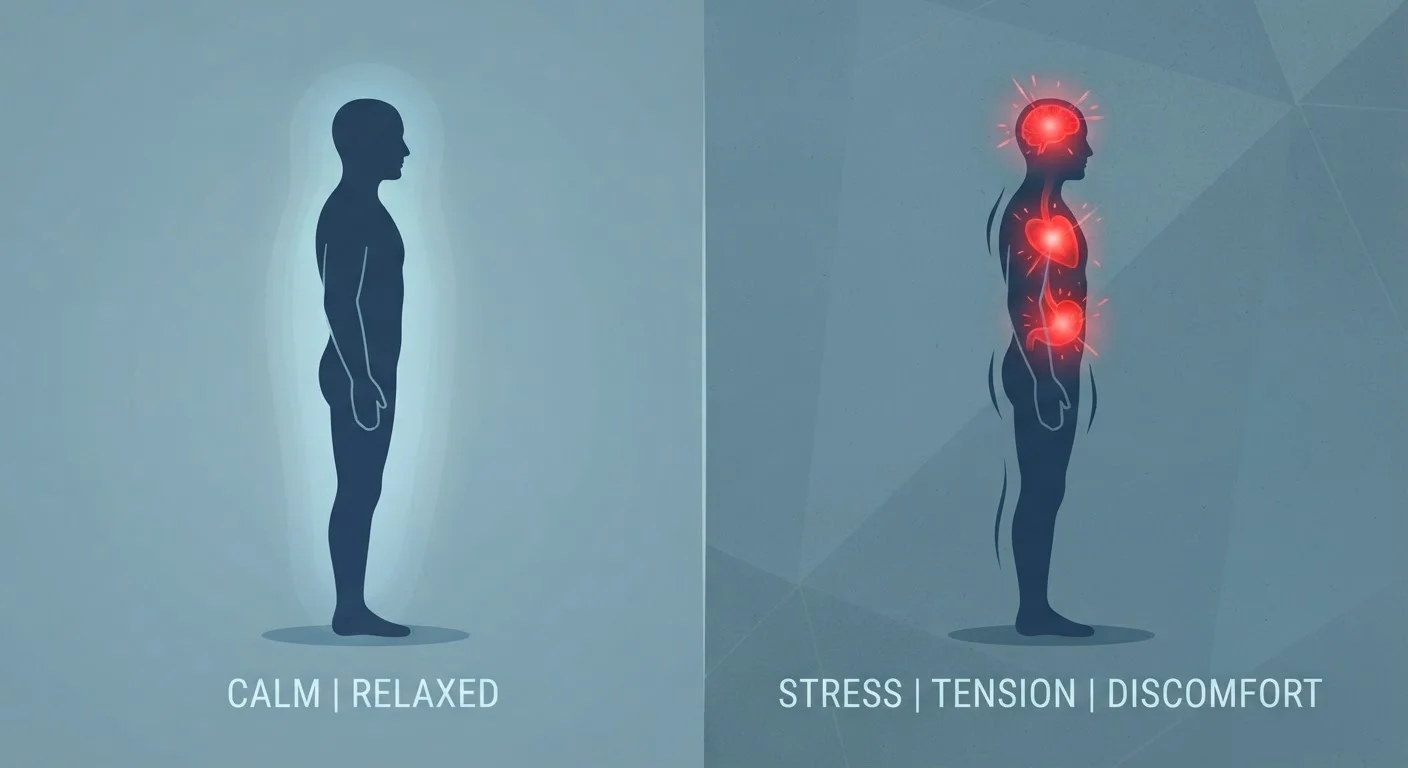
The Body Under Pressure: Why Stress Isn't Just Mental
The popular distinction between "mental" and "physical" health can obscure an important biological reality: the brain and body are in constant biochemical dialogue. When psychological pressure becomes sustained — whether from work, relationships, financial strain, or health anxiety — the body doesn't simply carry on unaffected. It adapts, and those adaptations have measurable consequences.
At the core of this process is the stress response — a system that evolved to protect against immediate threats. Understanding how stress triggers physiological changes, from cortisol surges to nervous system activation, is foundational to grasping why chronic psychological pressure accumulates as physical damage over time. When this response is repeatedly activated without adequate recovery, it stops being protective and starts being harmful.
Key Physiological Pathways Linking Stress to Physical Disease
Stress affects the body through several interconnected mechanisms. The most studied involve the hypothalamic-pituitary-adrenal (HPA) axis and the autonomic nervous system.
77%
Adults reporting stress-related physical symptoms
According to the American Psychological Association's Stress in America surveys, a significant majority of U.S. adults regularly experience physical symptoms they attribute to stress.
2–3×
Elevated cardiovascular risk from chronic stress
Research in cardiovascular medicine suggests chronically stressed individuals face materially higher risk of major cardiovascular events compared to low-stress counterparts.
40%
IBS cases with significant psychological stress component
Gastroenterology research consistently identifies psychological stress as a major trigger and aggravating factor in a substantial proportion of irritable bowel syndrome cases.
Cardiovascular System
Chronic stress raises blood pressure and heart rate through repeated sympathetic nervous system activation. Over time, this strains arterial walls and promotes atherosclerosis — plaque buildup linked to heart attack and stroke risk. Studies published in cardiology literature identify psychological stress as an independent risk factor for cardiovascular events, not merely a secondary concern.
Immune and Inflammatory Response
Cortisol, released during stress, initially suppresses inflammation — but chronically elevated levels paradoxically promote low-grade systemic inflammation. This contributes to conditions ranging from autoimmune flares to increased susceptibility to viral infections. The connection between stress and inflammation also amplifies pain perception, explaining why many people with chronic pain report worsening symptoms during stressful periods.
Digestive System
The gut and brain communicate via the vagus nerve and the enteric nervous system — sometimes called the "second brain." Stress disrupts gut motility, alters gut microbiome composition, and increases intestinal permeability. These changes are linked to irritable bowel syndrome (IBS), functional dyspepsia, and worsening of inflammatory bowel conditions.
Musculoskeletal System
Muscle tension is one of the most immediate physical responses to stress. Chronic tension — particularly in the neck, shoulders, and jaw — contributes to tension headaches, temporomandibular joint (TMJ) dysfunction, and general musculoskeletal pain. The biological mechanisms that turn mental stress into body symptoms are well-documented and often underappreciated in conventional health conversations.
Managing the Physical Impact: Evidence-Informed Approaches
Recognizing stress as a physical health issue opens meaningful opportunities for intervention. Several approaches have demonstrated measurable physiological benefits in peer-reviewed research:
- Mindfulness-based practices: Regular mindfulness meditation has been shown to reduce cortisol levels and lower markers of systemic inflammation in multiple clinical trials.
- Physical activity: Exercise remains one of the best-studied buffers against the physical effects of stress, improving cardiovascular resilience, mood regulation, and immune function.
- Sleep prioritization: Sleep is when the HPA axis recalibrates. Chronic sleep deprivation compounds stress physiology rather than providing recovery.
- Social connection: Research on social support consistently shows that strong interpersonal relationships moderate the physiological stress response.
Treat Stress Recovery as a Health Priority
Building deliberate recovery into your routine — through rest, movement, or mindfulness — isn't a luxury; it's a physiological requirement. Even brief, consistent stress-reduction practices can measurably reduce cortisol levels and improve cardiovascular markers over time. If physical symptoms persist, a healthcare provider can help distinguish stress-related effects from other underlying conditions.
Chronic stress ignored or suppressed has well-documented physical and mental consequences — recovery and rest are not optional extras but physiological necessities. Exploring the broader natural techniques available for stress reduction can help readers build sustainable, personalized strategies.
This article is for general informational purposes only and does not constitute medical advice. Always consult a qualified healthcare professional for guidance specific to your health situation, symptoms, or concerns.
Frequently Asked Questions
Yes, research consistently links chronic stress to increased risk of physical illness. Sustained stress elevates cortisol and inflammatory markers, which over time can contribute to conditions including heart disease, digestive disorders, and weakened immunity. This doesn't mean stress alone causes every illness, but it is a significant contributing factor that healthcare providers increasingly recognize.
Common physical manifestations include headaches, muscle tension, fatigue, disrupted sleep, digestive issues such as bloating or irritable bowel symptoms, elevated blood pressure, and frequent infections due to immune suppression. These symptoms arise because stress hormones affect multiple organ systems simultaneously.
Chronically elevated cortisol suppresses certain immune responses while promoting low-grade inflammation. This dual effect can make the body more vulnerable to infections while also increasing risk of inflammatory conditions. The relationship is complex and varies by individual, duration of stress, and other health factors.
Evidence supports that stress reduction practices — including mindfulness, regular physical activity, adequate sleep, and social connection — can measurably improve physical health markers such as blood pressure, inflammatory biomarkers, and immune function. These approaches complement, but do not replace, medical care.
You should consult a qualified healthcare professional whenever physical symptoms are persistent, severe, or interfering with daily function — regardless of whether you suspect stress is involved. Many stress-related symptoms overlap with other conditions that require proper diagnosis and treatment.
The content on this site is for informational purposes only and is not a substitute for professional advice. Always consult a qualified professional for guidance specific to your situation.