

Why Nutrition Labels Trip People Up
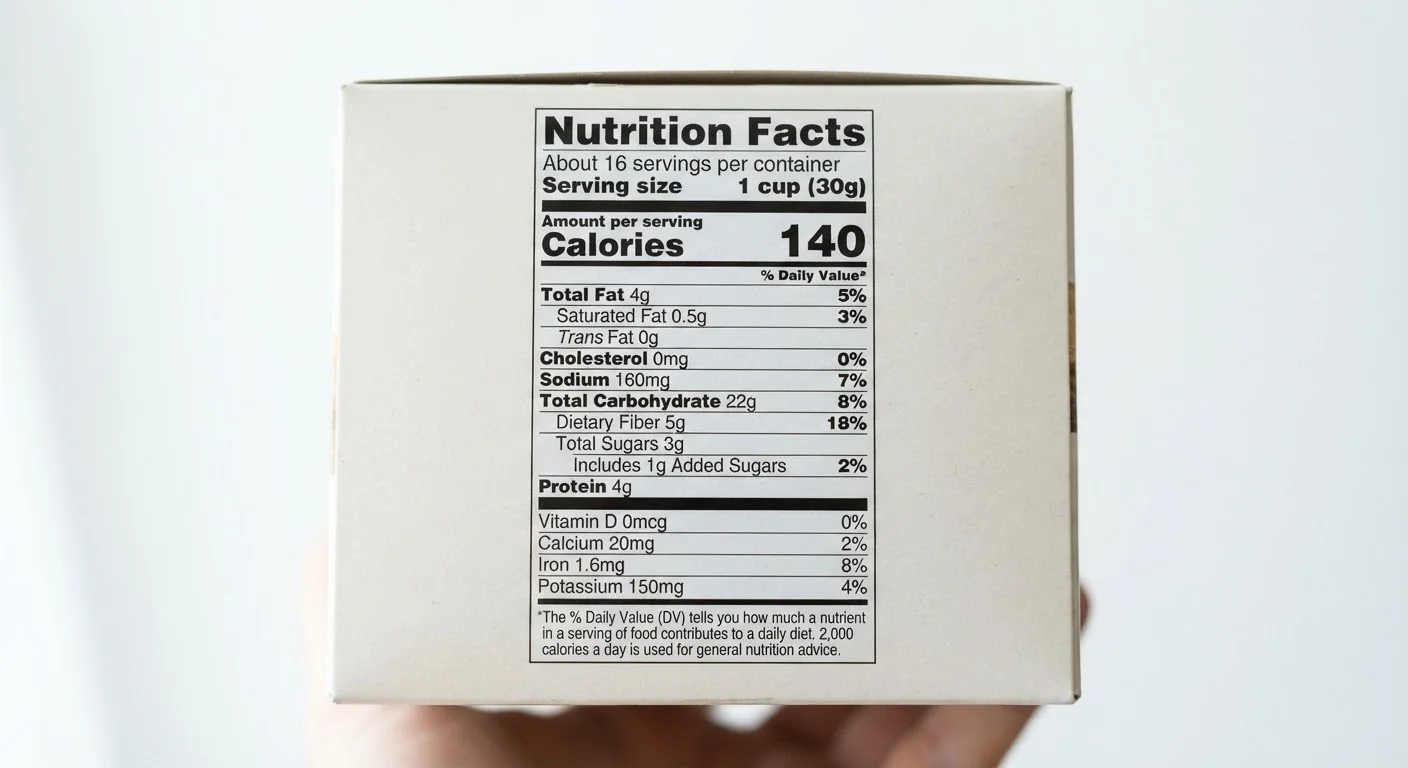
The Nutrition Facts panel was designed to inform, yet research consistently shows most people either ignore it or misread it. The layout packs calorie counts, macronutrients, micronutrients, and percentage benchmarks into a small space — and a few structural quirks make key figures easy to overlook.
The most common mistake is treating the entire package as one serving. A bottle of juice or a bag of chips may list two or three servings per container, meaning every number on the label must be multiplied accordingly. Miss that detail and your calorie and sugar estimates can be off by a factor of two or more.
Understanding the label's logic doesn't require a nutrition degree. It requires knowing which four or five figures deserve your attention — and why the rest are secondary. For a grounding in common dietary terminology used throughout this guide, see the Natural Diet Plans Reference Glossary.
Use the Label to Compare, Not Just Evaluate
The Nutrition Facts panel becomes most powerful when you compare two similar products side by side. Holding up two breakfast cereals or two yogurts and scanning fibre, added sugars, and sodium in parallel takes under a minute and can meaningfully shift which option you choose. Make comparison a habit rather than an occasional check.
How to Read Each Section of the Label
Work through the label from top to bottom — this mirrors the hierarchy the FDA intended when it standardized the format.
Check serving size and servings per container first
Before reading any other figure, find Serving Size and Servings Per Container at the very top of the panel. Every calorie count, gram measurement, and percentage that follows applies to one serving — not the whole package. If the label shows 150 calories and there are 2.5 servings per container, consuming the entire package means 375 calories.
Note total calories per serving
Calories appear in large type immediately below the serving information. This figure represents the total energy in one serving from all macronutrients combined. It is a useful reference point but should not be the only figure you consider — a 200-calorie food can be nutrient-dense or nutritionally hollow depending on what provides those calories.
Scan the nutrients to limit
The label groups saturated fat, trans fat, cholesterol, and sodium as nutrients most Americans consume in excess. Trans fat has no safe established intake level — any non-zero amount warrants attention. For sodium, a 5% DV or lower per serving is a reasonable target for most processed foods, though individual health conditions may require stricter thresholds.
Immediately below, look for total sugars and the indented line showing added sugars. Added sugars are those not naturally occurring in the ingredient — they include table sugar, syrups, and concentrated fruit juice used as sweeteners. The Dietary Guidelines for Americans recommend limiting added sugars to less than 10% of total daily calories.
Identify nutrients to prioritize
Below the sugars line, the label lists dietary fibre, vitamin D, calcium, iron, and potassium — nutrients the FDA identified as broadly underconsumed in the US population. A higher % DV for these is generally a positive signal. Dietary fibre, for example, supports digestive health and satiety; potassium plays a role in blood pressure regulation. Use these figures to compare similar products and identify better sources.
Read the ingredients list as a complement to the numbers
The ingredients list appears below the Nutrition Facts panel and is ordered by weight — the first ingredient is present in the greatest amount. If a refined grain, added sugar, or oil appears in the first three positions, it defines the product's nutritional foundation regardless of what the numbers show. Look for whole, recognizable ingredients early in the list. Multiple names for sugar (dextrose, maltose, corn syrup, evaporated cane juice) can scatter its total contribution across several entries, making the product appear lower in sugar than it is.
Once you've read through the numbers in context, apply the same lens to your grocery list. Our nutrient-rich grocery list framework shows how to translate label reading into smarter weekly shopping decisions.
Front-of-Pack Claims Are Not Regulated Like Labels
Terms like 'low fat,' 'reduced sugar,' and 'high protein' on the front of packaging are subject to FDA definitions, but phrases like 'wholesome,' 'clean,' or 'guilt-free' are marketing language with no legal nutritional meaning. Always turn the package over and verify claims against the Nutrition Facts panel and ingredients list before drawing conclusions.
Putting the Numbers in Context
Labels describe a product in isolation. What matters nutritionally is how that product fits into your day. A food with 20% DV for sodium isn't a problem if the rest of your meals are low-sodium whole foods — but it matters a great deal if you're also eating processed foods at every other meal.
The % Daily Value (% DV) column uses a 2,000-calorie reference diet. Individual caloric needs vary, so the percentages are approximate guides rather than personal prescriptions. As a practical rule of thumb from FDA guidance: 5% DV or less is considered low for a nutrient; 20% DV or more is considered high.
Use high % DV figures to your advantage when shopping for nutrients you want more of — such as dietary fibre, potassium, calcium, and vitamin D, all of which tend to be underconsumed in typical US diets. For nutrients to limit — saturated fat, added sugars, and sodium — look for lower % DV values.
Label literacy pairs well with a broader understanding of balanced eating. See what a balanced plate actually looks like for guidance on proportions and food groups that complement this number-by-number approach.
This article is for general informational and educational purposes only and does not constitute medical or dietary advice. Consult a registered dietitian or qualified healthcare professional for guidance tailored to your individual health needs.
The content on this site is for informational purposes only and is not a substitute for professional advice. Always consult a qualified professional for guidance specific to your situation.