

The Core Framework: Proportions Over Perfection
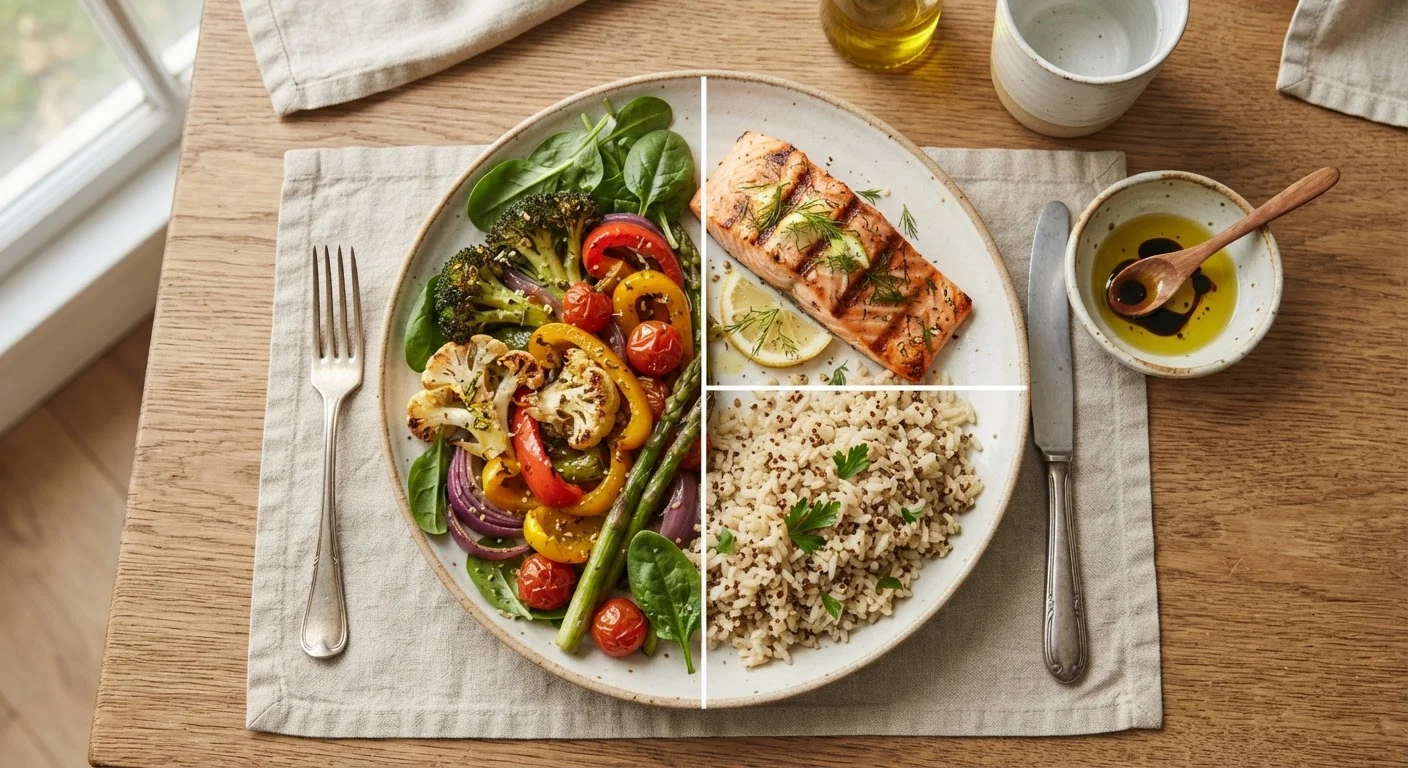
The most durable version of the balanced plate model divides a standard dinner plate into three functional zones. Half the plate is vegetables and fruit — prioritizing non-starchy vegetables such as leafy greens, broccoli, peppers, and tomatoes, with fruit as a complementary rather than dominant presence. One quarter is dedicated to quality protein: fish, poultry, eggs, legumes, or tofu. The remaining one quarter holds whole-grain or minimally processed carbohydrates — brown rice, quinoa, whole-wheat pasta, or starchy vegetables like sweet potato.
This simple spatial division does real nutritional work. The vegetable half delivers fiber, phytonutrients, and micronutrients while keeping caloric density low. The protein quarter provides the amino acids needed for tissue repair and satiety. The carbohydrate quarter supplies sustained energy without the blood-sugar spike associated with refined grains.
Use Your Plate as a Built-In Portion Guide
You don't need to weigh food to eat balanced meals. A standard 9-inch dinner plate naturally limits total volume while the visual proportions guide food group distribution. Eating from smaller plates is consistently associated with lower total intake in behavioral research, without requiring conscious restriction.
Healthy fats sit outside the three main zones but remain essential. A drizzle of olive oil on roasted vegetables, a few slices of avocado, or a handful of nuts alongside the meal contributes fat-soluble vitamin absorption and cardiovascular benefit without displacing any plate section.
Why Vegetables Take Up Half the Plate
The emphasis on vegetables is among the most consistently supported findings in nutritional epidemiology. Diets rich in vegetables and legumes are associated with lower rates of cardiovascular disease, type 2 diabetes, and certain cancers, according to data reviewed by major health authorities worldwide. Fiber from vegetables feeds beneficial gut microbiota, slows glucose absorption, and supports satiety — all without adding significant calories.
Filling half the plate with vegetables also naturally limits the space available for ultra-processed foods, refined starches, and excess saturated fat — a structural nudge that requires no willpower after the habit is established. Variety within this half matters: rotating among different colors and types broadens your micronutrient intake across the week.
Plate Models Are Starting Points, Not Rigid Rules
Cultural food traditions, medical conditions, activity levels, and individual metabolic needs all influence what an ideal plate looks like for any given person. The proportions described here reflect broad evidence-based guidance for generally healthy adults. People managing conditions such as diabetes, kidney disease, or eating disorders should work with a registered dietitian to adapt these principles to their specific circumstances.
Choosing the Right Proteins and Carbohydrates
Within the protein quarter, the quality and source of protein influences overall dietary health. Fatty fish such as salmon or mackerel adds omega-3 fatty acids alongside protein. Legumes — lentils, chickpeas, black beans — contribute fiber and iron alongside plant protein. Processed meats occupy a different risk profile and are generally recommended only occasionally by major dietary guidelines.
On the carbohydrate quarter, the key distinction is processing level. Whole grains retain their bran and germ, delivering B vitamins, magnesium, and fiber that are stripped from refined counterparts. Choosing whole-grain options at most meals — rather than white rice or white bread — is one of the highest-impact single swaps supported by dietary research.
For readers building this into a broader eating strategy, constructing a whole-food meal plan offers practical tools for extending these principles across a full week of eating. Understanding how single meals accumulate is also addressed in our piece on how daily food choices stack up.
If you find nutrition labels useful for evaluating packaged components of a meal, our guide on reading nutrition labels clearly covers the figures that matter most.
This article is for general informational and educational purposes only and does not constitute medical or dietary advice. Consult a registered dietitian or qualified healthcare professional for guidance tailored to your individual health needs.
Frequently Asked Questions
No. Dietary quality is determined by patterns over days and weeks, not individual meals. Aim for balance most of the time and treat occasional deviations as normal. Consistency, not perfection, is the operative principle.
Yes, with some adjustment. Plant-based proteins like legumes, tofu, or tempeh fill the protein quarter. Certain nutrients — vitamin B12, iron, zinc, and omega-3s — may need closer attention when animal foods are removed. See our <a href="/diet-nutrition/healthy-eating-basics/plant-based-eating-weighing-the-trade-offs">overview of plant-based trade-offs</a> for more detail.
The plate model prioritizes food quality and proportion rather than numeric calorie targets, making it more sustainable and less cognitively demanding. It doesn't replace calorie awareness for people with specific clinical needs, but it is a practical starting framework for most adults.
Olive oil, avocado, nuts, seeds, and fatty fish are widely supported by evidence as sources of unsaturated fats that benefit cardiovascular health. These are used to dress, cook, or complement your plate rather than forming a large separate section of it.
Absolutely. For combination dishes, mentally assess whether each food group is represented in roughly the right proportion. A stir-fry with abundant vegetables, a moderate amount of tofu or chicken, and a smaller portion of brown rice maps closely to the balanced plate model.
The content on this site is for informational purposes only and is not a substitute for professional advice. Always consult a qualified professional for guidance specific to your situation.