

Why Sanskrit Shows Up on the Mat
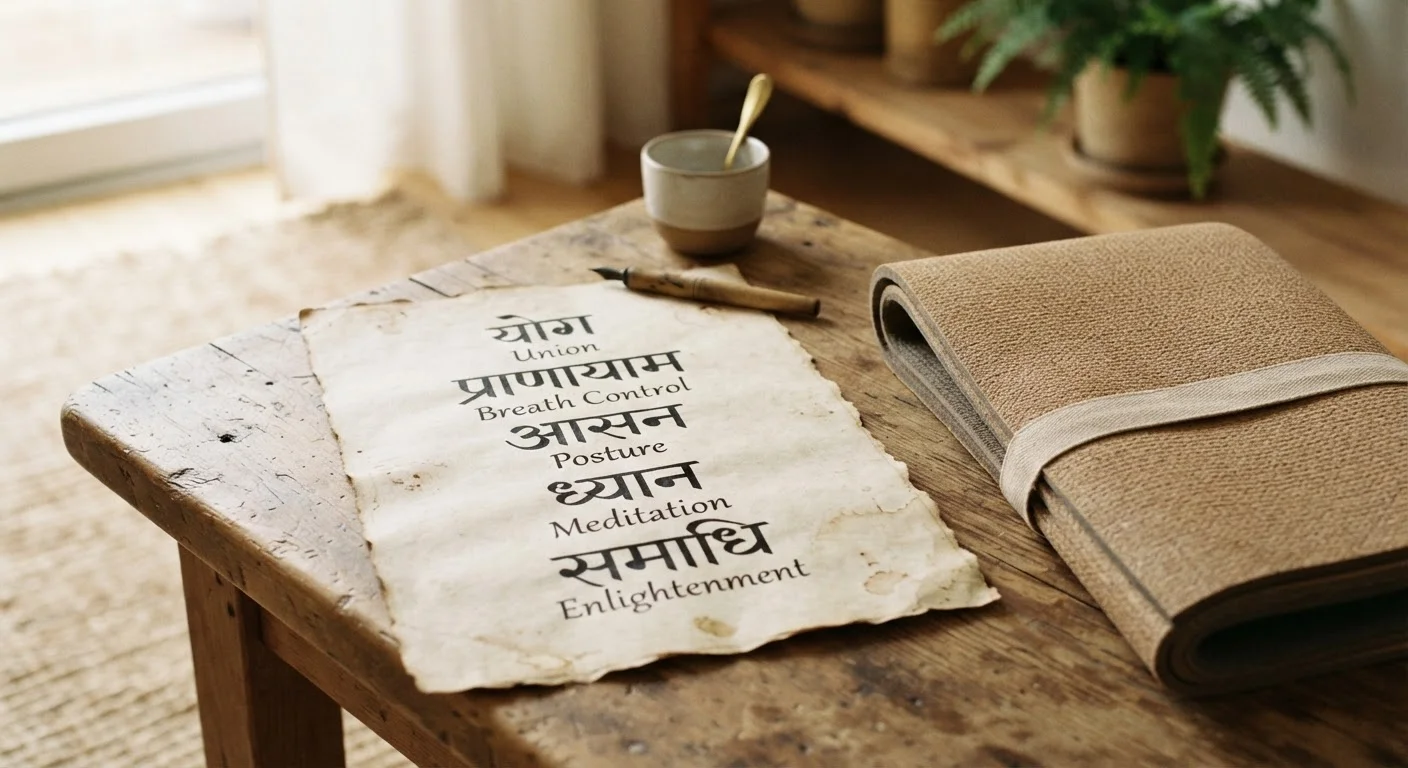
Walk into almost any yoga class in the US and you'll hear a mix of English and Sanskrit — the ancient South Asian language that yoga's foundational texts were written in. Instructors may cue you into Tadasana (Mountain Pose), remind you to engage your bandhas, or close class with a collective Om. For newcomers, this language layer can feel like an extra obstacle on top of learning the movements themselves.
It doesn't have to be. Sanskrit terms in yoga aren't gatekeeping — they're a shared vocabulary that connects modern practitioners to a long lineage of knowledge. More practically, knowing what a word means helps you respond to cues faster and understand your teacher's intention. This glossary covers the terms you're most likely to encounter, grouped by category for easy scanning.
If you're preparing for your first session, our beginner's class guide also covers format, etiquette, and what to bring.
| Language of origin | Sanskrit — a classical South Asian language |
| Primary texts using Sanskrit | Yoga Sutras of Patanjali, Hatha Yoga Pradipika, Bhagavad Gita |
| Most commonly heard class term | Asana (posture) |
| Number of traditional yoga limbs | Eight (Ashtanga), as described by Patanjali |
| Pronunciation tip | Most Sanskrit vowels are long; stress often falls on penultimate syllable |
Core Sanskrit Terms Explained
Posture and Movement
Asana (AH-sah-nah) literally means "seat" but in modern usage refers to any yoga posture. When you see a pose name ending in -asana — Trikonasana, Savasana — you're already reading Sanskrit.
Vinyasa (vin-YAH-sah) describes a breath-linked sequence of movements. In class, "take a vinyasa" typically means moving through Plank, Chaturanga (a low push-up), Upward-Facing Dog, and Downward-Facing Dog.
Surya Namaskar (SUR-yah nah-mah-SKAR) — Sun Salutation — is the foundational movement sequence taught in most traditions. For a full breakdown of each transition, see our step-by-step Sun Salutation guide.
Breath and Energy
Pranayama (prah-nah-YAH-mah) means breath regulation. Prana translates as life force or vital energy; ayama means extension or control. Pranayama practices range from simple diaphragmatic breathing to structured techniques like Nadi Shodhana (alternate nostril breathing).
Ujjayi (oo-JAH-ee) is an audible breathing technique used widely in Ashtanga and Vinyasa styles. A slight constriction at the back of the throat creates an ocean-like sound that helps regulate pace and focus attention inward.
Bandha (BAHN-dah) means "lock" or "seal" — a muscular engagement that yoga tradition describes as directing energy flow. The three most referenced are Mula Bandha (pelvic floor lift), Uddiyana Bandha (lower abdominal draw), and Jalandhara Bandha (chin tuck).
Gaze and Awareness
Drishti (DRISH-tee) is a focused gaze point. Fixing the eyes on a stable spot — your extended hand, the floor, or the tip of the nose — supports balance and concentration.
Dharana (dhar-AH-nah) means concentration or single-pointed focus, and is considered one of the eight limbs of yoga as described in Patanjali's Yoga Sutras.
Asana
Any physical yoga posture. The word literally means "seat" in Sanskrit and appears as a suffix in most pose names (e.g., Trikonasana, Virabhadrasana).
Pranayama
The practice of intentional breath regulation. Derived from prana (life force) and ayama (extension), pranayama encompasses a wide range of breathing techniques used to calm, energize, or focus the mind.
Vinyasa
A style of practice and a movement principle in which postures are linked together in sequences timed to the breath. The term also refers specifically to a transitional sequence of four poses.
Bandha
A muscular "lock" or internal engagement that yogic tradition associates with directing prana (energy) within the body. The three primary bandhas are Mula, Uddiyana, and Jalandhara.
Drishti
A specific gaze point used during posture practice to cultivate concentration and assist with balance. Different poses have traditionally assigned drishti points.
Ahimsa
The principle of non-harming, the first of yoga's ethical observances (yamas). In practice, it encourages working within honest physical limits rather than forcing the body.
Savasana
Corpse Pose — a supine resting posture held at the end of most yoga classes to allow the body and nervous system to absorb and integrate the effects of practice.
Ujjayi
An audible breathing technique characterized by a slight constriction at the back of the throat, producing an ocean-like sound. Commonly used in Vinyasa and Ashtanga classes to regulate pace and internalize attention.
Philosophy and Practice Structure
Ahimsa (ah-HIM-sah) — non-harming — is the first of yoga's ethical guidelines (yamas). On the mat, it's a reminder to work within your body's honest range rather than forcing flexibility.
Savasana (shah-VAH-sah-nah), Corpse Pose, is the intentional rest taken at the end of most classes. It allows the nervous system to integrate the practice — skipping it is widely considered a missed opportunity for the mind-body benefits yoga offers. To understand why mindful integration matters, see our article on mindful movement principles.
Om (also spelled Aum) is a sacred syllable chanted at the opening or close of many classes. It is considered in yogic philosophy to represent a universal sound or vibration — participation is always optional and a matter of personal comfort.
This article is for general educational purposes and does not constitute medical or therapeutic advice. If you have a health condition or injury, consult a qualified healthcare professional before starting or modifying a yoga practice.
The content on this site is for informational purposes only and is not a substitute for professional advice. Always consult a qualified professional for guidance specific to your situation.