

Summary
22 items · 15–30 minutes
Why Pre-Practice Preparation Matters
Showing up to your mat is the first step — but what you do in the fifteen minutes before unrolling it can determine whether a session feels grounded and productive or scattered and uncomfortable. Pre-practice readiness isn't about ritual for its own sake; it's a practical framework that reduces injury risk, improves focus, and helps you meet your body where it actually is on a given day.
This checklist is designed for beginners who are still building foundational habits, and for intermediate practitioners who may have let preparation slide. Work through each group before your next session, and over time many of these checks will become second nature. If you're also building a broader wellness routine, the mind-body readiness assessment offers useful complementary context.
When to Pause and Seek Professional Guidance
Yoga is generally safe for most adults, but certain conditions — including recent surgery, cardiovascular concerns, pregnancy, or acute musculoskeletal injury — require professional clearance before practice. If you experience sharp pain, dizziness, or breathlessness during any session, stop immediately. This checklist is a preparatory tool, not a substitute for individualized medical or clinical advice.
Your Pre-Practice Checklist
The checklist below is organized into four logical groups: physical readiness, your environment, equipment, and mental preparation. Move through them in order — physical checks come first because they may prompt you to adjust everything else.
Physical Readiness
Environment Setup
Equipment Check
Mental and Breath Preparation
For practitioners managing an existing injury, principles for modifying yoga with an injury provides structured guidance on adapting poses without abandoning practice altogether. And if you'd like to understand the warm-up phase in more detail, what research says about warming up and cooling down is a solid companion read.
Tools and Props Worth Having Ready
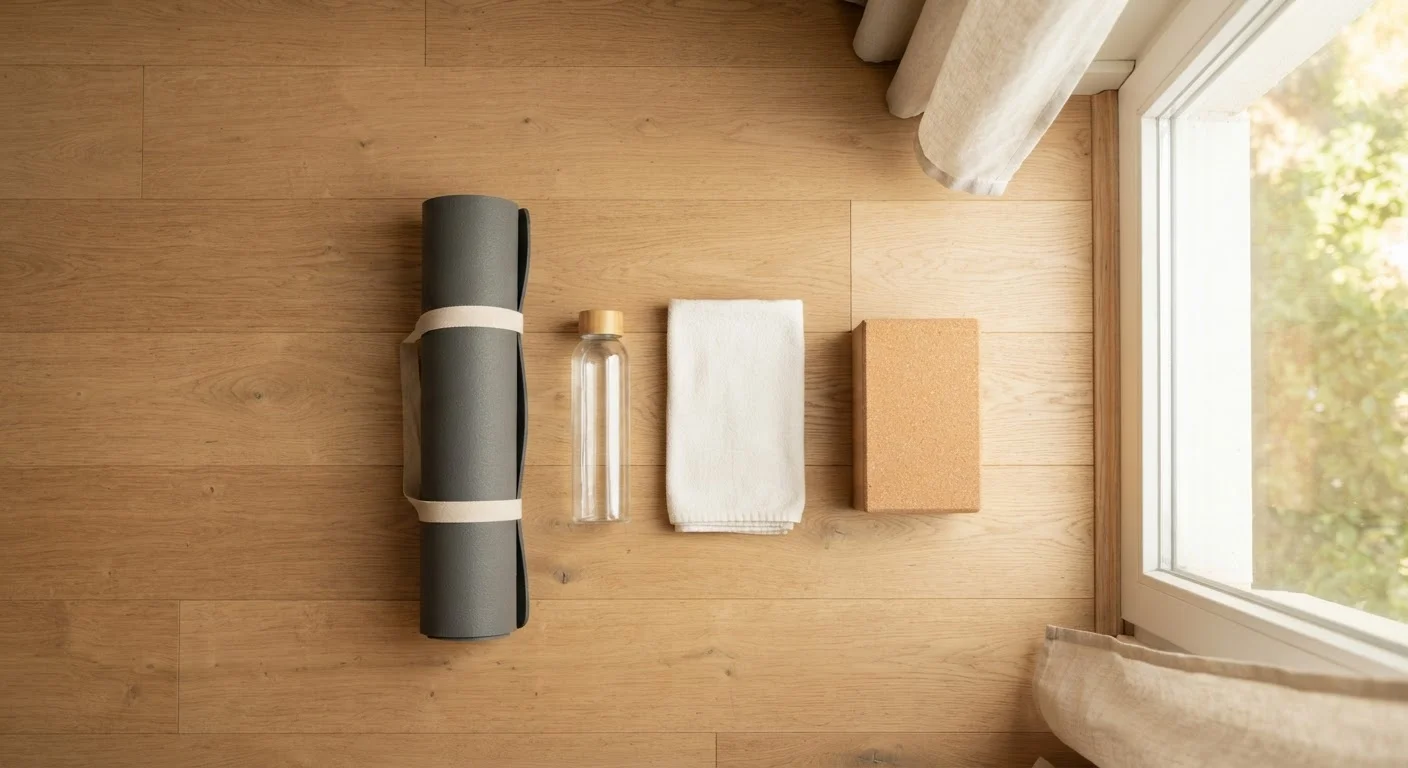
Yoga doesn't require a great deal of equipment, but having the right basic props within reach — rather than scrambling mid-pose — keeps the flow of practice intact and supports proper alignment.
Non-slip yoga mat
Provides a stable, cushioned surface that supports joint safety and grip during standing and floor poses.
Yoga blocks (2 recommended)
Bring the floor closer in poses where flexibility limits safe alignment, reducing strain on hamstrings, hips, and lower back.
Yoga strap or belt
Extends reach in seated forward folds and shoulder openers, enabling correct alignment without overstretching.
Folded blanket
Provides cushioning for knees and hips in kneeling poses, and warmth during savasana.
Bolster or firm pillow
Supports the spine and hips in restorative and yin poses, allowing the body to release passively without muscular effort.
Water bottle
Maintains hydration during longer or more vigorous sessions without requiring you to leave the mat.
Props are not training wheels. Experienced practitioners use blocks, straps, and bolsters intentionally to deepen alignment and access poses safely. Unfamiliar with the Sanskrit terms your teacher or class app uses for these? The plain-language yoga terminology guide explains asana, pranayama, drishti, and other common terms clearly. If your practice also includes strength or flexibility training, the movement readiness checklist for strength and flexibility covers similar ground for those sessions.
Don't Skip the Body Scan
Many practice-related strains happen when practitioners ignore early signals — tightness, fatigue, or low-grade soreness — and push into a full session anyway. A 60-second body scan before you begin is one of the most effective ways to catch these signals and adapt your practice accordingly. Pushing through pain is not a yoga principle; listening is.
This article is for general informational purposes only and does not constitute medical advice. Always consult a qualified healthcare professional before beginning or modifying a yoga practice, particularly if you have any existing health conditions, injuries, or concerns.
The content on this site is for informational purposes only and is not a substitute for professional advice. Always consult a qualified professional for guidance specific to your situation.