

Why These Phases Actually Matter
Many home exercisers treat the warm-up and cool-down as optional bookends — something to do when time permits. Research and exercise science suggest otherwise. These phases serve distinct physiological purposes, and consistently skipping them can limit performance and elevate the risk of strain or overuse injury.
A warm-up gradually increases heart rate and blood flow to working muscles, raises tissue temperature (which improves muscle elasticity), and activates the neuromuscular pathways used in your main workout. A cool-down, on the other hand, helps the cardiovascular system transition safely from exertion back to rest and may support recovery by maintaining circulation while metabolic byproducts are cleared.
For a fuller picture of how these phases fit into your overall weekly plan, see our practical framework for structuring home workouts.
What the Evidence Supports
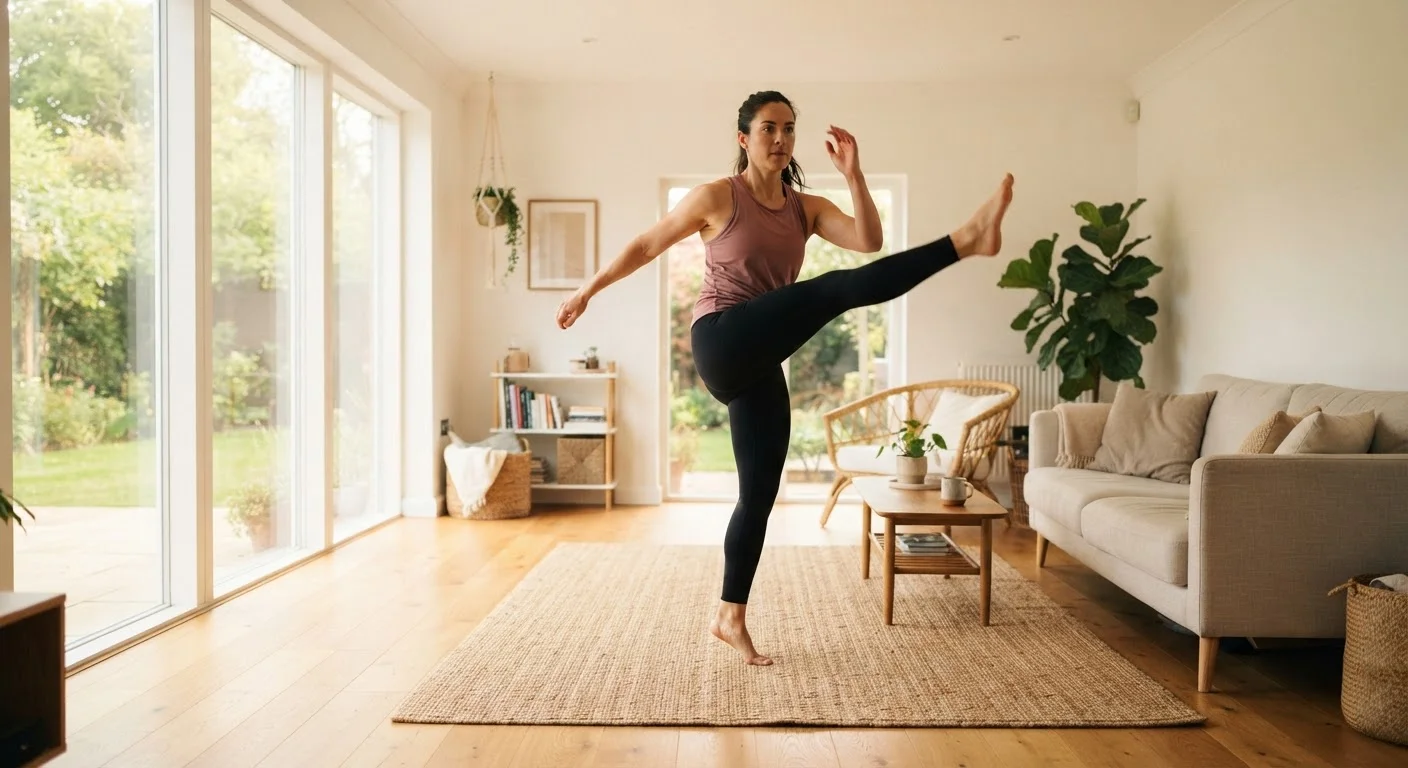
The research picture on warm-ups is reasonably clear: active, movement-based preparation outperforms passive rest before exercise. Studies consistently show that dynamic warm-ups — leg swings, hip circles, arm rotations, bodyweight squats — improve range of motion and power output better than prolonged static stretching performed immediately before activity. Holding a static stretch for 30–60 seconds pre-workout can temporarily reduce force production in some individuals, which is why most exercise physiologists now recommend saving long static holds for after your session.
Cool-down evidence is more nuanced. While a cool-down does not fully prevent delayed-onset muscle soreness (DOMS), it does support a smoother cardiovascular transition and may reduce the lightheadedness that can follow sudden exercise stoppage. For most people, a combination of light movement and gentle static stretching works well here.
For a deeper look at how static and dynamic approaches compare, our static vs. dynamic stretching guide offers detailed context.
Building Your Home Warm-Up and Cool-Down
The practical good news: you don't need equipment, extra space, or a long time window. Most home workouts benefit from 5–10 minutes of warm-up and a similar cool-down window. The key is matching the warm-up to the demands of your session — a lower-body strength day calls for hip and ankle mobility work; an upper-body session benefits from shoulder circles and thoracic rotation.
If you're just getting started setting up a sustainable home training habit, the home fitness starter checklist covers the foundational environment and scheduling steps that make consistency much easier.
This article is for general informational purposes only and does not constitute medical advice. If you have an existing injury, health condition, or any concerns about beginning or changing an exercise routine, please consult a qualified healthcare professional before proceeding.
The content on this site is for informational purposes only and is not a substitute for professional advice. Always consult a qualified professional for guidance specific to your situation.